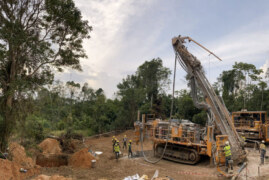
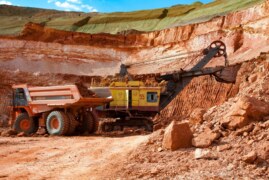
Peru’s rugged Andean terrain presents unique challenges and opportunities for road construction. Remote sites, steep slopes, and limited logistics make traditional stationary crushing plants less practical. Mobile stone crushers are gaining traction as a versatile solution that brings the production line to the worksite, reduces transport costs, and speeds up project timelines. This article explores why mobile stone crushers are especially well suited for Peru’s mountain roads, how their technical features match local needs, and what operators should consider for successful deployment.
Why Mobile Crushers Fit Mountain Road Projects
Mountain road construction demands equipment that can be moved easily, set up quickly, and operate reliably under harsh conditions. Mobile stone crushers answer these needs by combining multiple processing steps into a single integrated unit. A mobile unit functions effectively as a compact production line—minimizing on-site assembly and shortening the lead time between arrival and production. For remote Andean projects, where access roads are narrow and transportation costs are high, the ability to bring the crusher close to the quarry face or borrow pit reduces the need to haul raw rock long distances.
Key Operational Advantages
Mobile crushers typically incorporate modular design, allowing operators to change the crushing configuration (for example, switching between a jaw-crusher plus cone-crusher combination or a jaw plus impact crusher for sand-making). This flexibility is valuable in Peru, where material properties can vary widely from site to site. On steep mountain slopes, the ability to pre-screen material and route oversized fragments back into a secondary crusher reduces downtime and keeps production steady.

Features That Matter for Andean Conditions
When evaluating mobile stone crushers for projects in Peru, several technical features stand out as particularly beneficial:
Integrated One-Unit Production Line
A complete mobile unit that contains feeding, primary crushing, secondary crushing (if needed), screening, and conveyor discharge simplifies logistics. One device functioning as a full production line reduces the number of separate machines to transport and maintain—an important advantage where crane access and flat laydown areas are limited.
Modular Structure and Fast Deployment
Modules that break down into transportable sections make it possible to move machinery on narrow mountain roads or to sites with height and width restrictions. Rapid assembly and disassembly reduce installation and commissioning times, which is critical when road works are scheduled in tight windows due to weather or seasonal access.
Intelligent Control and Remote Monitoring
Modern mobile crushers often include centralized electrical control with PLC and touchscreen operation, plus IoT remote-monitoring modules. These capabilities let supervisors monitor equipment health, production metrics, and fault alerts from a distance—very useful for projects where on-site technical expertise may be limited. One-button start and clear HMI interfaces make training local crews faster, aligning with the practical skills typically available in regional construction teams.
Dust Control and Sealing
Dust is a major environmental and health concern in confined mountain valleys. Mobile units with sealed transfer points, rubber-lined chutes, and options for spray dust suppression help reduce airborne particulates. Improved sealing also prolongs wear part life and reduces maintenance frequency—an operational cost benefit in locations where spare parts deliveries can take days.
Centralized Lubrication and Easy Maintenance
Centralized lubrication points and accessible service platforms simplify routine maintenance. For work in remote areas, minimizing the number of lubrication points and having an organized service layout cuts the time field teams spend on upkeep. Combined with an integrated platform that facilitates inspection, these design choices mean less downtime and more consistent production.
Environmental and Economic Impact
Deploying mobile stone crushers in Peru’s(plantas chancadoras de piedra Perú) mountains supports both environmental stewardship and cost-efficiency. Producing aggregate onsite lowers the carbon footprint associated with transporting heavy material down winding mountain roads. It also reduces pavement wear on local access roads and the fuel consumption of heavy trucks. Economically, shorter logistics chains and faster project turnarounds can translate into reduced overall project costs—an attractive proposition for contractors and public agencies managing limited budgets.
Adapting to Local Practices
Peruvian contractors often favor robust, easy-to-operate equipment that tolerates variable feed material and limited maintenance infrastructure. Mobile crushers with simple mechanical designs paired with smart controls strike a good balance: mechanical reliability where it counts, and intelligent monitoring where it adds the most value. Offering operator training in Spanish and providing a spare-parts strategy adapted to the region will further increase adoption and uptime.

Challenges and Considerations
While prospects are strong, several considerations must be addressed to ensure success. Operators should evaluate the mobile unit’s powertrain and fuel needs relative to site fuel logistics. Selecting the correct crusher combination and screening configuration for the predominant rock types (andesite, limestone, quartzite, etc.) in a region is essential to maximize efficiency and wear life. Finally, coordinating with local authorities on dust mitigation and noise control helps avoid regulatory delays and community pushback.
Conclusion
Mobile stone crushers present a compelling solution for road construction in Peru’s mountainous regions. Their modular, integrated design reduces logistical complexity; intelligent controls and centralized maintenance features improve reliability; and dust suppression and sealing systems align with environmental priorities. For contractors operating in the Andes, choosing mobile crushing systems tailored to local rock conditions and logistics can shorten project schedules, reduce costs, and deliver aggregate where and when it is needed most. For anyone planning mountain roadworks in Peru, exploring a modern mobile stone crusher plant Peru installation is a practical step toward more efficient, sustainable construction.