Working Principle and Application Scenarios of Mobile Crushing Plants

Working Principle
Material Conveying and Feeding
Crushing Processing
- Jaw Crushing: Crushes high-hardness materials (such as ores and rocks) through the extrusion of the movable jaw and fixed jaw, mainly used for primary crushing.
- Impact Crushing: Utilizes high-speed rotating hammers to impact materials, and then realizes crushing through repeated collisions between materials and the impact plate, suitable for medium and fine crushing of brittle materials (such as concrete blocks and limestone).
- Cone Crushing: Drives the movable cone to rotate through an eccentric shaft to extrude and bend materials for crushing, suitable for medium and fine crushing of high-hardness materials, producing more uniform product particle size.
- Impact-type Crushing: Materials are thrown out by a high-speed rotating impeller and collide with the crushing chamber wall or material layer to achieve crushing and shaping, mainly used in the processing of sand and gravel aggregates.
Screening and Classification

Finished Product Conveying and Stacking
Application Scenarios
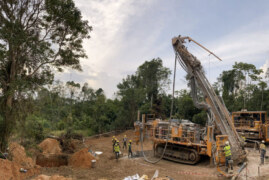
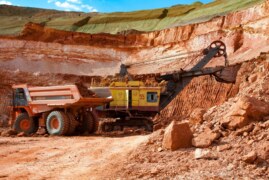
Mining Exploitation Field
- Application Scenarios: Primary crushing of ores in open-pit mines, roadway crushing in underground mines, tailings recovery, etc.
- Core Value: It can operate directly near the mine pit, crushing raw ore to a particle size suitable for transportation, reducing ore transportation volume (lowering transportation costs). For remote mining areas, there is no need to build fixed production lines, enabling rapid commissioning.
- Typical Case: In the exploitation of copper and iron ores, jaw-type mobile crushing plants are used at the pithead to crush large ore blocks before transporting them to the concentrator.
Construction Waste Recycling Field
- Application Scenarios: Demolition sites of old buildings, road reconstruction projects, construction waste treatment plants, etc.
- Core Value: On-site crushing of construction waste such as concrete blocks, bricks, and waste asphalt to process into recycled aggregates, which are used to make recycled concrete, road bases, permeable bricks, etc., realizing resource recycling.
- Typical Case: At urban demolition sites, impact-type mobile crushing plants are used to process construction waste, and the produced recycled aggregates are directly used for the construction of surrounding roads.
Infrastructure Construction Field
- Application Scenarios: Highway/railway construction, port/airport construction, site leveling projects, etc.
- Core Value: It can move with the construction progress to crush earth-rock and sand materials on-site, meeting the project’s demand for aggregates of different specifications, and reducing the transportation cost and time of purchased aggregates.
- Typical Case: During highway construction, mobile crushing plants are used to process sand and gravel at quarries along the route to directly supply aggregates required for pavement laying.
Quarry and Sand-Gravel Processing Field
- Application Scenarios: Small and medium-sized quarries, river sand mining, temporary sand-gravel processing points, etc.
- Core Value: No fixed workshop is required, and the operation position can be flexibly adjusted according to ore distribution. It is suitable for small-scale and multi-batch sand-gravel production, reducing early investment costs.
Emergency Rescue Field
- Application Scenarios: Ruins cleaning after earthquakes and floods, road emergency repair, dyke reinforcement, etc.
- Core Value: With strong mobility, it can quickly reach the scene to crush debris, clear blocked roads, or process sand and gravel for emergency engineering construction, improving rescue efficiency.
More information about mobile crusher plant, pls visit http://www.uniquemacglobal.com, engineer will give you good proposal.