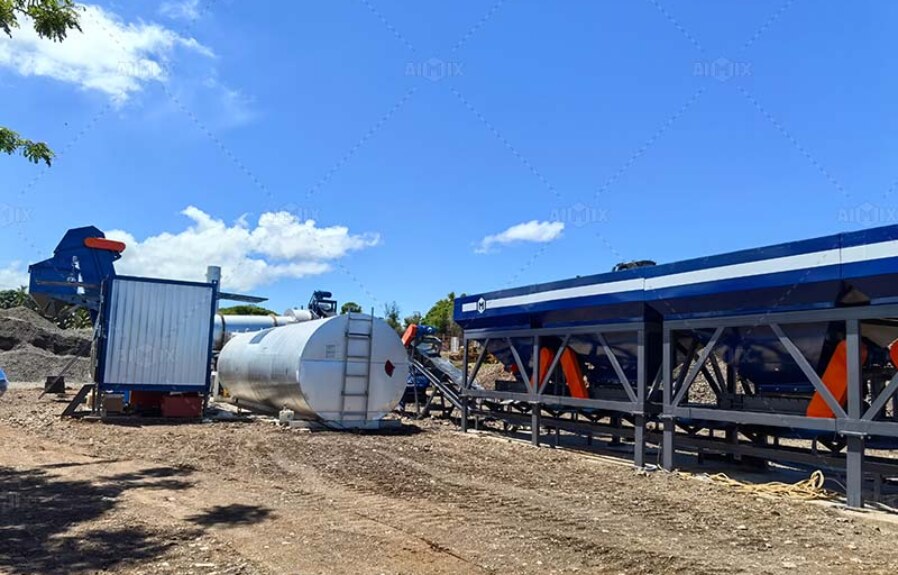
For Mexican road contractors, profitability often depends on how efficiently they manage small projects rather than how many tonnes of asphalt they can produce in a single hour. Rural road rehabilitation, pothole repairs, municipal resurfacing, and short road maintenance contracts may require relatively small quantities of hot mix asphalt. However, contractors still need reliable material quality, timely delivery, and control over transportation costs.
A 40–60 TPH small asphalt plant can be a profitable investment for contractors who secure enough work, organize production efficiently, and keep operating costs under control. Nevertheless, the rated capacity alone does not guarantee a return. The actual result depends on annual production volume, contract prices, fuel consumption, aggregate supply, labor, plant utilization, and the distance between the production site and each project.
For contractors working across rural municipalities or handling several short maintenance contracts in Mexico, the key question is not simply whether a small asphalt plant can produce 40–60 tonnes per hour. Instead, it is whether owning the plant costs less than purchasing hot mix asphalt from an external supplier over the expected operating period.
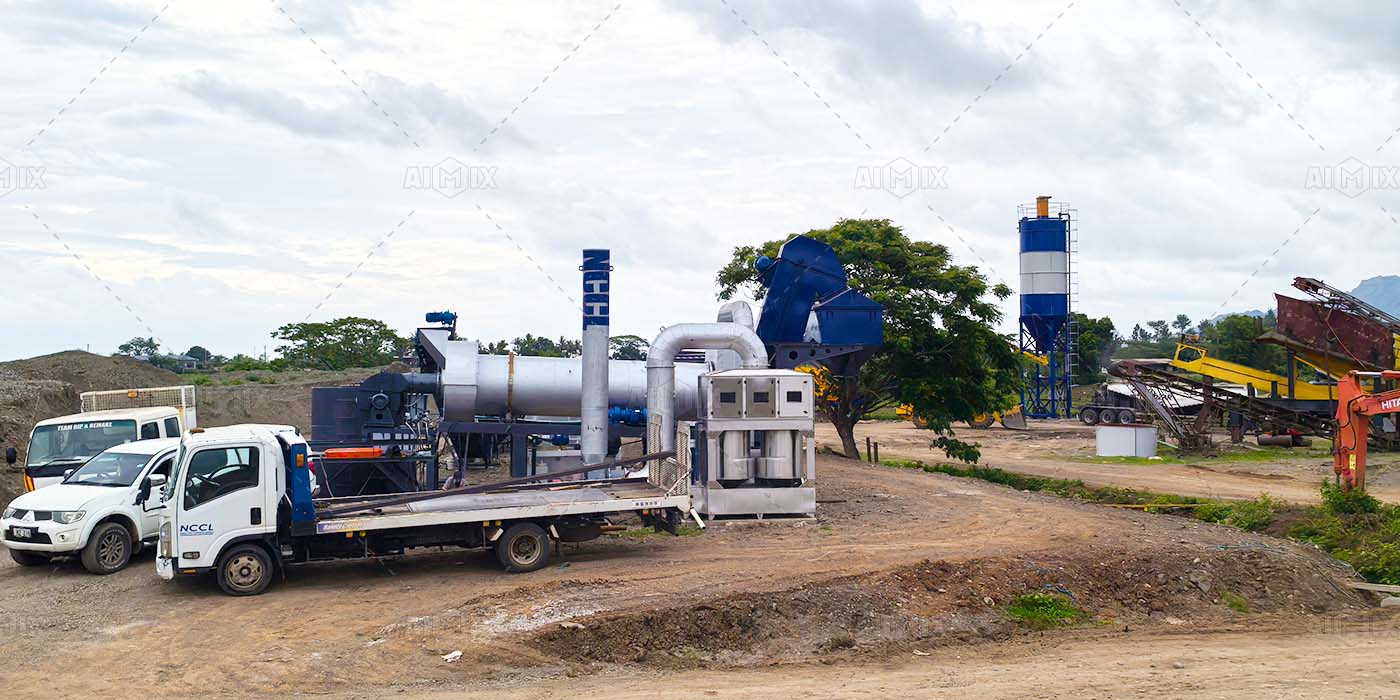
1. Why Small Asphalt Plants Can Suit Mexican Rural Road Projects
Before comparing investment costs, contractors should understand how their project conditions influence asphalt production. A plant that suits a large highway project may not deliver the same economic benefits on scattered rural roads or short municipal contracts.
Smaller Contracts Often Require Flexible Production
Rural road projects may involve localized resurfacing, damaged pavement repairs, shoulder improvements, and the rehabilitation of short road sections. Municipal maintenance teams may also schedule several jobs throughout the year rather than complete one continuous paving project.
These conditions can favor a small asphalt plant because the contractor can match production more closely to actual demand. However, the plant still needs enough scheduled work to justify its capital investment.
- Rural road rehabilitation: Produce asphalt for defined road sections without depending entirely on a distant supplier.
- Municipal pavement maintenance: Coordinate production with planned resurfacing, pothole repair, and road rehabilitation schedules.
- Regional road contracts: Serve several projects within a practical transportation radius when contract timing and material requirements allow.
- Contractor-owned paving operations: Coordinate asphalt production with paving crews, rollers, trucks, and site preparation.
However, contractors should not assume that every small project requires an on-site asphalt plant. For an isolated repair involving only a few tonnes, purchasing hot mix from a nearby supplier may remain the more economical option.
When a 40–60 TPH Capacity Makes Sense
A plant rated at 40–60 tonnes per hour can support small and medium-sized road contracts, provided its actual production rate matches the mix design, aggregate moisture, operating conditions, and equipment configuration. Contractors should distinguish rated output from the quantity they can consistently produce and place during a working day.
- A 40 TPH plant has a theoretical output of 320 tonnes during eight hours of continuous production.
- A 60 TPH plant has a theoretical output of 480 tonnes during eight hours of continuous production.
- Actual daily production will usually be lower because of startup, mix changes, aggregate handling, maintenance, weather, truck availability, and paving schedules.
These figures are capacity calculations, not guaranteed daily production. For example, a contractor with a 150-tonne daily requirement may not need to operate at full capacity for an entire shift. The contractor should instead evaluate the minimum practical production run, warm-up and shutdown requirements, and the cost of maintaining consistent mix quality.
2. Batch Mix or Drum Mix: Which Plant Fits Short Contracts?
Once the required capacity becomes clear, the next decision concerns the production process. Mexican contractors should compare batch mix and drum mix asphalt plants according to their project schedule, mix specifications, material requirements, and expected production volume.
Batch Mix Asphalt Plants for Different Mix Requirements
A batch mix asphalt plant produces asphalt in separate batches. It measures and combines aggregates, filler, and bitumen according to the selected mix design. This process gives the operator control over individual batches and can help contractors manage projects that require different asphalt mixtures.
For municipal contractors who alternate between maintenance jobs and resurfacing contracts, a batch plant may offer useful production flexibility. However, mix changes require time, and smaller batches can increase operating costs per tonne if the contractor frequently stops and restarts production.
Drum Mix Asphalt Plants for More Continuous Production
A small asphalt drum mix plant may suit contractors who produce a relatively consistent asphalt mixture for repeated road maintenance work. It dries aggregates and mixes them with bitumen in a continuous process, which can support steady production when material supply and paving schedules remain consistent.
Nevertheless, continuous production does not automatically make a drum plant cheaper. Contractors must consider the required mix specifications, available equipment, production stability, and the ability to coordinate output with trucks and paving crews.
In Mexico, the appropriate choice depends on the actual tender requirements and local operating conditions. Contractors should verify the specified asphalt mixture before selecting a plant, rather than assuming that one production process suits every rural or municipal project.
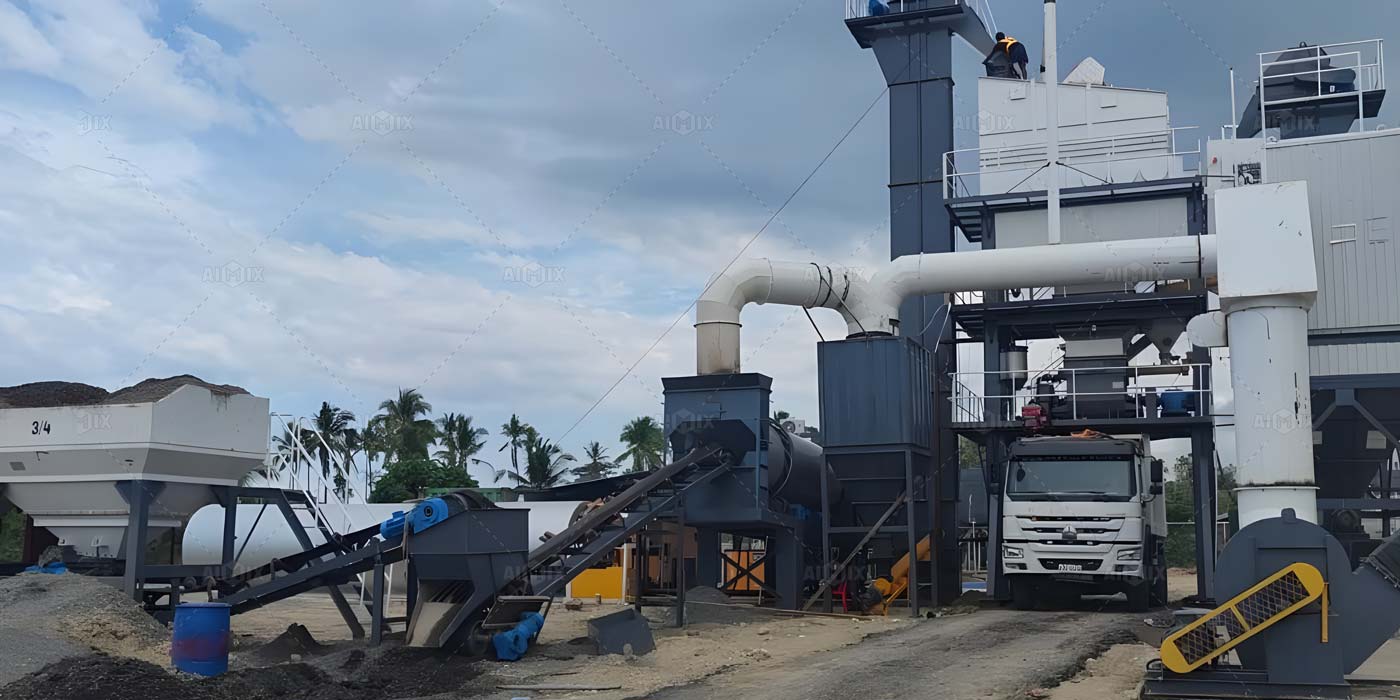
3. Estimate Annual Asphalt Demand Before Investing
Plant capacity helps determine how quickly a contractor can produce asphalt, but annual demand determines whether the equipment will earn enough to cover its ownership costs. Therefore, contractors should estimate the volume of asphalt they can realistically sell or consume before requesting quotations.
Estimate Production From Contract Quantities
Start with awarded contracts, credible tender opportunities, and recurring maintenance requirements. Separate confirmed demand from possible future work. This distinction matters because a plant generates no production revenue when a tender is delayed or a project does not proceed.
For an initial estimate, consider the following illustrative scenarios. They are planning assumptions rather than forecasts of typical Mexican municipal demand.
- Scenario A: Produce 100 tonnes per operating day for 60 days, resulting in 6,000 tonnes annually.
- Scenario B: Produce 150 tonnes per operating day for 80 days, resulting in 12,000 tonnes annually.
- Scenario C: Produce 200 tonnes per operating day for 100 days, resulting in 20,000 tonnes annually.
These scenarios illustrate why a plant with a high hourly rating can still struggle financially. If a contractor only secures a limited number of operating days, annual production may remain too low to cover financing, depreciation, site expenses, and maintenance.
Match the Plant to Actual Daily Demand
Suppose a municipal contract requires 600 tonnes of asphalt over four paving days. The average placement requirement is 150 tonnes per day. A 40–60 TPH plant can theoretically meet this demand within a relatively short production period, but the contractor must also account for startup, truck loading, transportation, and paving coordination.
Producing more asphalt than the paving crew can place may create unnecessary inventory, delivery delays, or material waste. Conversely, insufficient production can leave crews and trucks waiting. The most profitable arrangement balances the plant, haulage fleet, storage arrangements where applicable, and paving equipment.
4. What Determines the Profitability of a Small Asphalt Plant?
After estimating annual demand, contractors should compare the total cost of owning a plant with the cost of buying asphalt from an established supplier. A reliable comparison includes both direct production expenses and the fixed costs that continue even when the plant is idle.
Capital Investment and Financing
The initial investment includes more than the plant purchase price. Depending on the selected configuration and site conditions, contractors may also need to budget for transportation, foundations or site preparation, electrical installation, fuel systems, aggregate storage, environmental controls, commissioning, and operator training.
Financing can also change the result. A contractor who borrows heavily to purchase a plant must generate enough cash flow to cover loan payments during periods of low demand. Therefore, a lower equipment quotation does not necessarily represent the lowest total ownership cost.
Fuel, Bitumen, Aggregates, and Other Operating Costs
Materials often account for a substantial share of asphalt production costs. Contractors should estimate each major cost using local supplier quotations and the actual mix design rather than relying on generic industry averages.
- Aggregates: Compare quarry prices, grading consistency, moisture content, and transportation distance.
- Bitumen: Confirm the required grade, delivered price, supply reliability, and storage requirements.
- Fuel and electricity: Estimate consumption using the expected production rate, aggregate moisture, burner configuration, and local energy prices.
- Labor: Include operators, maintenance technicians, loaders, quality-control personnel, and other required staff.
- Maintenance: Budget for wear parts, bearings, filters, belts, calibration, repairs, and scheduled servicing.
- Transportation: Include inbound material deliveries and outbound asphalt haulage to each project.
- Environmental and site expenses: Verify applicable permits, emissions requirements, dust controls, noise restrictions, and site operating costs.
These expenses can vary significantly between regions. A plant near a dependable aggregate source may have a different cost structure from one serving remote communities with longer supply routes. Contractors should therefore build their calculations around the intended installation site and operating territory.
5. Compare Plant Ownership With Buying Ready-Made Hot Mix Asphalt
For short municipal contracts, owning a plant makes financial sense only when it offers a measurable advantage over alternative supply arrangements. The comparison should use the same asphalt specification, delivery point, and project quantity.
Calculate the Cost Per Tonne
For an owned plant, estimate the full annual cost and divide it by the tonnes actually produced. Include variable production costs and the annual share of fixed ownership costs. Do not divide by rated hourly capacity or maximum theoretical output.
Owned Plant Cost Per Tonne = (Annual Fixed Costs + Annual Variable Production Costs + Relevant Delivery Costs) / Annual Tonnes Produced
For purchased asphalt, use the supplier’s delivered price per tonne and include any additional handling, waiting time, or transportation expenses that the contractor must pay.
Consider a hypothetical example. Assume an owned plant has annual fixed costs of MXN 1,800,000 and variable production costs of MXN 1,050 per tonne. These figures are illustrative only and do not represent a market quotation.
- At 6,000 tonnes per year: Fixed costs equal MXN 300 per tonne. The estimated plant cost is MXN 1,350 per tonne before any additional delivery costs not already included.
- At 12,000 tonnes per year: Fixed costs equal MXN 150 per tonne. The estimated plant cost falls to MXN 1,200 per tonne.
- At 20,000 tonnes per year: Fixed costs equal MXN 90 per tonne. The estimated plant cost falls to MXN 1,140 per tonne.
This example shows how higher utilization spreads fixed costs across more tonnes. However, the calculation does not prove that ownership is cheaper in every situation. Contractors must compare these results with actual supplier quotations and ensure that the assumed variable costs include the necessary materials, energy, labor, and maintenance expenses.
Estimate the Break-Even Production Volume
The break-even calculation identifies the production volume at which owning a plant costs the same as buying equivalent asphalt from a supplier. It provides a practical starting point for investment decisions.
Break-Even Annual Volume = Annual Fixed Ownership Costs / (Delivered Purchase Price Per Tonne – Variable Owned Production Cost Per Tonne)
For example, assume annual fixed ownership costs of MXN 1,800,000, a delivered supplier price of MXN 1,450 per tonne, and variable owned production costs of MXN 1,050 per tonne. The difference is MXN 400 per tonne.
The break-even volume is therefore 4,500 tonnes per year. At this volume, the simplified cost of ownership equals the purchase cost. Above that level, ownership may provide a cost advantage; below it, purchasing asphalt may be more economical.
However, this calculation assumes that both prices cover comparable costs and that the contractor can produce the required quantity without additional unbudgeted expenses. A complete investment analysis should also consider financing, taxes, downtime, residual value, working capital, and project-specific risks.
6. Why Transportation Distance Can Change the Result
Even when a plant produces asphalt at a competitive cost, the contractor must deliver the material while it remains suitable for paving. Consequently, transportation distance and delivery timing can strongly influence the economics of rural road maintenance.
Evaluate the Entire Supply Route
A contractor serving several municipalities should map the expected projects, aggregate suppliers, bitumen suppliers, and potential plant locations. A central location may reduce average delivery distances, but it could increase inbound material costs or create scheduling problems for distant projects.
Before choosing a site, assess the following factors:
- Typical travel time between the plant and each road project.
- Road access for aggregate delivery vehicles and asphalt trucks.
- Traffic restrictions, seasonal road conditions, and rainy-season access.
- Availability of fuel, electricity, water where required, and maintenance services.
- Local land-use requirements and environmental authorization.
- The number of trucks needed to maintain a steady supply to the paving crew.
Mexico’s geographic and climatic conditions vary widely. A location that works well for a contractor serving several nearby municipalities may not suit a company whose contracts are spread across distant regions. Therefore, contractors should compare several realistic operating locations before committing to a fixed installation.
7. Can One Small Asphalt Plant Serve Multiple Short Contracts?
Serving several projects can improve annual utilization, but only if the contractor coordinates production, equipment movement, and contract schedules. The plant itself is only one part of the operation.
Build a Practical Production Calendar
Group nearby contracts into operating periods whenever possible. This approach can reduce repeated startup costs and improve the use of operators, trucks, and maintenance resources.
- Step 1: Record the estimated asphalt quantity, required mix, delivery location, and completion date for each contract.
- Step 2: Identify contracts that can share the same production location and asphalt specification.
- Step 3: Schedule aggregate deliveries, bitumen supply, equipment maintenance, and truck availability.
- Step 4: Allow time for laboratory testing, mix verification, weather interruptions, and possible contract delays.
- Step 5: Compare planned production days with the annual break-even requirement.
This process helps contractors distinguish a plant that will remain productive from one that will sit idle between occasional contracts. It also exposes scheduling conflicts before they affect delivery commitments.
Consider Mobility and Relocation Costs
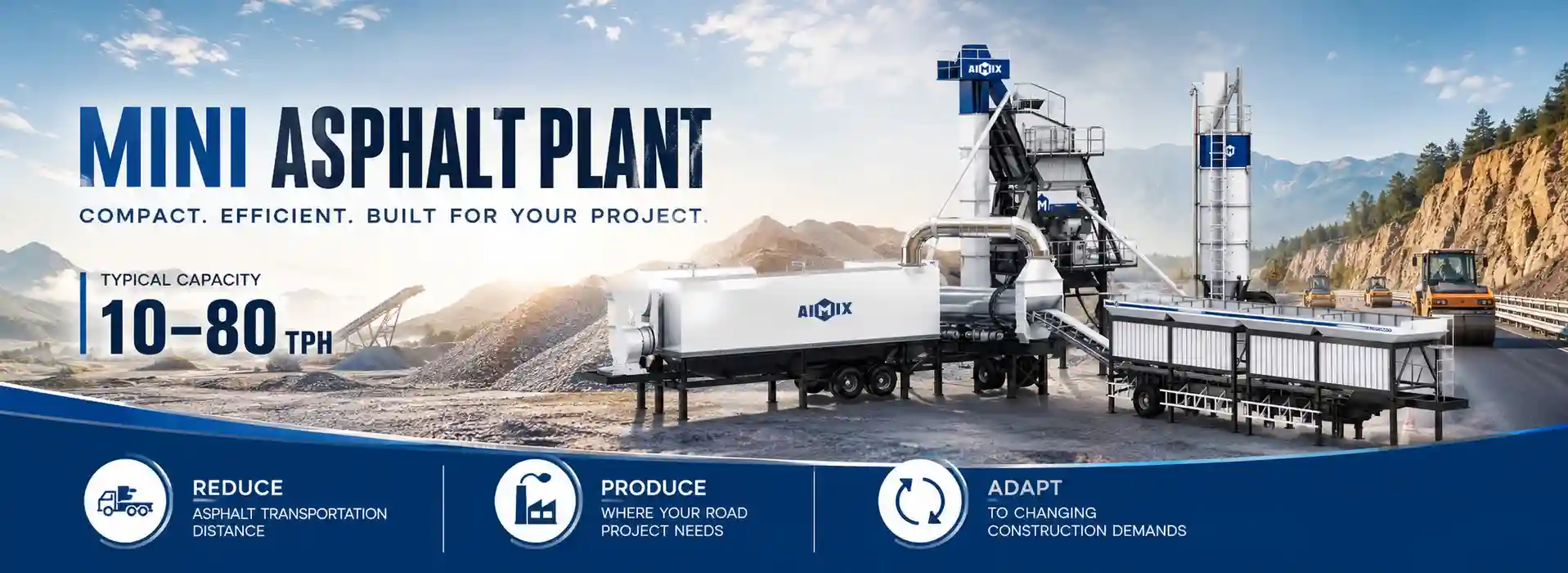
If contracts move between distant areas, a mini mobile asphalt plant may offer operational advantages. However, mobility does not eliminate relocation expenses. Contractors should include dismantling where necessary, transport permits, haulage, reinstallation, commissioning, and the time lost during each move.
A stationary plant may offer a better solution when contracts remain concentrated within one region. A transportable configuration may suit contractors with recurring work across several locations, provided the savings from repositioning justify the additional costs.
Before selecting a configuration, ask the supplier for the actual transport dimensions, required lifting equipment, installation requirements, foundation specifications, and expected relocation time. These details are more useful than relying on the word “mobile” alone.
8. Common Investment Mistakes Contractors Should Avoid
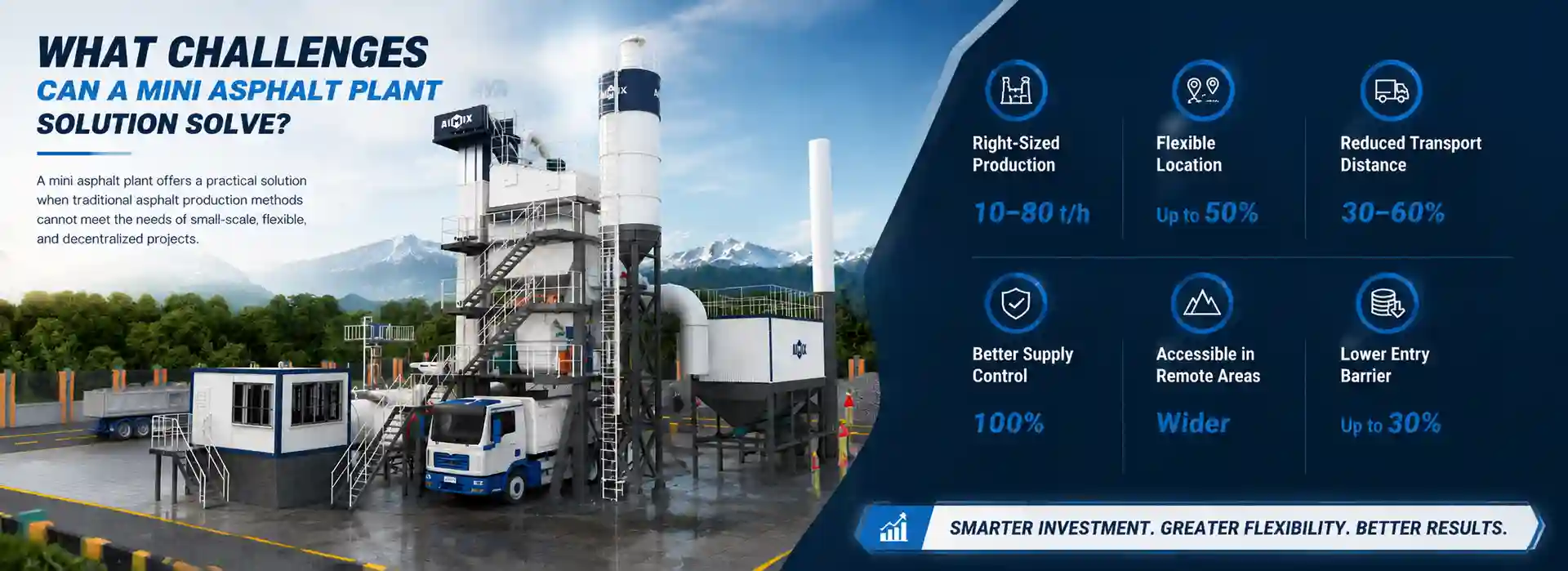
Even a well-sized asphalt plant can produce disappointing returns when contractors underestimate operating risks. Reviewing these issues before purchasing equipment can help protect cash flow and improve project delivery.
Buying Capacity Without Securing Demand
A 60 TPH plant may look attractive because it can produce more asphalt per hour than a 40 TPH unit. Nevertheless, the larger capacity offers limited financial value if the contractor cannot secure additional contracts. Base the decision on forecast annual tonnes, operating days, and actual production requirements.
Ignoring Material and Delivery Costs
Low plant production costs do not guarantee low delivered asphalt costs. Expensive aggregates, inconsistent bitumen supply, long haul distances, or insufficient trucks can eliminate the expected savings. Obtain local quotations before finalizing the financial model.
Underestimating Quality Control
Municipal and road contracts may specify aggregate gradation, binder content, temperature, compaction, and other quality requirements. Contractors should confirm the applicable project specifications and arrange suitable laboratory testing and quality-control procedures.
Consistent production helps reduce rejected loads, rework, and disputes. It also supports stronger relationships with public-sector clients and repeat customers.
Overlooking Permits and Environmental Requirements
Before installation, confirm the applicable federal, state, and municipal requirements for the proposed site. Depending on the project and location, the contractor may need to address land use, emissions, dust, noise, fuel storage, waste management, and environmental authorization.
Requirements vary by jurisdiction and project scope. Contractors should consult the relevant authorities and qualified local professionals rather than assume that a supplier’s standard configuration automatically satisfies every Mexican requirement.
9. A Practical Checklist Before Purchasing a 40–60 TPH Asphalt Plant
After reviewing demand, operating costs, and site conditions, contractors can use the following checklist to decide whether the investment deserves further evaluation.
- Confirmed demand: Can awarded contracts and credible repeat work support the planned annual production volume?
- Break-even volume: Does realistic annual demand exceed the calculated break-even requirement with a reasonable safety margin?
- Supply advantage: Is producing asphalt internally more economical than purchasing equivalent material delivered to the job site?
- Plant configuration: Does batch or drum production better match the required mix designs and contract schedule?
- Material availability: Can the contractor obtain suitable aggregates and bitumen at predictable prices?
- Logistics: Can trucks deliver asphalt at the required rate without excessive waiting or material deterioration?
- Site readiness: Are access, utilities, installation, permits, and environmental controls adequately planned?
- Financial resilience: Can the business cover loan payments and fixed costs during slow months or contract delays?
- Technical support: Can the supplier provide installation guidance, operator training, spare parts, and maintenance support?
- Investment recovery: Does the projected cash flow support an acceptable payback period under conservative assumptions?
A contractor who cannot yet confirm sufficient annual demand may benefit from continuing to purchase asphalt, partnering with an existing producer, or evaluating equipment rental options where available. These alternatives can help the business build a stronger contract base before committing to a permanent plant investment.
10. Final Verdict: Is a 40–60 TPH Small Asphalt Plant Profitable in Mexico?
A 40–60 TPH small asphalt plant can be profitable for Mexican contractors serving rural roads and short municipal maintenance contracts, but profitability depends on utilization, material costs, transportation, contract reliability, and disciplined production planning.
The investment becomes more attractive when a contractor has recurring work across nearby municipalities, reliable aggregate and bitumen supplies, manageable transportation distances, and sufficient annual demand to spread fixed costs over a meaningful production volume.
By contrast, contractors who only handle occasional small repairs may find that buying hot mix asphalt remains the lower-risk option. They should also be cautious about financing a plant based on unawarded tenders or optimistic production forecasts.
The most reliable approach is to compare at least three scenarios: conservative, expected, and high utilization. For each scenario, calculate annual tonnes, cost per tonne, break-even volume, cash flow, and the effect of delayed contracts. This analysis will provide a clearer investment decision than rated capacity or purchase price alone.
Plan Your Small Asphalt Plant Investment With AIMIX
Are you evaluating a 40–60 TPH asphalt plant for rural road construction, municipal resurfacing, or recurring maintenance contracts in Mexico? AIMIX can help you assess plant configurations according to your target production, asphalt mix requirements, project locations, and operating conditions.
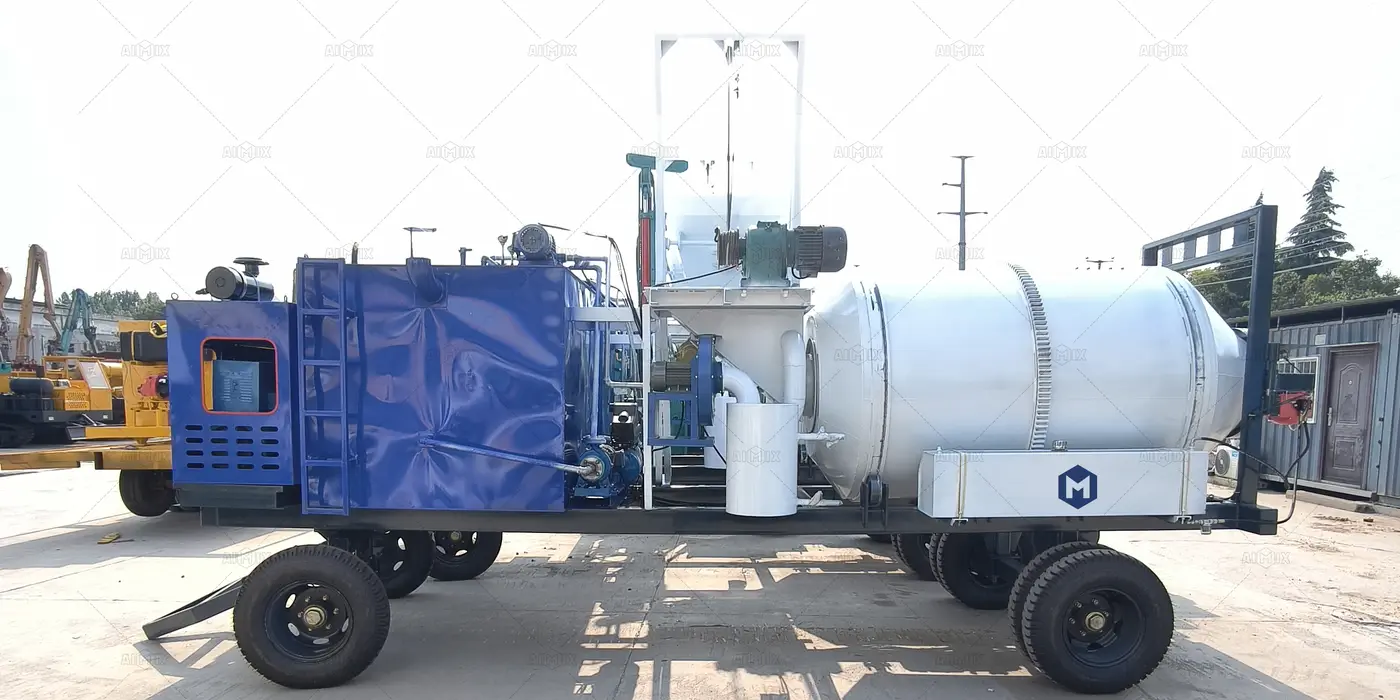
For smaller repair jobs, a mini asphalt mixing plant may be worth evaluating alongside 40–60 TPH options. The right choice depends on the quantity of asphalt required, the frequency of production, the mix specifications, and the total cost of operating the equipment.
Before requesting a quotation, prepare your estimated daily asphalt demand, expected annual production, preferred plant configuration, available installation site, aggregate and bitumen supply conditions, and project schedule. These details help establish a more realistic equipment configuration and operating plan.
Contact the AIMIX team to discuss your project requirements and request a configuration proposal. With a clear understanding of annual demand, production costs, and delivery logistics, you can make a better-informed decision about whether a small asphalt plant is the right investment for your Mexican contracting business.