The demand for high-quality aggregates continues to grow with the expansion of infrastructure, real estate development, and road construction projects across the globe. Contractors and aggregate producers are increasingly looking for flexible solutions that allow them to process a variety of raw materials quickly and cost-effectively. Among the wide range of crushing equipment available today, the portable impact crusher and the mobile cone crusher stand out as two of the most effective machines for aggregate production. While each unit can work independently, combining them in a single production chain delivers greater efficiency, better product shape, and improved versatility. Understanding how to integrate these machines can make a significant difference in the success of aggregate processing operations.

Role of Portable Impact Crusher in Aggregate Production
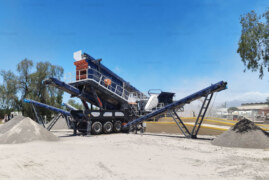
The portable impact crusher is designed to handle primary and secondary crushing tasks effectively. It uses high-speed rotors and impact plates to reduce the size of raw materials such as limestone, concrete, and asphalt debris. One of its greatest strengths lies in producing a consistent, cubical-shaped product, which is highly desirable for construction aggregates. Portable impact crushers are also known for their mobility, allowing operators to transport them between job sites with ease. When used at the beginning of an aggregate production chain, the portable impact crusher quickly reduces large feed material into smaller, manageable sizes, preparing it for further refinement.
Role of Mobile Cone Crusher in Aggregate Production
On the other hand, the mobile cone crusher specializes in secondary and tertiary crushing. Unlike impact crushers, cone crushers rely on compressive force to break down materials, which makes them especially effective for hard and abrasive stones such as granite, basalt, and river gravel. The mobile cone crusher is capable of producing precise and uniform aggregate sizes, with excellent control over the final gradation. This makes it ideal for producing aggregates for asphalt, concrete, and high-quality base materials. Its mobility adds another advantage, allowing operators to move the crusher to wherever it is needed within a production site or to an entirely new location.
Benefits of Combining Portable Impact Crusher and Mobile Cone Crusher
When the portable impact crusher and the mobile cone crusher are combined, aggregate producers gain the ability to balance productivity with precision. The portable impact crusher handles the initial reduction of large rocks, concrete blocks, or demolition debris, creating feed material that is easier for the cone crusher to process. By feeding this material into the mobile cone crusher, operators achieve refined aggregates with controlled particle sizes. The impact crusher ensures high reduction ratios and shape, while the cone crusher provides uniformity and strength. Together, they form a highly effective two-stage crushing system.
Workflow Integration
To combine the portable impact crusher and the mobile cone crusher efficiently, operators typically arrange them in a sequential circuit. Raw materials are first loaded into the portable impact crusher using loaders or excavators. After impact crushing, the output material is conveyed to the mobile cone crusher via a conveyor belt system. The cone crusher then further processes the material, ensuring precise gradation and consistent output. This workflow can be supported with vibrating screens that classify materials into different sizes. The integration of conveyors and screens ensures a smooth, continuous production flow and reduces downtime caused by manual handling.
Flexibility in Applications
Another advantage of combining the portable impact crusher and the mobile cone crusher lies in their adaptability to different projects. For road base production, the impact crusher provides high-quality fines and cubical aggregates, while the cone crusher ensures that harder stones are crushed into durable base layers. For concrete production, this combination guarantees a mix of well-graded materials that enhance workability and strength. In recycling projects, the impact crusher handles softer materials like concrete and asphalt, while the cone crusher tackles leftover aggregates or harder debris. This dual approach allows operators to use a single system for multiple applications, making it a cost-effective solution.
Cost Efficiency and Productivity
Combining the portable impact crusher with the mobile cone crusher also leads to higher cost efficiency. Since the impact crusher reduces the size of feed material, the cone crusher does not need to exert as much energy, which reduces wear and tear. This extends the lifespan of cone crusher liners and lowers maintenance expenses. Additionally, the combination allows for higher throughput, as each machine focuses on what it does best. The impact crusher provides rapid initial reduction, and the cone crusher ensures fine-tuning of the final product. Together, they minimize downtime, increase tonnage per hour, and deliver aggregates that meet strict industry specifications.
Maintenance Considerations
For the combination of portable impact crusher and mobile cone crusher to remain effective, proper maintenance is essential. Regular checks on wear parts such as blow bars in the impact crusher and liners in the cone crusher help prevent unexpected breakdowns. Lubrication of moving parts, inspection of conveyor belts, and monitoring of screening equipment further ensure smooth operations. With proper care, both machines can operate for long periods, maximizing the return on investment for aggregate producers.
Optimizing Output Quality
Another important consideration when combining the portable impact crusher and the mobile cone crusher is the quality of the final aggregates. By adjusting the settings on each machine, operators can control output size and shape. For example, reducing the gap in the cone crusher allows for finer aggregates, while adjusting the rotor speed of the impact crusher influences particle shape. By fine-tuning both machines, operators can meet specific project requirements, whether they are producing aggregates for asphalt, concrete, or sub-base layers.
Conclusion
In the modern construction and mining industry, producing high-quality aggregates requires more than just powerful machinery; it requires a strategic approach to crushing and screening. The combination of the portable impact crusher and the mobile cone crusher provides aggregate producers with the perfect balance of flexibility, precision, and efficiency. The impact crusher ensures rapid reduction and excellent product shape, while the cone crusher guarantees uniformity and strength. By integrating these two machines into a single production workflow, businesses can achieve consistent output, reduce operating costs, and adapt to a wide range of applications. Ultimately, this combination represents not just an efficient method of aggregate production, but a long-term investment in productivity and quality.