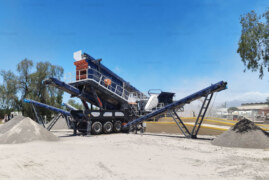
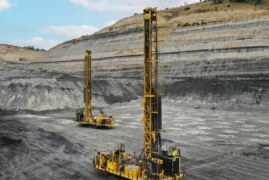
When we talk about the production of construction materials, one of the most important machines is the gravel crusher. Without crushing technology, modern infrastructure projects would be impossible to complete efficiently. Roads, bridges, residential buildings, and industrial facilities all rely on crushed stone and gravel as essential raw materials. Therefore, many people who are not in the industry are curious to know: how does a gravel crusher work? Understanding the working principle and process helps contractors, engineers, and investors make better decisions about equipment selection and project planning.

What Is a Gravel Crusher?
To start with, a gravel crusher is designed to take large pieces of rock, stone, or river gravel and reduce them into smaller, usable sizes suitable for construction. The core function is simple, but the way it achieves this is a combination of mechanical force, material science, and modern engineering design. Depending on the type of crusher, the working mechanism can be compression, impact, or shear, but the goal is always the same: break down big rocks into smaller aggregates. The phrase “how does a gravel crusher work” can be answered by looking step by step at the journey of a stone through the crushing system.
Feeding and Pre-Sorting
The first stage involves feeding and pre-sorting. Large rocks or raw gravel are transported, usually by a vibrating feeder or conveyor belt, into the hopper of the crusher. The feeder controls the flow of material, ensuring that rocks enter the machine at a steady rate. This avoids overloading, which could damage the internal parts. In many cases, a grizzly screen is placed before the crusher to separate out finer materials, preventing unnecessary wear. At this stage, the preparation sets the foundation for efficient crushing and directly affects productivity.
Primary Crushing Stage
Once the raw material enters the machine, the second stage is primary crushing. This is typically carried out by jaw crushers or gyratory crushers. A jaw-type gravel crusher works with two plates, one fixed and one moving. The moving plate compresses the rock against the fixed plate, applying tremendous pressure until the stone breaks. This answers in part the question “how does a gravel crusher work”—it relies on mechanical force and leverage to shatter the stone into smaller chunks. The result of this stage is medium-sized gravel that is easier to handle but still too large for final use in construction.
Secondary Crushing Stage
After primary crushing, the material usually moves to the secondary crusher, often a cone crusher or impact crusher. Here, the principle changes slightly. A cone crusher applies continuous compression inside a rotating cone chamber, squeezing rocks until they fracture into even smaller sizes. An impact crusher, on the other hand, throws the stones against metal plates or anvils, using high-speed impact to break them apart. This difference in working principle shows that when we ask “how does a gravel crusher work,” we must consider the specific type of crusher being used. Compression crushers are better for hard, abrasive rocks, while impact crushers are more efficient with softer or less abrasive materials.
Screening and Classification
The third stage is screening and size classification. Once the gravel has been crushed, it passes over vibrating screens that separate the material into different sizes. Fine particles fall through smaller openings, while larger ones are carried onward for further crushing. The cycle may repeat several times depending on the specification required. For example, road construction may need gravel of a certain size range, while concrete production may require a mix of fine and coarse aggregate. The role of the gravel crusher does not end at simply breaking rocks; it must also help deliver consistent sizes to meet construction standards.
Supporting Systems and Energy Transfer
Supporting systems are also crucial to understand the full answer to “how does a gravel crusher work.” Dust suppression systems, conveyors, and control systems all contribute to the crusher’s functionality. Since crushing generates dust and noise, modern plants integrate water sprays or enclosed conveyors to reduce pollution. Conveyors move material between different stages efficiently, and computerized controls adjust feeder speeds, monitor vibration, and ensure smooth operation.
Energy transfer is another essential factor. The motor provides the necessary power, converting electrical or diesel energy into mechanical force. Heavy-duty bearings and shafts transmit this energy to the crushing chamber. As rocks fracture, enormous forces are at play, and the design of the crusher ensures that the energy is concentrated on the material rather than wasted through vibration.
Safety Considerations
Safety is also a key aspect of how a gravel crusher works. Most machines include emergency stops, protective guards, and hydraulic relief systems. The hydraulic system, for instance, can automatically release pressure if an uncrushable object, like a piece of metal, enters the chamber. This prevents catastrophic failure. Operators must be trained to feed material properly, monitor performance, and shut down the machine safely. Understanding these safety systems is part of truly knowing how does a gravel crusher work in a real-world construction environment.
Applications in Construction
In the context of construction material production, the final crushed gravel is used in numerous ways. Fine gravel may be mixed with sand and cement to make concrete, while coarser material can be used for road base or drainage layers. Crushed aggregates are even applied in railway ballast, landscaping, and erosion control. Therefore, the function of a gravel crusher is not only about breaking rocks—it is about enabling entire industries to obtain the raw materials they need to build infrastructure.
Conclusion
In conclusion, answering the question how does a gravel crusher work requires looking at the whole process, from feeding and primary crushing to secondary crushing, screening, and final output. A gravel crusher operates by applying mechanical force—through compression, impact, or both—to reduce large rocks into usable construction aggregates. Supporting systems such as feeders, screens, conveyors, and dust suppression play an equally important role. By understanding the principles behind these machines, construction companies can operate them more efficiently, maintain them properly, and ensure a steady supply of high-quality materials. The next time you see a road being built or a building rising, you can appreciate that behind the scenes, a gravel crusher has played a vital role in making that construction possible.