In the aggregates and mining industry, selecting the proper impact crusher model is one of the most important steps to achieve the required product quality, efficiency, and profitability. The configuration of crushing equipment directly determines the final particle size distribution, shaping quality, and overall plant performance. Whether you are setting up a stationary crushing line or a mobile stone crusher plant, understanding how different impact crusher designs affect particle output will help ensure that your production goals are met with lower operating costs and higher reliability.
Understanding How an Impact Crusher Works
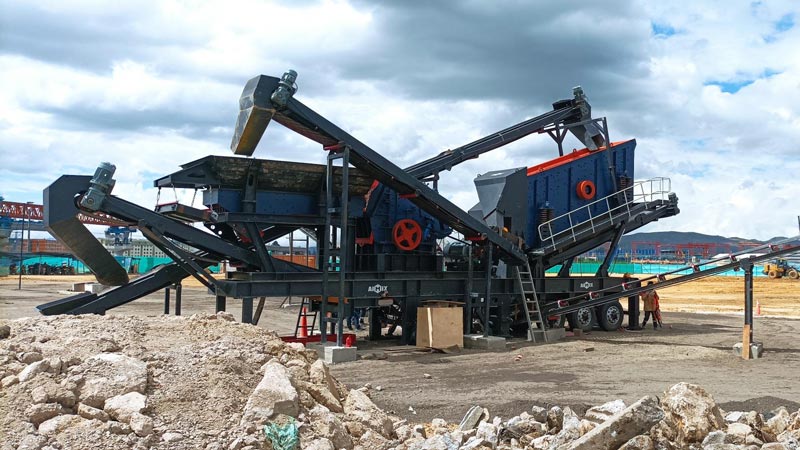
An impact crusher(trituradora de impacto) reduces material size by using high-speed impact force instead of compression. The rotor, equipped with blow bars, accelerates the feed material and throws it against impact plates (also known as aprons). The repeated collision between material and plates breaks the rock into smaller particles.
The final particle size and shape depend on several factors:
-
Rotor speed and diameter
-
Feed material hardness and size
-
Gap settings between the blow bars and impact plates
-
Number of crushing stages (primary, secondary, tertiary)
By adjusting these parameters, operators can control the output size and achieve either coarse aggregates or fine manufactured sand.
Types of Impact Crushers and Their Applications
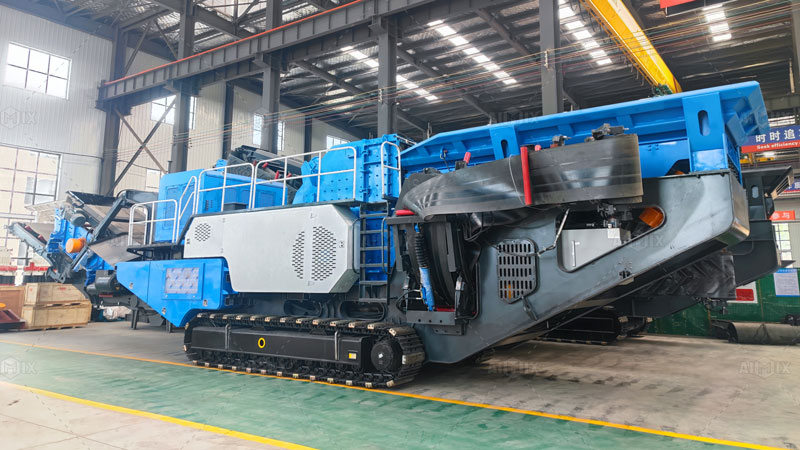
Different models of impact crushers serve different production needs. Choosing the right type ensures optimal particle size control and cost efficiency.
Primary Impact Crushers
Primary impact crushers are designed for processing large feed sizes, typically used at the first stage of crushing. They produce a more cubic output compared with jaw crushers and are ideal for limestone and other soft to medium-hard materials. Their large feed opening and adjustable apron settings allow flexible control of product size.
Secondary Impact Crushers
Secondary impact crushers are often used for medium to fine crushing. These machines focus on refining the particle shape and achieving consistent gradation. They are suitable for producing high-quality aggregates required for road base, concrete, or asphalt applications.
Vertical Shaft Impact Crushers (VSI)
VSI impact crushers are specifically designed for shaping and fine crushing. By accelerating material vertically and allowing it to collide with a rock bed or anvils, they produce uniform, cubical sand. This type of crusher is often integrated into a mobile stone crusher plant(planta de trituracion movil) for flexibility and on-site sand manufacturing.
Matching Crusher Configuration with Desired Particle Size
When determining which impact crusher to use, it’s essential to define the target particle size distribution and the end-use of the material.
For Coarse Aggregates
If your production requires larger aggregates (for example, 20–40 mm), a single-stage primary impact crusher may be sufficient. Adjusting the apron gap to a wider setting allows for less reduction per stage and maintains a higher production capacity.
For Fine Aggregates or Manufactured Sand
For smaller sizes (below 5 mm), a two-stage configuration works best. A secondary impact crusher or VSI is used after the primary crusher to refine the shape and achieve precise gradation. This approach is common in mobile stone crusher plants that produce both coarse and fine materials for different construction needs.
For Balanced Production
Many plants combine both horizontal and vertical shaft impact crushers to achieve a balance between productivity, shape, and size control. Using automation systems to monitor rotor speed and feed rate ensures consistency and minimizes over-crushing.
Key Parameters Affecting Particle Size
Even with the right model, operating parameters have a significant impact on the final product.
-
Rotor Speed: Higher speeds generally result in finer output and better shape, but also increase wear.
-
Feed Size: A consistent feed ensures uniform particle size; oversized material leads to irregular outputs and potential blockages.
-
Aperture Settings: Smaller gaps between blow bars and aprons yield finer products; periodic adjustments maintain quality.
-
Material Hardness: Softer materials produce finer particles with less energy, while harder rocks may require stronger blow bars and optimized liner design.
Monitoring and adjusting these variables allows operators to fine-tune the process in real time.
Integration with a Mobile Stone Crusher Plant
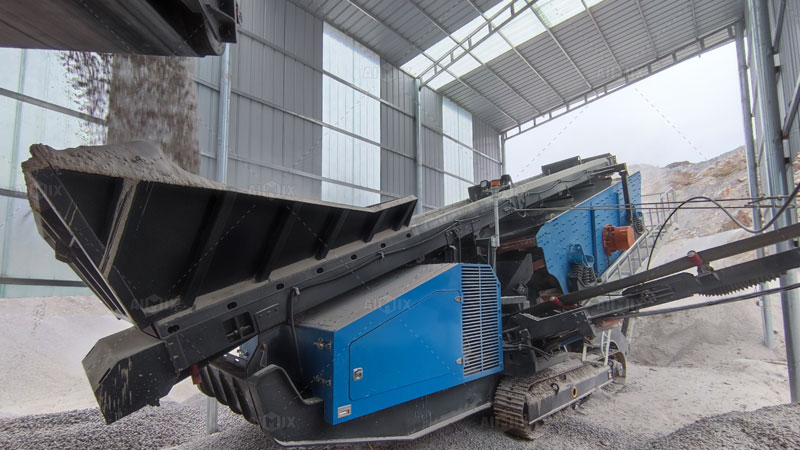
Modern construction projects increasingly rely on flexible, on-site crushing solutions. A mobile stone crusher plant equipped with an impact crusher offers several benefits:
-
Rapid deployment and relocation between job sites
-
Reduced material transportation costs
-
Real-time control of particle size through automatic adjustment systems
-
Compact layout for limited-space projects, such as urban demolition or small quarries
By integrating a mobile impact crusher into the workflow, producers can efficiently adapt to varying material types and product specifications.
Maintenance and Wear Considerations
Proper maintenance is vital for consistent product quality and safety. Regularly inspecting blow bars, impact plates, and liners helps prevent sudden failures and ensures stable particle size. Operators should also monitor rotor balance and bearing temperature. Implementing a predictive maintenance program can further extend component life and reduce downtime.
Conclusion
Selecting the right impact crusher model and configuration is not just about crushing efficiency—it’s about achieving the precise particle size and quality your project requires. Whether you operate a large stationary plant or a mobile stone crusher plant, understanding how rotor design, speed, and staging affect product gradation will lead to better results, lower costs, and longer equipment life. By aligning crusher selection with production goals and material characteristics, producers can ensure consistent output and high profitability in demanding aggregate and mining environments.