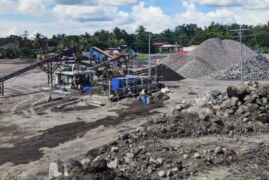
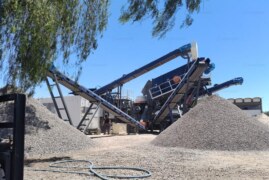
Mountain road construction presents unique challenges that distinguish it from standard urban or flatland projects. Among the most critical obstacles is the consistent supply of quality aggregates. Transporting materials from distant quarries to rugged and often inaccessible terrain can increase costs, cause delays, and impact project timelines. To address these challenges, modern crushing solutions such as stone crusher plant(planta trituradora) and mobile stone crusher plant systems are becoming indispensable in mountainous regions.
The growing infrastructure needs across Latin America, including highway expansions and rural connectivity projects, highlight the importance of reliable aggregate supply. Crushing technology offers a practical and cost-effective solution, enabling contractors to produce aggregates on-site and adapt to the logistical complexities of mountain road construction.

Challenges of Aggregate Supply in Mountainous Areas
Mountainous construction sites are often characterized by steep slopes, winding roads, and limited access routes. These conditions pose several problems for aggregate supply:
- High Transportation Costs: Delivering aggregates from distant quarries requires specialized vehicles and careful route planning. Fuel and maintenance expenses can significantly raise overall project costs.
- Limited Storage Space: The irregular terrain often restricts the establishment of large material storage areas, making it difficult to stockpile sufficient aggregates.
- Environmental Constraints: Mountainous areas are environmentally sensitive, with regulations that restrict large-scale quarrying and transportation activities to preserve ecosystems.
- Weather Impact: Heavy rains or snow can make access routes impassable, disrupting the delivery of critical construction materials.
These factors make traditional supply chains inefficient and unreliable for projects located in remote or elevated regions.
On-Site Crushing: A Practical Solution
One effective way to overcome supply challenges is through on-site aggregate production using a stone crusher plant. By establishing a crushing operation near the construction area, contractors can produce high-quality aggregates directly from locally available rock. This approach reduces transportation distances, lowers costs, and ensures a steady supply of material.
A stone crusher plant can handle a wide variety of materials, from hard granite to softer sedimentary rock, and produce different aggregate sizes suitable for road bases, asphalt, and concrete. By integrating screening and sorting capabilities, these plants allow for precise material control and consistent quality output.
Benefits of Stationary Crushing Plants
- Stable production capacity for large-scale projects
- Consistent aggregate quality with controlled sizing
- Ability to process high volumes of raw material continuously
- Reduced dependency on distant quarries
Mobile Crushing Plants for Flexibility and Accessibility
In particularly challenging or temporary mountain construction sites, a mobile stone crusher plant(planta de trituracion movil) offers additional advantages. Mobile systems can be transported to different sections of the road project as work progresses, minimizing the need to haul aggregates over difficult terrain.
Mobile crusher plants are designed with compact layouts and flexible configurations. They allow contractors to establish temporary crushing zones, move quickly, and maintain production continuity even in constrained spaces. Automation and modern control systems ensure consistent output and reduce labor requirements.
Key Advantages of Mobile Stone Crusher Plants
- Rapid deployment and relocation across the project site
- Lower transportation costs by producing aggregates close to usage points
- Reduced site preparation requirements due to compact design
- Versatility in processing different types of rock and aggregate sizes
Cost and Time Efficiency
On-site crushing using either stationary or mobile plants not only addresses logistical challenges but also significantly improves cost and time efficiency. By producing aggregates locally, contractors reduce reliance on long-distance transportation, cutting fuel and vehicle maintenance expenses.
Additionally, controlling the crushing process on-site allows for precise material grading, reducing waste and rework. For mountain road projects where tight deadlines are common, these efficiency gains translate directly into smoother project execution and budget adherence.
Environmental Considerations
Mountainous regions are often environmentally sensitive, and construction projects must comply with strict regulations. On-site crushing minimizes the environmental impact of aggregate transport by reducing emissions from trucks and heavy machinery. Modern crushing plants are also equipped with dust suppression systems and noise reduction technologies, ensuring that operations comply with local environmental standards.
Furthermore, utilizing rock available at the construction site reduces the need for quarrying in distant areas, conserving natural resources and limiting landscape disruption.

Best Practices for Mountain Road Projects
For successful implementation of crushing solutions in mountain road construction, contractors should consider the following practices:
- Conduct a thorough site assessment to determine available rock types and quantities.
- Choose a stone crusher plant or mobile stone crusher plant configuration that matches project scale and terrain.
- Implement dust and water management systems to comply with environmental regulations.
- Train operators to optimize crusher settings for consistent aggregate quality.
- Plan the relocation strategy for mobile plants in phases that align with road construction progress.
Conclusion
Mountain road construction in Latin America poses unique challenges that make conventional aggregate supply methods costly and inefficient. By adopting modern crushing solutions such as a stone crusher plant or a mobile stone crusher plant, contractors can overcome logistical hurdles, reduce costs, and ensure consistent aggregate quality.
These technologies not only improve operational efficiency but also support sustainable construction practices by minimizing transport emissions and utilizing locally available rock. As infrastructure development in mountainous regions continues to expand, on-site crushing solutions are becoming an essential tool for successful project execution.