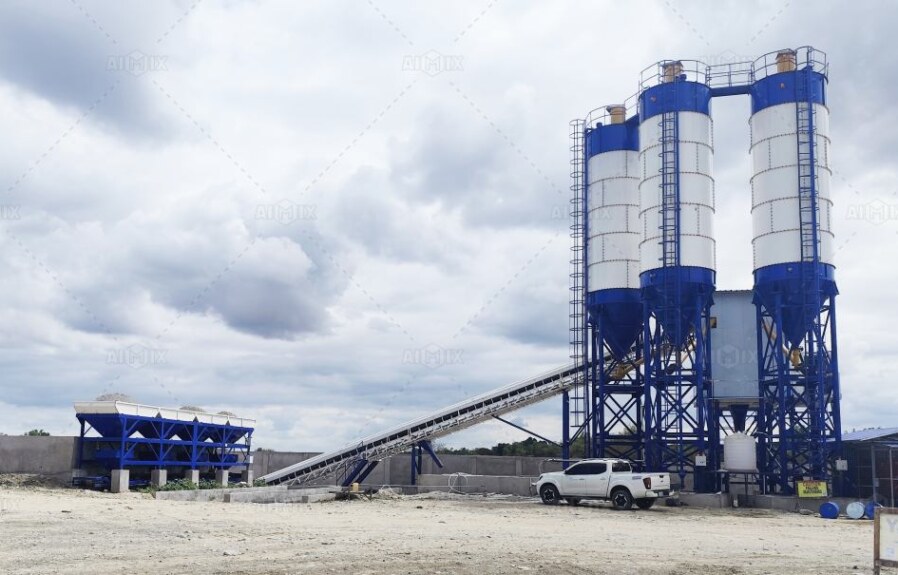
Setting up a ready mix concrete (RMC) plant is a major capital investment that involves multiple cost components — from land and machinery to logistics, workforce, and utilities. However, beyond these direct expenses, economic conditions play a powerful and often fluctuating role in determining the overall ready mix concrete plant setup cost.
In an increasingly interconnected global economy, shifts in inflation, interest rates, raw material prices, and exchange rates can directly affect both short-term budgeting and long-term project profitability. Understanding these macroeconomic influences is essential for construction companies, investors, and equipment suppliers seeking to make informed decisions and maintain financial resilience.
The Economic Context of Concrete Production
The ready mix concrete industry operates at the intersection of construction, manufacturing, and logistics — sectors highly sensitive to broader economic cycles. During periods of economic expansion, infrastructure spending, urbanization, and private investment typically rise, increasing the demand for concrete plants. Conversely, when economies slow down or inflation spikes, plant setup costs can escalate, reducing the feasibility of new projects.
Because RMC production depends on stable access to cement, aggregates, steel, fuel, and skilled labor, even minor economic disruptions can lead to significant cost variations. Therefore, tracking economic indicators is a crucial part of financial planning for any company setting up a concrete batching facility.
Inflation and Its Effect on Plant Setup Costs
Inflation is one of the most direct economic factors influencing plant setup costs. When general prices rise, the cost of nearly every component involved in establishing a ready mix plant follows suit.
-
Equipment and Machinery: Inflation increases the production and shipping costs of batching plant machinery, conveyors, silos, and mixers. Manufacturers may adjust prices upward to cover higher material and energy costs.
-
Construction Materials: Inflation drives up prices for steel, cement, and aggregates — essential for both plant infrastructure and concrete production itself.
-
Labor Costs: In many countries, inflation triggers wage increases to offset the higher cost of living, further raising setup and operational expenses.
High inflation environments therefore demand tighter cost control and supplier negotiation strategies to prevent project budgets from spiraling beyond forecasts.
Interest Rates and Financing Conditions
Setting up a ready mix plant usually requires significant upfront capital. Many investors and contractors depend on bank loans or credit facilities to finance equipment purchases and construction.
When central banks raise interest rates to curb inflation, borrowing becomes more expensive. Higher loan repayments increase the total cost of ownership (TCO) for the plant and can delay return on investment (ROI).
Conversely, during low-interest periods, financing becomes more accessible, encouraging plant expansion or modernization. Smart investors often take advantage of such cycles to secure low-cost loans or lease equipment to minimize financial burden.
Therefore, the timing of investment relative to the interest rate cycle can significantly influence total setup expenditure.
Exchange Rates and Import Dependency
For many developing markets, the cost of a ready mix concrete plant is influenced by imported equipment and spare parts. When local currencies weaken against major trading currencies like the US dollar or euro, the cost of imported machinery increases dramatically.
For example:
-
A depreciation of the local currency can add 10–20% to the cost of imported batching plants or electronic control systems.
-
Customs duties, shipping costs, and taxes compound the effect, creating additional financial pressure on project budgets.
To mitigate these risks, some companies opt for localized manufacturing partnerships or regional suppliers, reducing dependence on volatile exchange rates and international logistics.
Energy Prices and Transportation Costs
The concrete production process is energy-intensive. Electricity powers mixers and control systems, while diesel fuels transport vehicles and generators. Economic fluctuations that raise global oil and gas prices can sharply increase operational and setup costs.
For instance:
-
Rising fuel costs inflate the price of transporting raw materials to the plant site.
-
Higher energy tariffs increase the monthly operational cost, particularly in regions with unstable energy supply.
Manufacturers and operators increasingly adopt energy-efficient systems and automation technologies to offset such economic pressures. These systems reduce energy consumption, improving both profitability and sustainability.
Construction Demand and Government Spending
Economic conditions also shape the demand landscape for ready mix concrete. During economic booms or when governments announce large-scale infrastructure programs, demand for concrete surges — leading to competitive bidding for equipment, land, and skilled labor. This increased competition can drive up initial setup costs.
On the other hand, during recessions or budget cuts, demand may slow, resulting in lower material prices and surplus equipment availability. Companies that can strategically invest during downturns often benefit from lower setup costs and are better positioned when the market recovers.
Thus, understanding the construction investment cycle is essential for timing new plant setups effectively.
Workforce and Training Costs
Economic expansion often tightens labor markets, particularly for skilled operators and technicians. This leads to higher wages and training expenses for maintaining plant efficiency and safety compliance.
In contrast, during economic downturns, labor may be more affordable but require additional training as skilled workers migrate to other industries. Therefore, companies must balance economic trends with workforce development strategies to maintain long-term productivity.
Strategic Responses to Economic Challenges
To manage the economic volatility affecting setup costs, successful companies employ several key strategies:
-
Cost Diversification: Sourcing from multiple suppliers to minimize dependency on a single market or currency.
-
Flexible Financing Models: Utilizing equipment leasing, staged payments, or hybrid purchase options to reduce initial financial pressure.
-
Local Sourcing: Partnering with domestic equipment and component suppliers to mitigate exchange rate risks.
-
Automation Investment: Reducing reliance on manual labor to stabilize long-term costs despite inflation or wage fluctuations.
-
Scenario Planning: Using predictive models to assess how macroeconomic variables might influence project viability before commitment.
These strategies create resilience, allowing companies to adapt to changing market conditions while keeping setup costs manageable.
Conclusion
The ready mix concrete plant setup cost is not merely a function of equipment and construction expenses — it is deeply influenced by the broader economic environment. Inflation, interest rates, exchange rates, energy prices, and government spending all contribute to shaping the final investment figure.
Companies that recognize and plan for these economic dynamics can better anticipate cost fluctuations, negotiate favorable financing, and make data-driven investment decisions.
In today’s unpredictable global economy, understanding the economic forces behind plant setup costs isn’t just smart — it’s essential for long-term competitiveness and profitability in the concrete production industry.