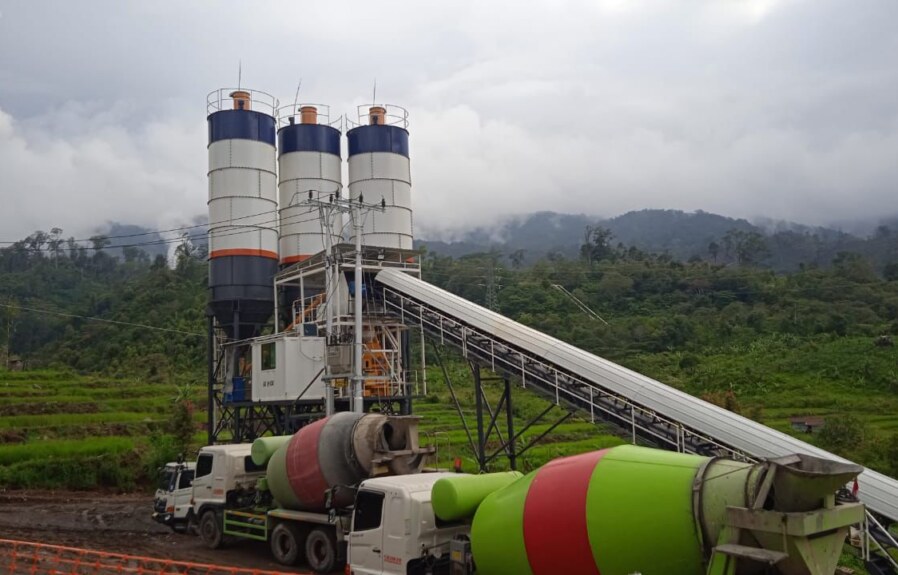
The mining industry in Australia is one of the most resource-intensive sectors, requiring massive amounts of energy, water, and materials to maintain productivity. Concrete, as a foundational material for mining infrastructure—such as processing plants, tailings storage, and road networks—plays a crucial role in site development. However, conventional concrete production can consume significant amounts of water and electricity, contributing to environmental pressures and operational costs. In this context, deploying a modern concrete batching plant Australia in mining operations provides a practical solution to optimize resources, enhance sustainability, and reduce costs.
1. The Importance of Water Efficiency in Mining Concrete Production
Concrete production relies heavily on water, not only as a key ingredient in the mix but also for cleaning and plant operations. Mining operations are often located in remote areas where water availability is limited or where environmental regulations impose strict limits on water usage. Excessive water consumption can increase operational costs and negatively impact local ecosystems.
Modern concrete batching plants Australia address this challenge through several water-saving technologies:
-
Water Recycling Systems: These systems capture washout water from mixer drums, hoppers, and conveyors, treat it, and reuse it in subsequent batches. This can reduce fresh water usage by up to 50%, a critical factor in arid mining regions.
-
Automated Mixing Controls: By precisely measuring water input per batch and continuously monitoring moisture content, batching plants prevent overuse, maintaining concrete quality while minimizing waste.
-
Rainwater Harvesting Integration: Some plants are designed to collect and store rainwater for production, further reducing reliance on local water sources.
By implementing these water-saving measures, mining operators can achieve sustainable operations without compromising concrete strength or durability.
2. Energy Optimization in Mining Concrete Production
Energy efficiency is another critical factor in mining operations. Traditional concrete plants consume large amounts of electricity through mixers, conveyors, and control systems. In remote mining sites, high energy consumption can significantly increase operating costs, especially when power is generated through diesel generators.
Advanced concrete batching plant Australia models incorporate energy-saving technologies to reduce electricity usage:
-
Variable Frequency Drives (VFDs): VFDs adjust motor speed based on load demand, reducing energy consumption while ensuring consistent material flow.
-
Efficient Mixing Motors: Modern mixers are designed to maximize mixing efficiency with minimal power input, optimizing energy use per cubic meter of concrete.
-
Optimized Material Handling: Smart conveyor systems reduce idle running time and power loss, ensuring energy is used only when necessary.
-
LED Lighting and Smart Control Systems: Energy-efficient plant lighting and automated systems further cut electricity consumption across the site.
These energy-saving features allow mining operations to maintain high productivity while lowering carbon emissions and operational expenses.
3. Sustainable Practices Through Smart Automation
The integration of automation and smart technologies in concrete batching plants further enhances resource efficiency. With automated batching, operators can precisely control material quantities, water input, and mixing times, reducing waste and ensuring consistent quality.
IoT-enabled sensors and real-time monitoring systems allow operators to track water and energy usage per batch. By analyzing these metrics, plant managers can identify inefficiencies, adjust processes, and implement targeted improvements. This data-driven approach aligns with broader sustainability goals in mining, such as reducing environmental impact and achieving operational certifications.
4. Mobile vs Stationary Plants in Mining Applications
Mining operations often require flexibility due to site relocations or phased development. Both mobile and stationary concrete batching plant Australia models offer sustainability benefits:
-
Mobile Plants: These can be relocated closer to the worksite, reducing transportation costs, fuel consumption, and associated emissions. They often include compact water recycling systems and energy-efficient mixers.
-
Stationary Plants: Ideal for long-term or high-volume operations, stationary concrete batch plants can integrate larger water and energy optimization systems, including industrial-scale water treatment and renewable energy sources.
Choosing the right plant depends on production requirements, site logistics, and sustainability priorities.
5. Economic and Environmental Benefits
Reducing water and energy use in mining concrete production has tangible economic and environmental benefits:
-
Lower Operating Costs: Less water and electricity directly translates into reduced expenses for mining companies.
-
Compliance with Regulations: Efficient plants help meet environmental regulations, avoiding fines and operational delays.
-
Enhanced Corporate Social Responsibility: Mining companies can demonstrate their commitment to sustainability, improving community relations and investor confidence.
-
Reduced Carbon Footprint: Energy-efficient operations contribute to lowering greenhouse gas emissions, supporting Australia’s climate targets.
Moreover, the ability to produce high-quality concrete with minimal resource consumption ensures that mining infrastructure remains durable and safe over the long term.
6. Conclusion
As the Australian mining sector continues to grow, the need for sustainable concrete production becomes increasingly critical. Deploying a modern concrete batching plant Australia equipped with water recycling systems, energy-efficient motors, smart automation, and flexible plant designs allows mining operators to significantly reduce resource use. These advancements not only lower costs but also enhance sustainability, regulatory compliance, and long-term operational efficiency.
By prioritizing water and energy efficiency, mining companies can achieve a balanced approach—meeting production demands while protecting natural resources. Modern batching plants are no longer just equipment; they are strategic tools that enable sustainable growth in one of the most resource-intensive industries in Australia.