Global Demand for Stationary Concrete Batching Plants in the Mining Sector
The mining industry is expanding in both scale and technological complexity, and this growth is driving stronger global demand for stationary concrete batching plants. Modern mining projects require extensive infrastructure, from processing facilities and haul roads to equipment foundations and storage structures. Reliable concrete supply has become a fundamental requirement for building and maintaining these operations efficiently.
Unlike temporary construction projects, mining sites often operate for decades. This long project lifecycle makes stationary batching plants a practical solution because they provide continuous, stable, and high-capacity concrete production. As mining companies focus on operational efficiency and infrastructure durability, stationary plants are increasingly viewed as essential industrial equipment rather than optional construction tools.
Infrastructure Expansion in Mining Projects
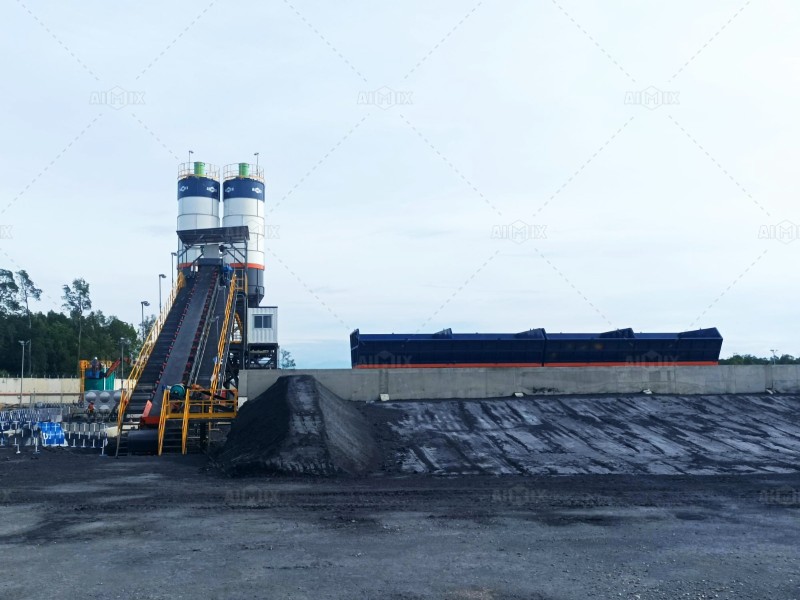
Mining infrastructure is becoming more complex as operations grow larger and more automated. Large open-pit mines, underground operations, and mineral processing facilities all require durable concrete structures capable of withstanding heavy equipment loads and harsh environmental conditions. Stationary batching plants allow contractors and mining companies to produce consistent concrete directly on or near the project site, improving construction efficiency.
Concrete is used throughout the mining lifecycle. During the development stage, batching plants support the construction of access roads, workshops, and processing facilities. As production begins, additional infrastructure such as conveyor foundations, retaining walls, and tailings containment systems requires continuous concrete supply. Stationary plants ensure that production capacity keeps pace with infrastructure expansion.
As mining companies invest in modernization and capacity upgrades, infrastructure demand continues to grow. Stationary concrete batching plants provide the reliability and production stability required for these long-term industrial construction projects.
Advantages of Stationary Batching Plants in Mining Environments
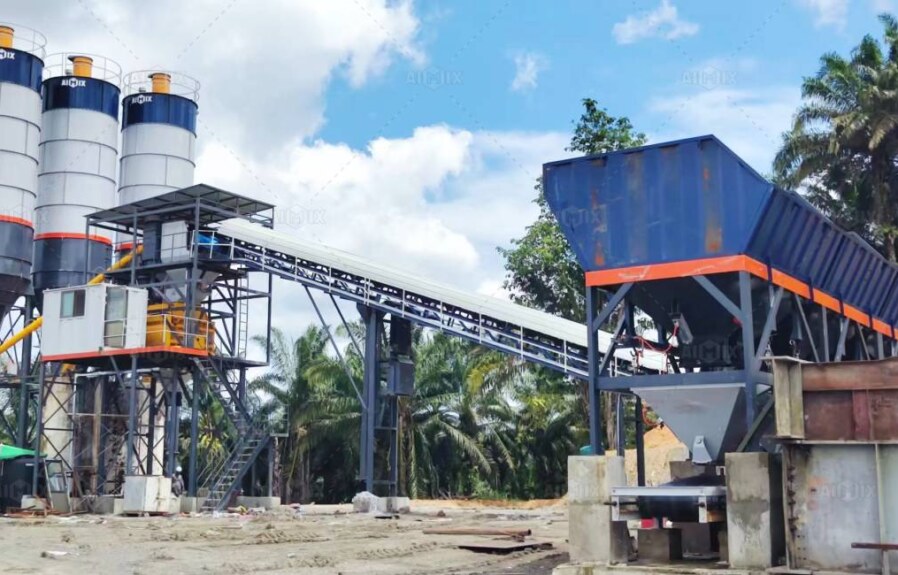
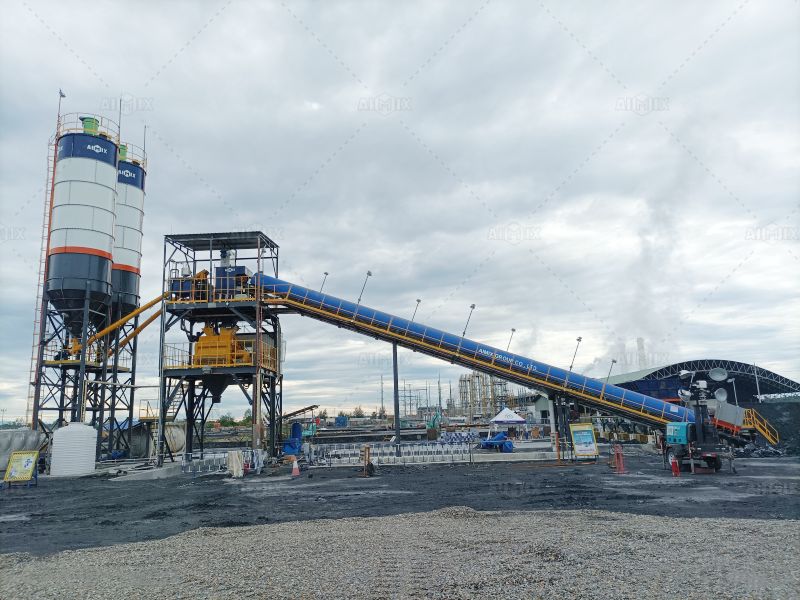
Stationary concrete batching plants are designed for high-volume, long-duration production. Their robust structure and modular configuration allow them to operate continuously in demanding environments such as mines, quarries, and heavy industrial zones. Compared with mobile plants, stationary systems offer greater production capacity and improved batching accuracy.
Automation is another important advantage. Modern stationary plants use digital control systems to manage material weighing, mixing time, and production scheduling. This level of precision helps ensure consistent concrete quality, which is essential for structural safety in mining infrastructure. Reliable batching also reduces material waste and improves cost control.
Because mining projects typically require large volumes of concrete over extended periods, stationary batching plants deliver better long-term efficiency. Their durability and scalability make them well suited for supporting industrial-scale construction.
Regional Growth in Mining and Construction
Global demand for stationary batching plants closely follows mining development and infrastructure investment trends. Regions rich in mineral resources are seeing increased construction activity related to extraction and processing facilities. As mining projects expand, the need for permanent concrete production systems grows accordingly.
In Asia, rapid industrialization and resource development continue to drive demand for high-capacity batching plants. Many mining operations are expanding alongside transportation and energy infrastructure, creating strong demand for reliable concrete supply systems.
Africa and Latin America are also experiencing growth in mining investment. As new mines are developed in remote areas, on-site concrete production becomes more important. Stationary batching plants allow contractors to produce concrete locally, reducing transportation costs and improving project efficiency.
Technology and Sustainability Influencing Demand
Technological improvements in batching and mixing plant design are another factor supporting global demand. Modern stationary plants are more energy-efficient, automated, and environmentally friendly than earlier generations. These innovations help mining companies meet productivity goals while reducing operational costs.
Sustainability considerations are also shaping equipment selection. Mining companies are increasingly adopting construction practices that reduce dust, waste, and energy consumption. Stationary batching plants with recycling systems and efficient mixing technology help support these environmental objectives while maintaining production performance.
Digital monitoring systems are becoming more common as well. Real-time production tracking allows operators to optimize material usage, schedule maintenance, and improve operational reliability. These features make stationary batching plants more attractive for large industrial projects, including mining infrastructure construction.
Long-Term Market Outlook
The long-term outlook for stationary concrete batching plants in the mining sector remains positive. As mineral demand continues to grow globally, mining companies will invest in new infrastructure and expand existing operations. This ongoing development will require reliable concrete production systems capable of supporting large-scale industrial construction.
Stationary batching plants will continue to play a central role in mining infrastructure projects because of their production capacity, durability, and automation capabilities. Their ability to deliver consistent concrete over long project lifecycles makes them a strategic investment for mining companies and contractors.
As mining operations become more industrialized and infrastructure-intensive, stationary concrete batching plants will remain a key component of project planning. Their role in supporting safe, efficient, and sustainable construction ensures continued demand across global mining markets.