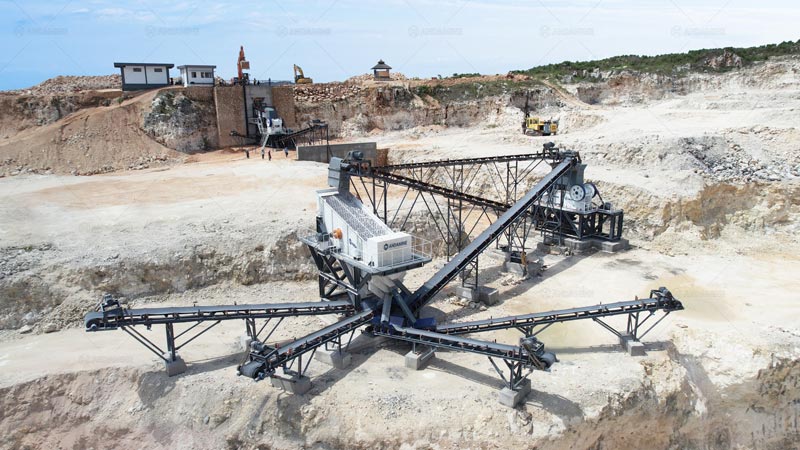
When entering the Latin American market for crushing and screening machinery, suppliers often find that local buyers follow a decision-making framework that differs markedly from North American or European patterns. Understanding this logic is not merely a matter of translation or adjusting technical specifications—it requires a deep appreciation of regional financing constraints, operational realities, and long-term service expectations. For any manufacturer hoping to supply a complete aggregate plant(planta de árido) in countries like Mexico, Colombia, or Peru, the purchasing process typically unfolds across several distinct phases, each with its own set of priorities and pain points. This article breaks down the core factors that shape these decisions, offering practical insights for sellers and useful benchmarks for buyers evaluating their next investment.
The Initial Trigger: Project Pipeline and Cash Flow Certainty
Latin American construction and mining cycles are heavily influenced by government infrastructure spending and commodity prices. Unlike operators in mature markets who may purchase equipment based on fleet replacement schedules, regional customers often wait until a project is fully financed before committing to major capital expenditure. This means that the decision to acquire a new aggregate plant is rarely speculative—it is tied directly to a confirmed contract or a visible multi-year pipeline of work.
Within this context, the first logical checkpoint is cash flow modelling. Buyers will typically run internal scenarios comparing rental options, used equipment purchases, and new machinery acquisitions. The preference for new equipment often wins when the project duration exceeds three years and when maintenance costs for older units in the local market are notoriously high. However, the final go-ahead depends on whether the supplier can offer flexible payment terms, such as dollar-linked instalments or partial financing through local development banks. Suppliers who fail to address this upfront rarely make it to the technical evaluation stage.
Technical Evaluation: Beyond Nameplate Capacity
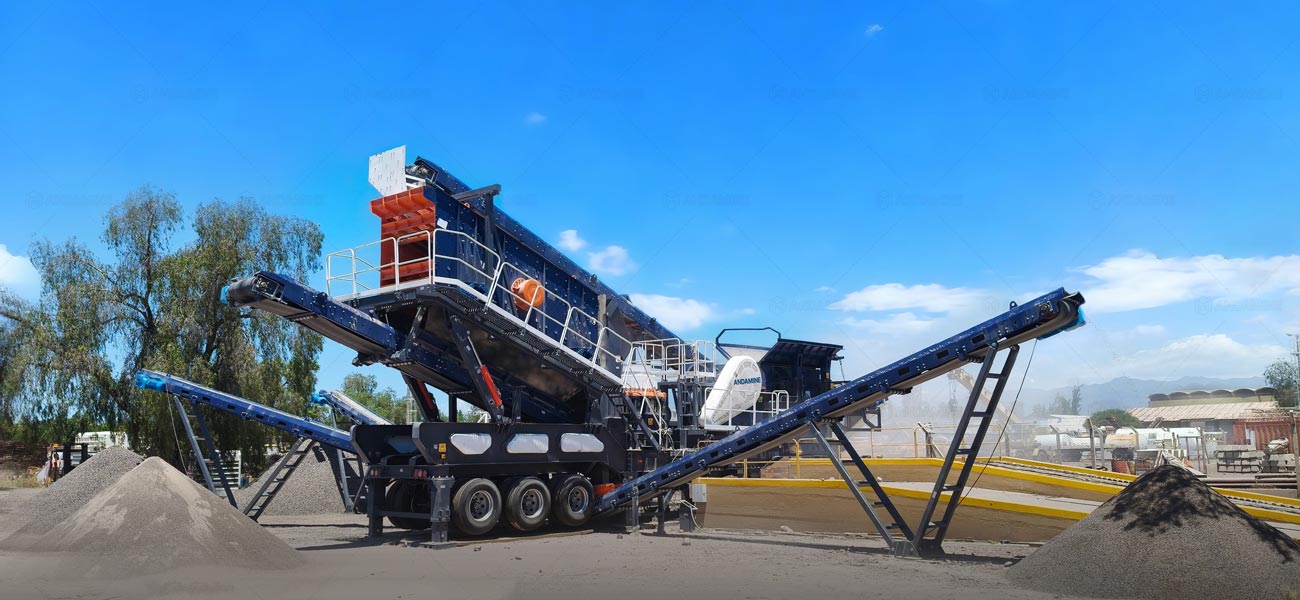
Once the budget is tentatively approved, engineering teams take over the assessment. Here, the decision-making logic shifts to a balanced scorecard of productivity, fuel efficiency, and ease of maintenance. Latin American sites often operate at altitude (especially in the Andes) or in humid tropical conditions, both of which affect diesel engine performance and conveyor belt life. Consequently, a stone crusher Chile(chancadora de piedra Chile) buyer, for instance, will demand real-world performance data from similar high-altitude operations, not just factory test sheets.
The technical committee typically weighs the following elements:
- Processing flexibility – Can the aggregate plant switch between producing base course, sub-base, and manufactured sand without lengthy changeover times? This versatility is highly prized because local material specifications vary widely between municipal, state, and federal projects.
- Power consumption per tonne – With electricity tariffs rising across the region, energy efficiency ranks as a top-three criterion. Buyers often request side-by-side consumption logs from existing installations.
- Wear part accessibility – Since replacement parts can take weeks to clear customs, designs that allow quick liner changes and jaw die rotations without special tools are favoured. This is where a stone crusher Chile operator will pay close attention to the crusher chamber geometry and the weight of individual wear components.
Crucially, the technical score is not treated in isolation. It is always normalised against the total cost of ownership over a five-year horizon, which brings us to the next major decision layer.
Commercial Logic: Total Cost, Local Support, and Resale Value
Latin American procurement teams are notoriously thorough in their commercial analysis. They will request line-item breakdowns for freight, insurance, installation supervision, and initial operator training. But the real differentiator lies in after-sales commitments. A supplier offering a competitively priced aggregate plant but with a sparse local service network will lose out to a marginally more expensive brand that has a dedicated warehouse and field engineers within 500 kilometres of the project site.
The commercial logic can be summarised in three recurring questions:
- How many hours of on-site commissioning support are included, and are these conducted by bilingual technicians who understand local electrical codes?
- What is the guaranteed response time for breakdown calls, and is there a penalty clause for delays?
- Does the supplier maintain an inventory of critical spares (toggle plates, conveyor rollers, screen meshes) in-country, or will every order require international shipping?
In parallel, buyers mentally calculate the projected resale value after four to six years. Because many Latin American firms upgrade their primary crusher ahead of major maintenance overhauls, a stone crusher Chile operator will favour brands with established second-hand markets in neighbouring countries. This residual-value consideration often tips the scale when two competing offers have similar upfront prices.
Operational Risk Management: Labour, Safety, and Environmental Permits
A less discussed but increasingly influential factor is the human element. Labour turnover in remote mining camps can exceed 30% annually, so equipment that is intuitive to operate and safe to maintain reduces training costs and insurance premiums. Decision-makers frequently request simulator-based training programmes or extended on-site mentoring as part of the purchase package.
Environmental compliance adds another layer. Many Latin American jurisdictions now require real-time dust suppression and noise monitoring at fixed aggregate plant installations. Buyers will verify that the proposed system includes water spray bars, enclosure panels, and silencers that meet local decree limits. Non-compliance can lead to daily fines that quickly erase any savings from a cheaper machine. Therefore, vendors who proactively provide environmental certification documents and reference lists from similarly regulated sites gain a substantial credibility advantage.
The Final Approval: Consensus Among Stakeholders
The purchasing decision is rarely made by a single individual. It typically involves a project manager, a chief engineer, a procurement officer, and sometimes a financial controller from the parent company. Each stakeholder has distinct concerns. The project manager wants on-time delivery; the engineer wants reliability; procurement wants transparent costing; and finance wants payment terms aligned with project milestones. Successful suppliers navigate this multi-person approval process by offering joint presentations that address each role’s specific metrics.
A common practice is to schedule a site visit to an existing reference installation—ideally one that processes similar feed material and has been running for at least 1,000 hours. During such visits, potential buyers observe real throughput rates, listen to the actual noise levels, and speak directly with the maintenance crew. For a stone crusher Chile prospect, seeing a machine operate in the Atacama or central valley provides far more assurance than any brochure.
Strategic Partnerships Over Transactions
In summary, the decision-making logic of Latin American customers is neither purely rational nor purely emotional. It is a hybrid process that weighs hard financial data against soft factors like trust, responsiveness, and long-term partnership potential. Suppliers who treat each enquiry as a one-off sale often struggle to close deals, whereas those who invest in local technical support, flexible financing structures, and transparent performance guarantees build lasting relationships.
From the buyer’s perspective, the most valuable partner is one that demonstrates a clear understanding of regional logistics, climatic challenges, and regulatory frameworks. Whether you are evaluating a new aggregate plant for a coastal highway project or comparing options for a stone crusher Chile installation in the highlands, the winning choice usually comes down to which supplier answers not just the technical questionnaire, but also the unspoken question: “Will you be here to help us when things get difficult?” Answer that convincingly, and the contract is within reach.