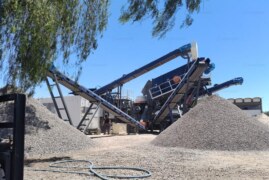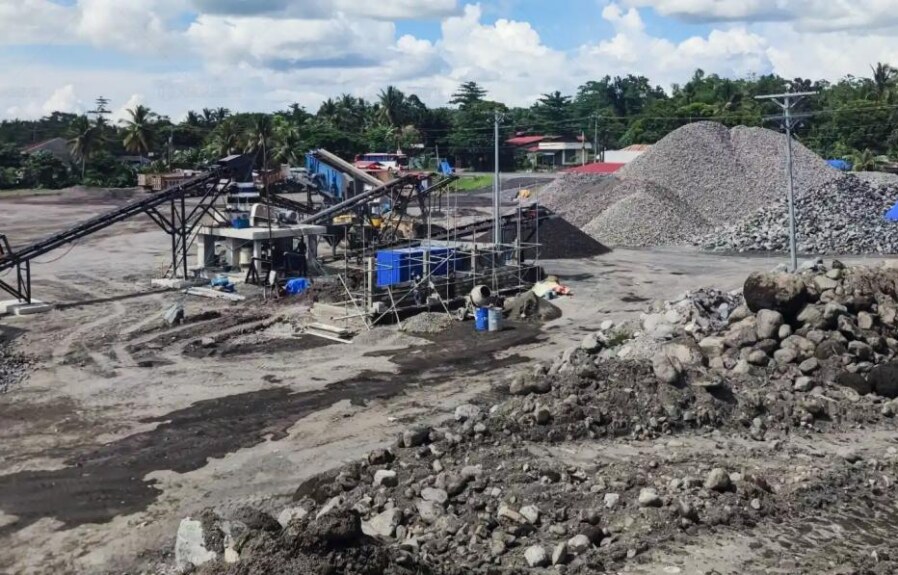
A mobile crusher for sale Philippines can be used to produce road base, subbase, and construction aggregates directly at or near project sites. This is particularly useful for road construction, quarrying, and infrastructure projects where transporting large quantities of raw rock over long distances can increase costs and complicate logistics. Instead of relying entirely on fixed aggregate sources, contractors can move the crushing equipment closer to the material source and adjust the production process according to the required aggregate sizes.
Why Mobile Crushing Is Suitable for Road Base Production
Road base production requires controlled particle sizes and a relatively consistent gradation rather than simply reducing rocks to smaller pieces. Depending on the road design, the final material may contain a combination of coarse and fine aggregates that must meet specified grading requirements. A mobile crushing plant can combine crushing and screening stages to process blasted rock, river stone, or other suitable materials into the required fractions.
Mobility is another advantage for road construction projects in the Philippines. A project may extend across mountainous areas, remote communities, or different sections of a highway, making it inefficient to transport raw materials back to a distant stationary plant. A mobile unit can be relocated as the project progresses, allowing aggregate production to follow the construction site and reducing unnecessary haulage.
Materials Processed into Road Base and Aggregates
The appropriate mobile crusher configuration depends heavily on the source material. Hard rocks such as basalt, andesite, and granite generally require robust primary crushing and may need secondary or tertiary crushing when a controlled final shape and grading are required. Limestone is generally easier to crush, while river stones can require attention to their rounded shape and relatively high moisture content.
For construction aggregates, the required end products are equally important. A project may need coarse aggregate for concrete, smaller fractions for asphalt, or graded material for road base and subbase. Screening after crushing separates the material into different sizes, while oversized particles can be returned for additional crushing when the process requires closed-circuit operation.
How to Choose a Mobile Crushing Plant
When considering how to choose a mobile crushing plant, start with the feed material, maximum feed size, required capacity, and final product specifications. For example, a hard-rock quarry supplying road construction may need a jaw crusher for primary reduction followed by an impact or cone crusher for further size reduction. A softer material with suitable feed characteristics may require a different configuration.
Production capacity should also correspond to the actual project demand rather than simply selecting the largest available machine. A plant producing significantly more aggregate than the project can consume may increase fuel, maintenance, and operating costs without providing a practical benefit. Conversely, insufficient capacity can create bottlenecks and increase the project’s overall production time.
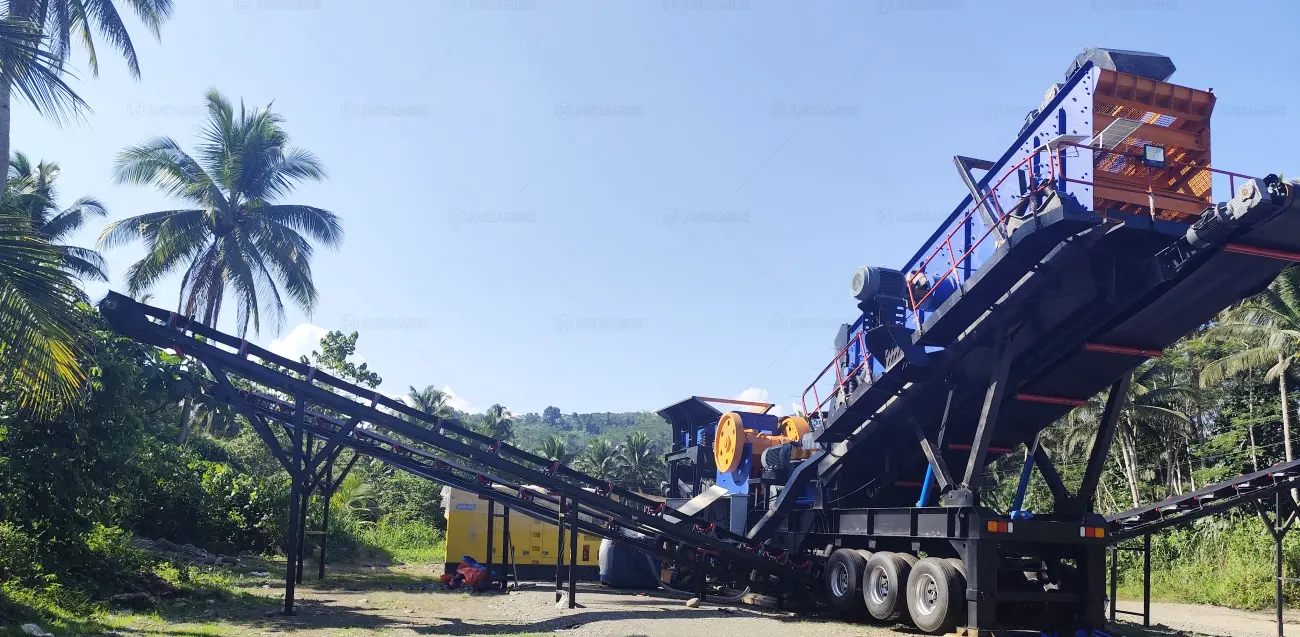
Mobile Crusher Configurations for Aggregate Production
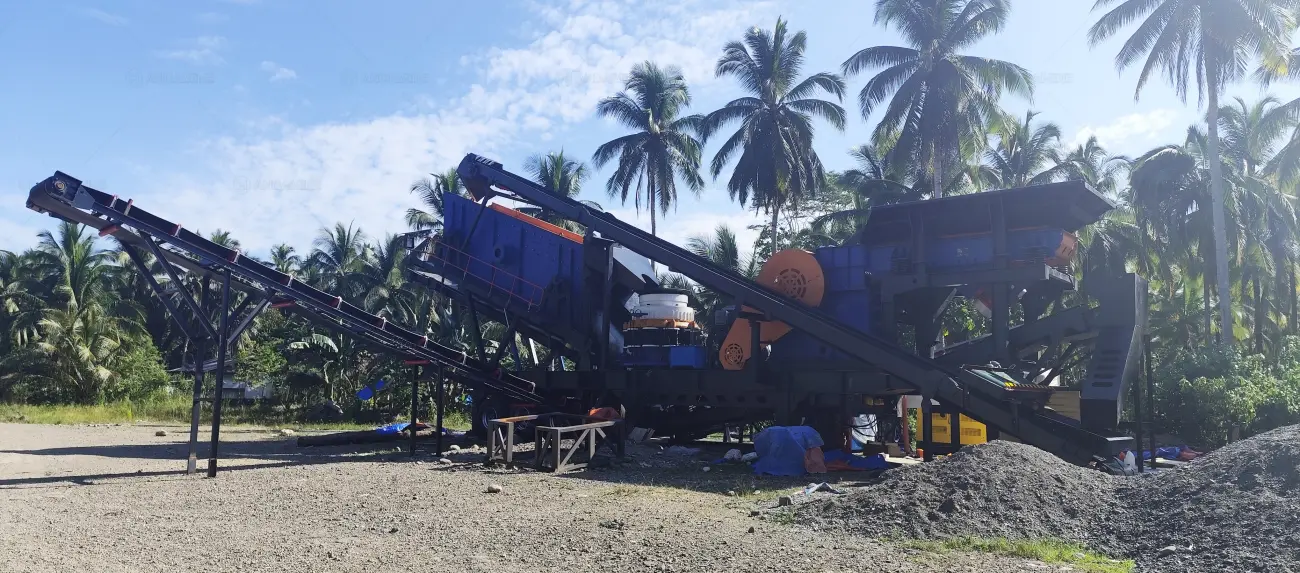
A mobile jaw crusher is commonly used as a primary crushing unit when large rocks need to be reduced to a manageable size. It is suitable for many hard and abrasive materials and can serve as the first stage in a multi-stage aggregate production process. For projects requiring more controlled particle shape or additional reduction, a mobile impact crusher can be incorporated as a secondary stage.
For applications requiring several finished aggregate sizes, a mobile screening plant can work together with the crusher. Some integrated configurations combine feeding, crushing, and screening in one mobile unit, while other projects use separate crushing and screening machines. The choice depends on the required product range, production volume, and site layout.
Reducing Aggregate Transportation Costs
One of the main reasons contractors consider a mobile crusher for sale Philippines is the opportunity to reduce the amount of raw material that must be transported. If suitable rock is available close to a road construction site, crushing it locally can eliminate some long-distance trips between the quarry and construction area. This can be particularly relevant where roads are narrow, mountainous, congested, or difficult to access.
However, mobility does not automatically mean lower costs in every project. The source material must be suitable, the site must have enough working space, and the project must have sufficient demand to justify mobilizing the equipment. Transportation costs should therefore be evaluated together with fuel consumption, equipment relocation, maintenance, labor, and site preparation.
Matching Output to Road Construction Requirements
Road base production should begin with the required specification rather than the crusher itself. Determine the target particle-size distribution, maximum allowable oversized material, required production rate, and whether the material needs to be washed or screened. These requirements determine how many crushing and screening stages are necessary.
For example, a project producing a single broad road-base gradation may use a simpler crushing and screening arrangement, while a project supplying several aggregate products may require more screening decks and additional crushing stages. Designing the process around the final specification helps avoid producing excessive fines or unwanted oversized material.
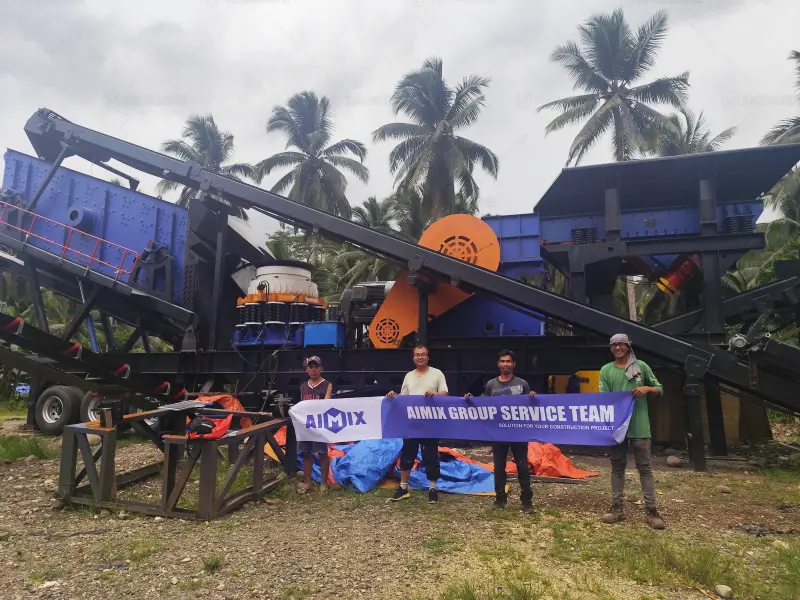
Site Conditions in Philippine Projects
Philippine crushing projects can involve very different site conditions. Mountainous quarry roads, limited working areas, heavy rainfall, soft ground, and long distances from ports or major cities can all affect equipment transportation and operation. A tracked mobile crusher may be more practical where the machine needs to move frequently across rough terrain, while a wheeled configuration can be advantageous when road transport and frequent relocation between prepared sites are important.
Before purchasing equipment, check access roads, turning areas, ground conditions, power and fuel availability, drainage, material stockpile locations, and the distance between the crushing area and construction zone. These factors influence not only the crusher configuration but also how efficiently the entire aggregate production process can operate.
A mobile crusher for sale Philippines can provide a practical way to produce road base and construction aggregates closer to where they are needed. The key is to match the crushing process with the material, capacity, final aggregate specifications, transportation conditions, and project duration. Rather than choosing equipment based only on advertised capacity or purchase price, contractors should work backward from the required finished products and site conditions. This approach makes how to choose a mobile crushing plant a process-design question as much as an equipment-selection question, helping ensure that the complete crushing and screening setup fits the actual road construction project.