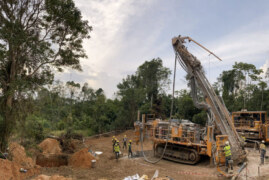
Effective grade control in underground mines is essential for maximizing ore recovery, minimizing dilution, and ensuring that the material sent to the mill meets quality requirements. Below is a structured approach to operating grade control in UG mines, incorporating best practices and key operational steps.
Establish a grade control team and framework
- Team composition: typically includes geologists, samplers, foremen, and sometimes drillers and machine operators.
- Framework: develop a consistent, repeatable, and customizable workflow for grade control, tailored to the specific mine and orebody.
Data collection and sampling
Face sampling
- Channel or groove sampling: systematic cutting of channels across exposed ore faces in development headings and stopes. This is the most accurate and widely used method.
- Pick sampling: picking small pieces across the face, used where channel sampling is impractical.
- Procedure: clean the face, mark sampling lines, and collect samples at regular intervals. High-grade streaks and waste bands are sampled separately.
Muck (Grab) sampling
- Muck sampling: collecting samples from broken ore piles (muck) at drawpoints, ore passes, or trucks to reconcile mined grade with predicted grade.
- Limitations: prone to sampling errors due to segregation and bias; should be used with caution and supported by other methods.
Drill-based sampling
- Short-hole drilling: used for grade control in stopes, providing additional data on ore boundaries and grade distribution.
Sample Preparation and Analysis
- Sample handling: label, store, and transport samples to the laboratory promptly to avoid contamination or loss.
- Analysis: conduct timely and accurate assays to determine ore grades and penalizing elements.
Data interpretation and modelling
- Block modelling: update grade control models with new sampling data to refine ore/waste boundaries and inform short-term mine planning.
- Integration: incorporate face, muck, and drill sample data into the resource model for continuous improvement.
Ore marking and excavation planning
- Marking boundaries: clearly mark ore and waste boundaries underground based on interpreted data to guide mining crews.
- Short-term planning: integrate grade control results into weekly and daily mining plans to optimize ore extraction and minimize dilution.
Reconciliation and reporting
- Production reconciliation: regularly compare predicted grades with actual mill feed grades to identify discrepancies and improve future grade control.
- Reporting: maintain daily, weekly, and monthly reports for ongoing performance monitoring and process optimization.
Continuous improvement
- Iterative review: conduct regular reviews and reconciliation workshops to align geological forecasts with processing outcomes and adapt protocols as needed.
- Training: ensure all staff involved in grade control are well-trained and understand the importance of accurate sampling and data handling.
Summary table: key grade control methods in UG mines
| Method | Description | Best Use Case | Limitations |
| Channel Sampling | Systematic cutting across ore faces | Development headings, stopes | Labor-intensive, time-consuming |
| Pick Sampling | Picking small pieces across the face | Irregular faces | Less accurate than channel sampling |
| Muck/Grab Sampling | Sampling from broken ore piles or trucks | Reconciliation, quick checks | Prone to bias and segregation |
| Drill-Based Sampling | Short-hole drilling for grade data | Stope definition | Requires drilling equipment |
By following these steps and best practices, underground mines can operate an effective grade control system that maximizes ore recovery, minimizes dilution, and ensures reliable delivery of quality ore to the processing plant.