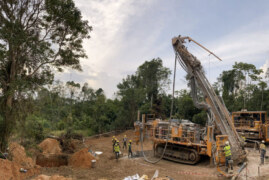
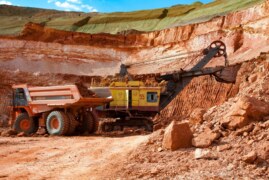
Mining extracts useful materials from the earth. Although mining provides many valuable minerals, it can also harm people and the environment. This can involve various methods of extraction, including surface and underground mining techniques, and the processing of the raw materials. The extracted materials, such as metals, coal, and gemstones, are then used in numerous industries.
Mining contributes significantly to GDP, employment, and international trade in many countries, particularly those rich in mineral resources. Its impacts can be summarized as follows:
GDP contribution: mining directly adds value through mineral extraction, processing, and sale. In resource-intensive economies, mining can account for around 8–15% of GDP, while in others it ranges from 2–3%. For example, mining’s share is about 10% of Australia’s GDP and up to 20% in some low- and middle-income countries. The sector also drives regional development by stimulating infrastructure growth and economic diversification (Contribution Of Mining To National GDP, 2025; Ericsson & Löf, 2018; GYA, 2023).
Employment: mining generates both direct employment (in mines, refineries, logistics) and indirect jobs (equipment suppliers, service providers). In countries like South Africa, mining jobs provide around 4.5% of total formal employment, while in Botswana mining accounts for 4% of employment. These jobs are typically well-paid compared to national averages (apofeed, 2025; Contribution Of Mining To National GDP, 2025).
International trade: mining is often a major source of export revenues. For example, mining accounts for approximately 45% of South Africa’s merchandise exports and 70% of Zambia’s export earnings. Minerals such as gold, diamonds, copper, and rare earth elements are strategically important internationally, with mining products representing a large portion of exports and foreign exchange earnings in many countries (apofeed, 2025; Contribution Of Mining To National GDP, 2025; Ericsson & Löf, 2018).
Overall, mining not only contributes direct economic value through GDP and exports but also supports broader economic growth through job creation, infrastructure development, fiscal revenues from taxes and royalties, and industrial diversification. Its importance is especially pronounced in resource-rich nations across Africa, Oceania, and Latin America.
Reference
apofeed. (2025, April 3). Mining Advances Growth Prospects for African Economies. African Business. https://african.business/2025/04/apo-newsfeed/mining-advances-growth-prospects-for-african-economies
Contribution Of Mining To National GDP: 2025 Growth Insights. (2025, July 13). https://farmonaut.com/mining/contribution-of-mining-to-national-gdp-2025-growth-insights
Ericsson, M., & Löf, O. (2018). Mining’s Contribution to Low- and Middle-income Economies. In T. Addison & A. Roe (Eds.), Extractive Industries: The Management of Resources as a Driver of Sustainable Development (p. 0). Oxford University Press. https://doi.org/10.1093/oso/9780198817369.003.0003
GYA. (2023, September 24). Exploring Mining Projects and Their Impact on Global Development. Hetherington Group | Tenement Management. https://hetherington.net.au/exploring-mining-projects-and-their-impact-on-global-development/