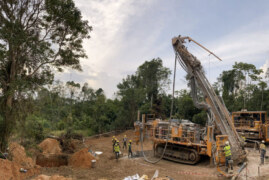
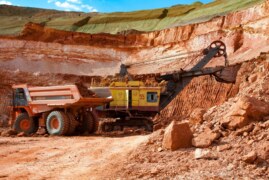
Social impact in mining refers to the wide-ranging consequences, both positive and negative, that mining activities have on the social fabric of affected communities and individuals.
This includes effects on employment, local economies, social services, cultural practices, health, and human rights, but also encompasses changes in population dynamics and community well-being.
Mining companies and regulators must understand and manage these impacts through Social Impact Assessments (SIAs) and transparent community engagement to foster positive outcomes and mitigate harm.
Mining companies can measure and report social impact effectively by adopting structured frameworks and best practices that ensure consistent, transparent, and comprehensive assessment and communication of their social contributions and consequences.
Measuring social impact
Social Impact Assessment (SIA)
This is a systematic process used to identify, predict, and evaluate social effects of mining projects on communities. It looks at the entire social system being affected, considering changes in livelihoods, health, human rights, demographics, and local economies. SIA includes ongoing monitoring and engagement with stakeholders to assess social outcomes throughout the project lifecycle [1], [2].
Use of consistent indicators
Leading industry frameworks recommend measuring social impact with a set of core, commonly accepted indicators to allow comparability and clarity. For example, the International Council on Mining and Metals (ICMM) uses indicators including workforce composition, pay equality, wage levels relative to living wages, local procurement, education and skills support, and community capacity building [3].
Integration with global standards
Aligning social impact measurement with global sustainability frameworks such as the United Nations Sustainable Development Goals (SDGs), Global Reporting Initiative (GRI), and Social Life Cycle Assessment (SLCA) enhances credibility and comprehensiveness, covering positive contributions (employment, income generation) and negative impacts (land use change, health risks) [4].
Stakeholder engagement and community monitoring
Effective measurement involves continuous engagement with affected communities and stakeholders to capture qualitative and quantitative data about social changes and perceptions, ensuring local voices are heard and accounted for.
Reporting social impact
Transparent social and economic reporting
Reporting should include clear data against recognized indicators, disaggregated where applicable (e.g., by gender or ethnicity), to show mining’s real contribution to social development. Mining companies often do this in sustainability or integrated reports that are accessible to investors, governments, and communities [3].
Beyond ‘Do No Harm’
Modern social reporting emphasizes creating positive social value, not just mitigating negative impacts. This means documenting initiatives and outcomes that improve local infrastructure, education, skills, employment, and health directly linked to mining activity.
Legal and best practice compliance
Reporting frameworks should comply with national regulations and international best practices on environmental and social impact assessments (ESIA), reinforcing accountability and thoroughness.
Use of technology and data tools
Increasingly, companies use sophisticated data collection, monitoring tools, and social value measurement frameworks to track and report social changes accurately and timely.
To sum up, mining companies measure and report social impact effectively by implementing a broad social impact assessment framework, using consistent and comparable indicators aligned with global standards, engaging stakeholders continuously, and transparently communicating both positive and negative social outcomes in compliance with best practices and legal requirements. This approach supports building and maintaining their social licence to operate and demonstrates their contributions to sustainable development.
Reference
[1] M. M. Susan A. Joyce, “MMSD Working Paper No. 46 Social Impact Assessment in the Mining Industry: Current Situation and Future Directions.” Accessed: Sept. 18, 2025. [Online]. Available: https://www.iied.org/g01023
[2] S. (IAAC/AEIC) Beyer, “Good Practice in Social Impact Assessment,” 2019.
[3] “Social and Economic Reporting: Framework and Guidance.” Accessed: Sept. 18, 2025. [Online]. Available: https://www.icmm.com/en-gb/our-principles/validation/social-and-economic-reporting
[4] L. Mancini and S. Sala, “Social impact assessment in the mining sector: Review and comparison of indicators frameworks,” Resources Policy, vol. 57, pp. 98–111, Aug. 2018, doi: 10.1016/j.resourpol.2018.02.002.