- Introduction
Hydraulic fracturing (HF) has become an important tool in deep underground mining, particularly in hard-rock metal mines where high in situ stresses, brittle rock masses, and large excavations create significant geotechnical risks such as rock bursts, violent spalling, and unstable caving. Building on early concepts of fluid-driven fracture propagation (Hubbert & Willis, 1957), modern mining practice uses HF for several engineering objectives, including rock mass preconditioning, stress redistribution, permeability enhancement, gas or water drainage, and in situ stress characterisation. In deep block caving and other mass-mining methods, HF is primarily applied to weaken stiff, high-stress rock volumes ahead of excavations, promote controlled damage accumulation, and mitigate stress concentrations responsible for seismicity and rock bursting (Huayong, et al., 2024; Zang et al., 2016). Across this spectrum of applications, inflatable packers are the critical enabling technology: they provide reliable hydraulic isolation of selected borehole intervals and maintain pressure integrity at depth, allowing fractures to be initiated, controlled, and monitored in a repeatable and safe manner. This paper summarises the principal applications of HF in underground mining, with block caving as a key subset, and places particular emphasis on the functional role of inflatable packers.
- Hydraulic Fracturing in Deep Underground Mining and Block Caving In underground mining, HF is applied for five closely related purposes:
(i) rock mass preconditioning and destressing, (ii) rock burst and seismic hazard mitigation, (iii) assistance to cave initiation and propagation, (iv) permeability enhancement for drainage or gas management, and (v) in situ stress measurement and characterisation. In deep hard-rock metal mines, HF is commonly implemented around development headings, production drifts, and undercut levels to reduce rock mass stiffness, promote yielding, and redistribute stresses away from critical excavations (Huayong, et al., 2024). For these destressing and rock burst-mitigation applications, inflatable packers are essential to transmit high injection pressures into intact rock rather than losing pressure along the borehole or into excavation-damaged zones.
In block caving, HF forms a key component of preconditioning strategies designed to assist cave initiation and stable cave propagation. In competent rock masses with low fracture density, delayed cave initiation and uneven cave growth are often accompanied by elevated seismic hazard. HF-induced fractures weaken the rock mass above and around the undercut, increase fracture connectivity, and promote more distributed failure, which reduces the likelihood of large, high-energy seismic events (Huayong, et al., 2024; Zang et al., 2016). The use of inflatable double-packer systems allows fractures to be generated at predefined depths and spacings, enabling systematic preconditioning rather than uncontrolled breakage. HF is also applied in coal and mixed-lithology mines to enhance permeability for gas drainage or water control, and to weaken stiff roof strata (Connell et al., 2010). In these permeability-enhancement and drainage applications, inflatable packers provide interval isolation so that injection is focused within the target seam or layer and uncontrolled fluid migration into roadways or adjacent workings is avoided.
In addition, HF is used for in situ stress estimation, where fracture initiation or reopening pressures in isolated borehole intervals are interpreted to estimate principal stress magnitudes. In such a way that a section of a borehole is sealed off using two inflatable rubber packers sufficiently pressurised so that they adhere to the borehole wall. Hydraulic fluid (typically water) is pumped under a constant flow rate into the section, and the pressure builds up gradually on the borehole wall until a fracture is initiated in the rock. The pressure at which the rock breaks is called the fracture pressure or breakdown pressure. The injection procedure is repeated several times. The breakdown pressure (Pb) is taken as the peak pressure attained in the first pressure cycle (Shirazi et al., 2014). Accurate stress estimation again depends on packers maintaining isolation throughout pressurisation and shut-in periods.
- Role of Inflatable Packers in Mining Hydraulic Fracturing 3.1 Operational Principles and Borehole Isolation
Inflatable packers are expandable sealing elements deployed in boreholes in a deflated state and subsequently pressurised to expand radially and conform to the borehole wall (Fig.1). In mining HF, double-packer configurations are most common: two inflatable elements isolate a short central section of the borehole, forming a controlled test or treatment interval. Once inflated, the packers hydraulically isolate this interval from the rest of the borehole and from nearby excavation-damaged parts.
Across all mining HF applications—destressing, preconditioning, permeability enhancement, gas or water drainage, and stress measurement—three functional requirements are fundamental:
- Hydraulic isolation of the target interval, preventing fluid bypass and ensuring that injected energy contributes to fracture initiation and propagation.
- Pressure integrity and control, allowing stable application of the high pressures required in deep, high-stress environments; and
- Repeatability, enabling multi-stage treatments or sequential testing along a borehole with consistent performance. Modern inflatable packer systems incorporate reinforced elastomer elements, high-pressure inflation circuits, and integrated pressure and flow monitoring. These features allow operators to stimulate discrete intervals systematically, which is essential for controlled rock mass modification and for reliable interpretation of pressure and seismic response records.
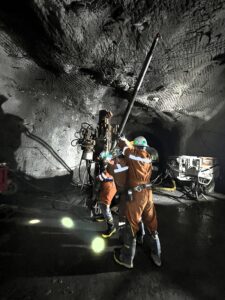
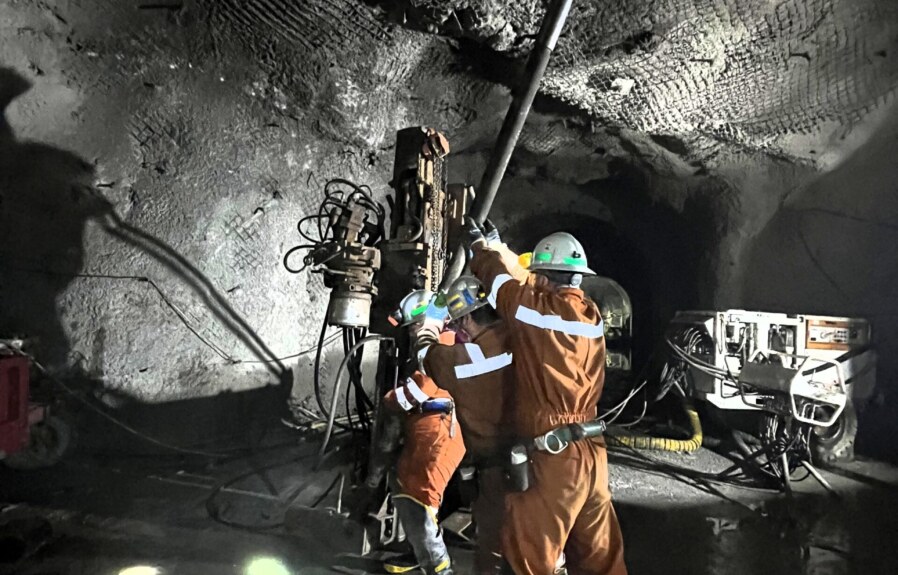
Figure 1. Deployment of IPI Packers’ DuraFRAC® Straddle Packers in an underground mine
3.2 Performance Requirements for Deep Mining and Block Caving
The performance demands on inflatable packers in deep underground mines are severe due to high confining stresses, rough and irregular borehole walls, and limited access for maintenance. Packers must conform to uneven borehole geometries to avoid leakage, as inadequate sealing can lead to inaccurate fracture pressure estimation and poor control of fracture geometry. High-pressure capacity and safety margins are critical, especially in block-caving preconditioning and rockburst-mitigation programs where injection pressures may approach or exceed the minimum principal stress. Operational reliability is equally important: packer systems must tolerate repeated inflations, retrievals, and redeployments without compromising sealing performance. For preconditioning and destressing, reliable isolation ensures that observed micro seismic responses can be confidently attributed to the executed HF stages (Huayong, et al., 2024; Zang et al., 2016), while permeability enhancement and stress measurement ensure that both flow and pressure data reflect the intended interval.
- Conclusions
Hydraulic fracturing is a versatile technique in underground mining, with applications ranging from rock burst mitigation and stress redistribution to block-caving preconditioning, permeability enhancement, gas or water drainage, and in situ stress measurement. In deep hard-rock mines, and particularly in block caving operations, HF plays a central role in managing seismic risk and controlling large-scale rock mass behavior.
Across all these applications, inflatable packers are fundamental to safe and effective HF implementation. By providing reliable borehole isolation, pressure integrity, and operational repeatability, packers enable controlled fracture initiation, improve the quality of pressure and seismic data, and reduce operational risk. As mining progresses to greater depths and increasingly complex stress environments, continued improvements in inflatable packer design and deployment methods will further strengthen the role of hydraulic fracturing as a core geotechnical tool in underground mining.
References
Arno Zang, Ove Stephansson, Leif Stenberg, Katrin Plenkers, Sebastian Specht, Claus Milkereit , Eva Schill, Grzegorz Kwiatek, Georg Dresen, Günter Zimmermann, Torsten Dahm, Michael Weber. (2016). Hydraulic fracture monitoring in hard rock at 410 m depth with an advanced fluid-injection protocol and extensive sensor array. Geophysical Journal International, Volume 208, Issue 2, Pages 790–813. https://doi.org/10.1093/gji/ggw430
Connell, L. D., Pan, Z., Lu, M., Heryanto, D., & Camilleri, M. (2010b). Coal permeability and its behaviour with gas desorption, pressure and stress. SPE Asia Pacific Oil and Gas Conference and Exhibition.
HuayongLv, Zhanbo Cheng, FeiXie, Junfeng Pan, FeiLiu.(2024) Study on hydraulic fracturing prevention and control of rock burst in roof of deep extra-thick coal seam roadway group. Sci Rep 14, 29537. https://doi.org/10.1038/s41598-024-77363-0
Hubbert, M. K., & Willis, D. G. (1957). Mechanics of hydraulic fracturing. Transactions of the AIME, 210, 153–168. https://waterwelljournal.com/the-use-of-inflatable-packers/
Hamed Shirazi, Seyed Rahman Torabi, Farhang Sereshki, Hossein Mirzaei, Nader Ziari., (2014). Analysis of the effect of interval length on the fracture pressure in the hydraulic fracturing technique. 5th Iranian Rock Mechanics Conference (IRMC5).