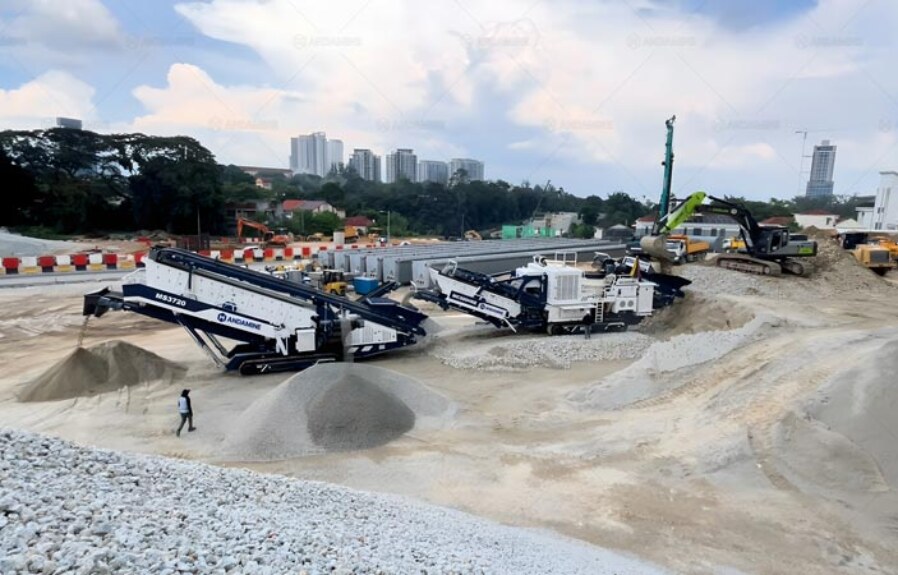
Achieving long-term profitability in today’s quarrying and mining sector requires moving far beyond basic material throughput numbers. Heavy equipment operation relies heavily on minute mechanical adjustments that dictate how effectively raw rock transforms into high-value spec products. Every fine adjustment to a machine setting fundamentally alters product gradation, overall energy consumption, and downstream equipment wear. Plant operators who take the time to evaluate mechanical settings alongside feed dynamics can unlock massive operational gains. Optimizing your operations requires looking past raw power and taking control of the specific parameters that govern processing success.
Redefining Operational Precision in the Modern Aggregate Industry
For decades, aggregate production prioritized sheer volume over fine-tuned precision. Modern quality standards, stringent shape requirements for concrete applications, and rising fuel and electricity expenses have permanently altered that approach. Process efficiency now centers on smart energy utilization and predictable particle reduction. Delivering top-tier finished products consistently requires every unit in the process to work as a unified system.
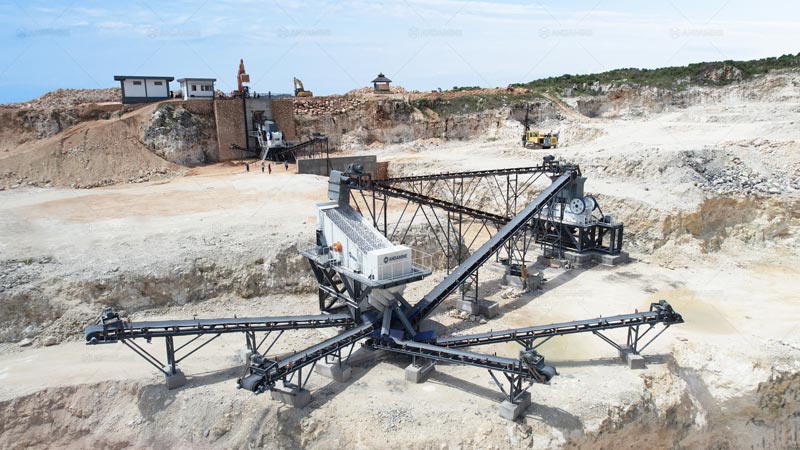
Understanding how mechanical force transitions into effective rock breakage ensures better control over the final gradation curve. When feed characteristics change due to varying quarry faces, machine calibration must adjust accordingly. Balancing reduction ratios across primary, secondary, and tertiary stages keeps material moving smoothly through the entire aggregate plant(planta de árido) without creating unnecessary recirculating loads or structural strain on machinery.
Fundamental Crusher Settings Controlling Reduction and Shape
Crushing machinery forms the core of processing circuits, yet these units often run on static default parameters that fail to match real-world feed fluctuations.
Managing Closed Side Setting and Eccentric Throw Dynamics
The closed side setting defines the maximum gap between crushing surfaces during the cycle, serving as the primary control point for product size. However, altering this parameter without accounting for eccentric throw can lead to significant inefficiency.
- A larger eccentric throw increases volumetric capacity and generates higher interparticle crushing, which helps produce well-shaped, cubical products.
- A smaller eccentric throw yields a narrower product range, though it may reduce overall throughput when handling coarser feed.
- Proper synchronization between these two parameters prevents unexpected chamber packing and drastically cuts down on unneeded wear liner replacement cycles.
Balancing Rotor Speeds and Chamber Profiles
For impactors and cone crushers, rotor and countershaft speeds control the transfer of kinetic energy into the rock mass. Higher operating speeds encourage better particle cubicity through aggressive impact forces, but they also accelerate liner wear and generate excessive fines. Choosing a chamber profile tailored to your specific feed size prevents material from slipping through uncrushed or over-crushing inside the cavity, keeping performance consistent across every aggregate plant layout.
Optimizing Portable Stone Crusher Units for On-Site Versatility
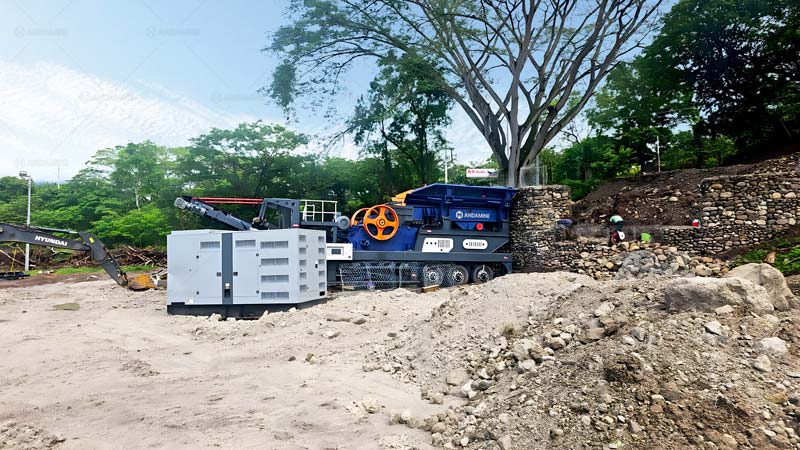
Contractors and flexible mining operations increasingly depend on mobile setups to process material right at the source. Operating a portable stone crusher(trituradora de piedra portátil) introduces unique challenges because feed properties can change dramatically between different work sites or quarry benches.
Rapid Field Calibration and Feed Control
Achieving consistent results with a portable stone crusher relies heavily on adaptable feeding protocols and quick mechanical tuning:
- Adjusting feeder speed to maintain a constant choke-fed condition in the crushing chamber.
- Re-setting clearance gaps frequently to compensate for unpredictable wear caused by varying stone hardness.
- Fine-tuning discharge conveyor speeds to prevent material buildup during high-capacity runs.
Integrating a portable stone crusher alongside stationary lines gives producers the agility needed to respond swiftly to sudden shifts in project specifications.
Mechanical Screening Parameters That Solve Processing Bottlenecks
Even a perfectly calibrated crushing circuit will fail to reach full capacity if the sizing screen decks cannot handle the material flow effectively. Screening remains one of the most overlooked bottlenecks in processing operations.
Fine-Tuning Stroke, Frequency, and G-Force Dynamics
Screen motion dictates how effectively fine particles travel down through the material bed to reach the mesh apertures.
- Low stroke amplitudes or insufficient operating frequencies prevent proper stratification, causing near-size particles to blind the screen openings.
- Overly aggressive g-forces cause material to bounce excessively, missing opportunities to drop through the deck.
- Proper stroke calibration creates a fluid bed effect that carries coarse fractions across the top deck while sifting fines rapidly down to lower decks.
Deck Angle Optimization and Material Retention Time
Screen inclination directly impacts how long rock fragments stay in contact with the screening media. A steeper deck slope speeds up material movement across the deck, increasing capacity but sacrificing separation accuracy. Conversely, a shallower deck angle provides longer retention time for precise sizing, though it risks overloading the screen box. Finding the precise balance prevents recirculating uncrushed rock unnecessarily back to your portable stone crusher or stationary cone unit.
Data-Driven Calibration for Maximizing Production Yields
Sustained profitability in aggregate production comes from continuous monitoring and adaptive adjustments rather than static set-and-forget routines. Tracking motor load amperage, auditing screen carryover, and checking finished product cubicity provide real-time feedback on machine health and efficiency. By managing mechanical parameters as interconnected variables across every aggregate plant, producers can eliminate costly bottlenecks, lower wear costs, and deliver superior stone products day after day.