Improving material throughput in a portable rock crushing plant does not simply mean increasing the feed rate. If crushers receive more material than they can process, the result may be chamber blockages, unstable output, excessive wear, and unplanned downtime. Higher throughput depends on coordinating feeding, crushing, screening, and material circulation so that every stage operates within its effective capacity.
For aggregate producers and contractors, the goal is to increase the volume of saleable material produced per operating hour without sacrificing equipment reliability or finished product quality.
1. Maintain a Consistent Feed Rate
Uneven feeding is one of the main reasons a portable rock crushing plant fails to achieve stable throughput. When too little material enters the crusher, available capacity is wasted. When too much material arrives suddenly, the crushing chamber may become overloaded.
A controlled feeding system helps maintain a more consistent material flow. The vibrating feeder should distribute rock evenly across the crusher inlet rather than concentrating it on one side. This improves chamber utilization and reduces uneven wear on liners and other crushing components.
Operators should also avoid feeding large batches intermittently. Instead, excavators or loaders should maintain a steady supply that matches the crusher’s processing capacity. A well-adjusted feeder can absorb some variation in incoming material and reduce sudden load fluctuations.
2. Match Feed Size with Crusher Capacity
Oversized feed can reduce throughput even when the crusher has sufficient rated capacity. Large rocks may occupy excessive chamber space, require more crushing cycles, or cause blockages. On the other hand, excessive fines entering the crusher can occupy space that could otherwise be used for effective rock reduction.
Before production begins, evaluate the maximum feed size and overall feed-size distribution. The crusher’s feed opening must accommodate the largest expected rocks, while the material should also fall within the recommended operating range.
For example, a jaw crusher used for primary crushing should receive material that fits its feed opening and crushing requirements. If the quarry produces oversized rock, secondary breaking or pre-screening may be necessary before feeding.
Removing suitable fines ahead of the primary crusher can also reduce unnecessary crushing loads. This allows the machine to focus on material that actually requires size reduction.
3. Balance Capacity Between Crushing Stages
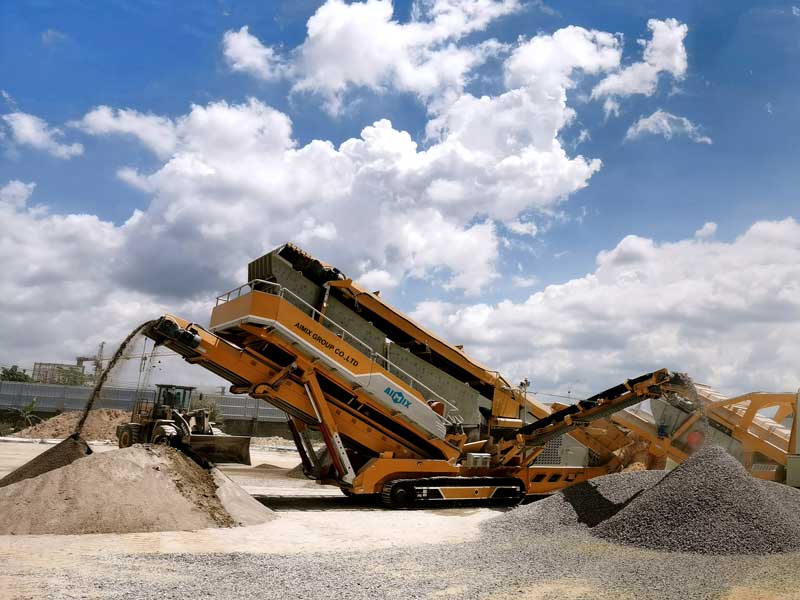
In a multi-stage portable rock crushing plant, overall throughput is limited by the stage with the lowest effective processing capacity. Increasing the output of the primary crusher will not improve total production if the secondary crusher or screening system cannot handle the additional material.
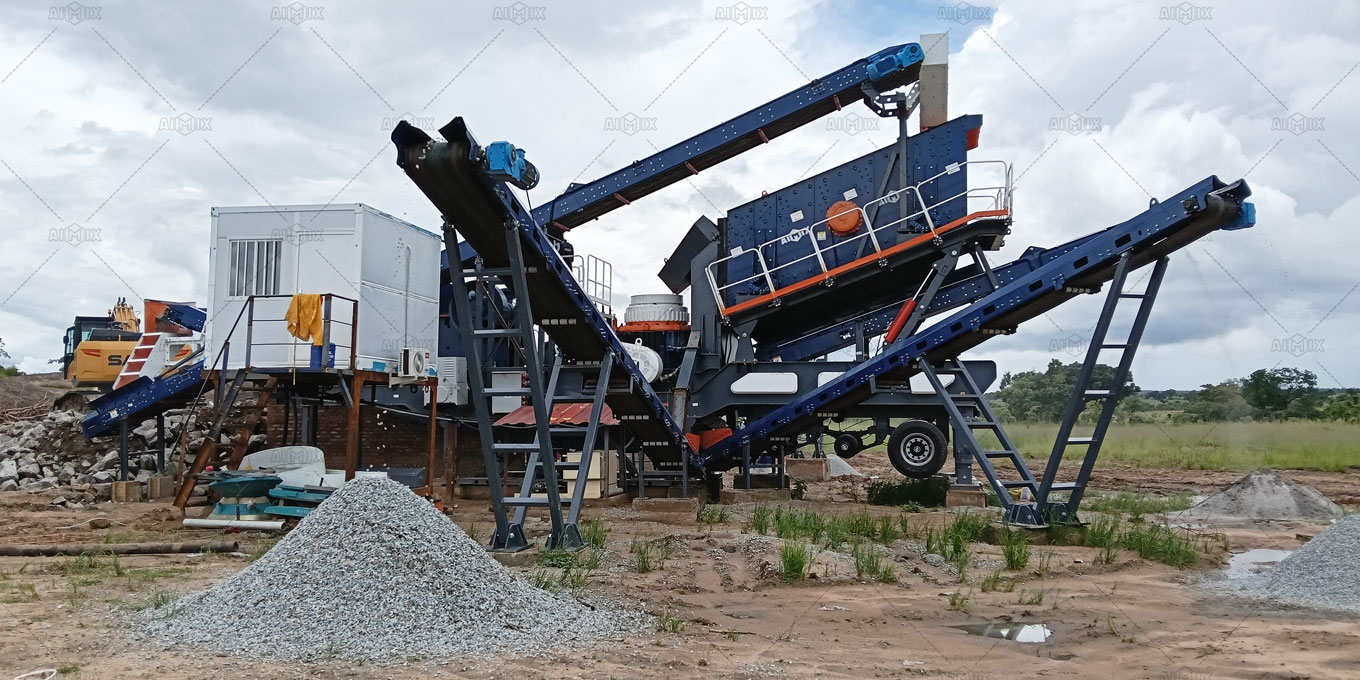
A properly configured aggregate crusher plant should therefore balance the capacity of its feeder, primary crusher, secondary crusher, screens, and conveyors.
For example, if the primary jaw crusher produces material faster than the secondary cone crusher can process it, an accumulation of intermediate material may develop. This can interrupt the production flow and eventually force the primary crusher to reduce its feed rate.
To prevent this problem:
- Compare the actual operating capacities of each processing stage.
- Check whether conveyors can transfer material at the required rate.
- Avoid configuring downstream equipment with insufficient capacity.
- Monitor intermediate stockpiles and identify recurring material accumulation.
- Adjust crusher settings and feed rates according to the production target.
The objective is to achieve a balanced process rather than maximize the output of one individual machine.
4. Optimize Screening and Material Recirculation
Screening efficiency has a direct influence on the throughput of a portable rock crushing plant, particularly in closed-circuit configurations.
If the screen cannot separate finished-size aggregates efficiently, excessive material may return to the crusher for additional processing. This increases the circulating load and reduces the amount of new feed that the crusher can accept.
Several factors influence screening performance, including screen area, mesh size, material moisture, feed distribution, and vibration conditions.
Operators should check whether material is spread evenly across the screen deck. Overloading one section can reduce separation efficiency and cause finished particles to remain in the recirculation stream.
For wet or sticky materials, screen blinding may further reduce effective screening area. Depending on the material conditions, adjustments to screen media, feed rate, or screening equipment may be required.
The aim is to return only oversize particles for further crushing while allowing qualified aggregates to leave the circuit as finished products.
5. Control Material Flow and Conveyor Performance
Conveyors connect the different processing stages, so their performance affects the entire plant. A crusher may have sufficient capacity, but restricted conveyor flow can still limit production.
Belt width, belt speed, loading conditions, transfer points, and material characteristics should be considered when evaluating conveyor capacity.
Material spillage, belt slippage, blockages at transfer points, and poor discharge alignment can interrupt production. These problems may also create safety risks and increase cleanup requirements.
Regular inspections should focus on belt tension, rollers, drive components, transfer chutes, and material buildup. Conveyor loading should remain within the designed operating range, with sufficient capacity to handle the output of upstream equipment.
6. Monitor Crusher Load and Adjust Operations
Improving throughput requires operators to understand how equipment responds to changing feed conditions. Motor current, hydraulic pressure, vibration, temperature, and other available operating indicators can help identify abnormal loading.
If the crusher repeatedly operates near its overload limit, reducing the feed rate temporarily may prevent blockages and mechanical damage. Once the cause is identified, operators can make targeted adjustments to feeding, material preparation, or crusher settings.
It is also important to distinguish between temporary fluctuations and persistent capacity problems. A sudden increase in motor load may indicate an oversized rock, while consistently high loading could suggest poor feed distribution, unsuitable settings, or insufficient downstream capacity.
Monitoring actual production rates alongside equipment indicators provides a more reliable basis for operational decisions than simply increasing feeder speed.
7. Reduce Unplanned Downtime Through Preventive Maintenance
Wear and maintenance conditions directly affect the amount of material a plant can process over a full shift. Worn jaw plates, cone liners, impact blow bars, damaged screen media, and poorly maintained bearings can reduce crushing and screening efficiency.
Preventive maintenance helps identify these issues before they cause major production interruptions. Operators should inspect wear components, lubrication systems, hydraulic connections, belts, screens, and electrical systems according to the equipment manufacturer’s recommendations.
Wear parts should also be replaced at appropriate intervals. Operating with excessively worn components may increase energy consumption, affect product gradation, and reduce crushing efficiency.
For portable plants working at remote sites, planning spare parts and maintenance access in advance can further reduce downtime.
Conclusion
Improving material throughput in a portable rock crushing plant requires coordinated control of feeding, crushing, screening, conveying, and maintenance. A higher feed rate alone cannot guarantee higher production. If one stage becomes overloaded, the entire process may lose efficiency.
By maintaining consistent feeding, controlling feed size, balancing equipment capacities, optimizing screening, and monitoring operating conditions, producers can increase effective output while protecting equipment reliability. The most productive portable crushing operation is not necessarily the one that processes the most material at a single stage, but the one that maintains a stable flow of correctly sized aggregates throughout the complete production process.