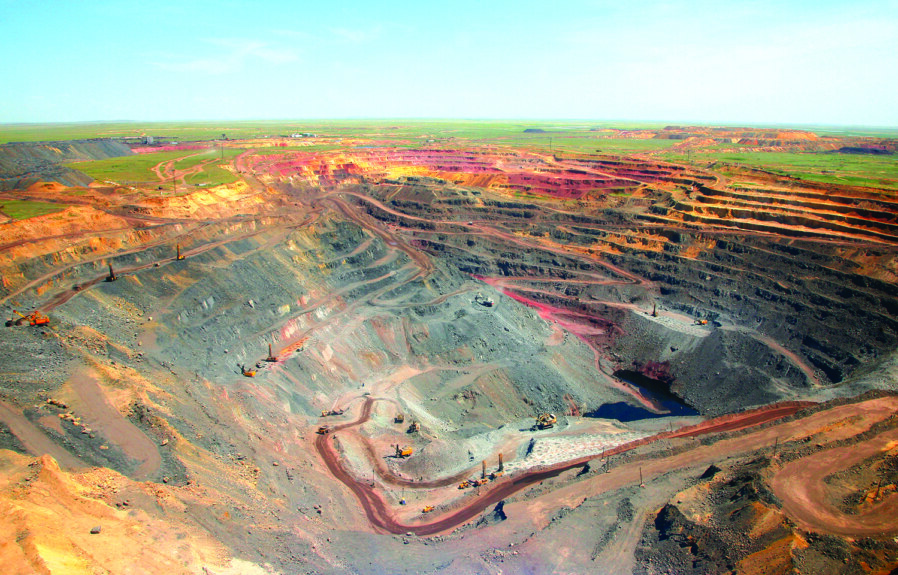
The global economic and social costs of landslides are increasing, with factors such as the intensification of climate change, urban development in marginal terrain areas, and aging infrastructure systems contributing to this trend. Existing approaches to slope monitoring, based on traditional concepts such as periodic manual surveys, single parameter measurements, and reactive responses to slope instability, have been found to be inadequate to address the increasing incidence and complexity of slope instability. However, a revolution is underway. The use of Internet of Things sensor technologies, artificial intelligence, multi-source remote sensing, and digital twin technologies is creating the possibility of a paradigm shift towards smart slope monitoring, transforming landslide risk from a threat to an opportunity. The article examines the scientific developments reported between 2020 and 2026 that are transforming the management of slope stability.
The limitations of conventional monitoring
Typically, traditional slope monitoring systems were disjointed, operating separately and independently of one another. Current scholarship has emphasized that “various monitoring systems such as environmental quantities, strong ground shaking, deformation monitoring, etc., operate independently, and the monitoring method based on a single point cannot cover all regions of a slope and exhibits a low degree of visual management” (Liu et al., 2024). Current systems are limited, for example, rainfall monitors detect rainfall but not its impact, crack monitors detect crack movement but not what causes them, and historical surveys provide historical records but not timely warnings.
In addition, current monitoring systems are fundamentally reactive. Infrastructure agencies typically only respond to slope failures after they happen, imposing significant repair costs, penalty costs for service disruptions, and, on occasion, legal liability. This risk-based approach assumes slope instability is simply a natural geological threat that must be endured, rather than a physical phenomenon that can actually be intelligently managed.
The technological foundation of smart monitoring
Modern smart slope monitoring systems leverage three revolutionary technologies: ubiquitous sensing, predictive analytics, and immersive visualization.
Modern advancements have enabled the integration of various sensing techniques, which have mitigated the disadvantage of point-source measurements. Various studies have successfully demonstrated the integration of various sensors, including those that utilize synthetic aperture radar (SAR) for regional deformation screening, unmanned aerial vehicles (UAV) for topographic mapping, three-dimensional scanners for change detection, and in-situ IoT sensors for hydrological monitoring (Ambika et al., 2025; Liu et al., 2024).
The deployment of low-cost, dual-frequency Global Navigation Satellite System (GNSS) stations is a significant move toward the democratization of precision slope measurement. A six-year research project in northern Taiwan observed that “continuous and automatic recording results, obtained at a high sample rate, reveal distinct movement patterns of the sliding blocks in relation to rainfall duration and amount” (Tseng et al., 2026). The average velocity of 1.13-1.96 x 10⁻⁶ mm/s falls under the “very slow” category of the global landslide velocity scale (Tseng et al., 2026).
Critical precursor conditions are usually located in the subsurface, where they are not easily observable or measurable. IoT sensors that monitor volumetric water content and matric suction offer real-time insights into hydrological failure mechanisms. A longitudinal study conducted from 2020 to 2024 in the Tijuana coastal region found that these parameters are “the usual precursor pore pressure dynamics for slope failure” (Ambika et al., 2025b). The integration of geophysical sensors, including electrical resistivity tomography and electromagnetic induction, offers insights into various subsurface features, including anomalies, leachate, and slip surfaces, which are not easily characterizable through traditional boreholes (Ciampi et al., 2026).
The opportunity paradigm: converting risk into value
Smart slope monitoring generates value through a variety of interconnected means, all of which work together to transform risk into opportunity.
Typically, when slope movement is detected, remedial work or replacement of the infrastructure is necessary. The continuous monitoring of slope movement reveals that a significant number of slopes exhibit very slow and continuous movement, but they are far from collapse. The slope at the Dalun Mountain site, monitored using GNSS, moves at a rate of millimetres per year but continues to support a university campus and the residential communities nearby (Tseng et al., 2026).
Transportation and mining organisations manage hundreds or thousands of slope assets. The constrained capital budgets require prioritization of risk management activities. Machine learning algorithms for vulnerability zonation enable the prioritization of risk management activities. A Random Forest algorithm was used for the Tijuana City landslides vulnerability zoning of the 1,886 square kilometres of land. The model identified areas of the land under very high vulnerability, totalling 47.18%, and distinguished areas of high vulnerability (Ambika et al., 2025b).
For the mining and infrastructure industries, slope failures can lead to litigation and loss of social license. The adoption of best-in-class slope monitoring solutions and the demonstration of the use of such solutions meet the obligation of due diligence.
Perhaps the most important opportunity relates to the transferability of the methodological framework. The integrated frameworks used for the Tijuana City landslides, Cili County shallow slope failures, and Poland’s post-mining subsidence share a common architecture and can be used for a wide range of other slope types and conditions (Ambika et al., 2025a; Głowacki & Bortnowski, 2026; Lin et al., 2026).
Challenges and future directions
Despite these advances, some important challenges remain. Physically based modeling requires high-quality geotechnical parameterization, which is rarely available at regional scales (Lin et al., 2026). In contrast, machine learning modeling is subject to extrapolation uncertainties when used outside of the range of the training data. Decades of landslide inventory data are required to validate early warning systems over such long timescales, a luxury few organizations can afford. Finally, sensor networks often experience reliability and maintenance difficulties in remote, power-constrained, or high-relief environments.
Future research needs include the development of hybrid modeling schemes that maintain physical consistency while allowing data-driven flexibility; the development of open benchmark datasets to allow intercomparison of algorithms; and the integration of uncertainty quantification within operational early warning systems to inform prudent decision-making under ambiguity.
Conclusion
Advanced slope monitoring has grown from theoretical study to practical application. By integrating IoT-based sensing technologies, machine learning-based analytics, multi-modal remote sensing, and online model updates, geotechnical engineers and infrastructure managers are able to understand slope behavior in unprecedented detail. This new understanding transforms landslides from random natural hazards to quantifiable and manageable risks—and, ultimately, to opportunities for optimized infrastructure investment and community safety. As global climate change increases hydrologic extremes and urbanization extends into challenging terrain, the move from reactive natural hazard management to active risk management is not only technologically possible but operationally necessary.
References
Ambika, K., Alzaben, N., Alghamdi, A. G., & Venkatraman, S. (2025a). Integrated geotechnical and remote sensing-based monitoring of unstable slopes for landslide early warning using IoT and sensor networks. Journal of South American Earth Sciences, 164, 105666. https://doi.org/10.1016/j.jsames.2025.105666
Ambika, K., Alzaben, N., Alghamdi, A. G., & Venkatraman, S. (2025b). Integrated geotechnical and remote sensing-based monitoring of unstable slopes for landslide early warning using IoT and sensor networks. Journal of South American Earth Sciences, 164, 105666. https://doi.org/10.1016/j.jsames.2025.105666
Ciampi, P., Cassiani, G., Felli, G., Tarantino, N., Savarese, G., Vadalà, G., & Papini, M. P. (2026). Landfill contamination and slope instability mapping through multi-source data fusion: Advancing multi-hazard detection via 3D modeling, geophysical investigations, and open GIS data. Waste Management, 209, 115216. https://doi.org/10.1016/j.wasman.2025.115216
Głowacki, T., & Bortnowski, P. (2026). Long-term prediction of post-mining land deformation with XGBoost, Bayesian optimization, and time series feature engineering. Measurement, 259, 119630. https://doi.org/10.1016/j.measurement.2025.119630
Lin, W., Palau Berastegui, R. M., Hurlimann Ziegler, M., Yin, K., & Li, Y. (2026). A regional-scale early warning system for rainfall-induced shallow landslides based on the outputs of a physically based model: Application to Cili County, China. Water (Basel), 18(2, article 168). https://doi.org/10.3390/w18020168
Liu, T., Gao, H., Wang, M., & Zhang, Q. (2024). Research on Integrated Intelligent Early Warning System for Slope with Multi-Source Sensing Perception. 2024 6th International Conference on Frontier Technologies of Information and Computer (ICFTIC), 1401–1404. https://doi.org/10.1109/ICFTIC64248.2024.10913439
Tseng, C.-H., Rau, R.-J., & Jeng, C.-J. (2026). Deformation pattern of a creeping slope revealed by continuous GNSS monitoring in northern Taiwan. Engineering Geology, 361, 108491. https://doi.org/10.1016/j.enggeo.2025.108491