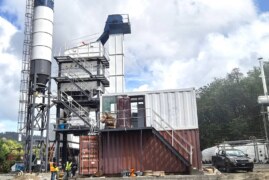
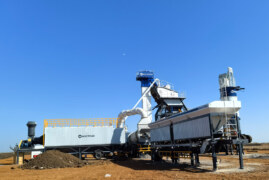
For quarry operators and heavy mining enterprises, verticalizing the supply chain to enter the pavement market represents a highly profitable logical progression. However, processing harsh, abrasive aggregates like granite, basalt, or quartzite requires a massive departure from standard commercial aggregate handling. When integrating asphalt production directly with existing crushing circuits, engineering teams must scrutinize specific industrial-grade technical specifications on high-capacity asphalt batch plants for sale. Ensuring the presence of heavy-duty multi-deck vibratory screens, premium wear-resistant liners, and variable frequency drive (VFD) aggregate feeders is critical to prevent premature equipment failure and secure a sustainable return on investment.
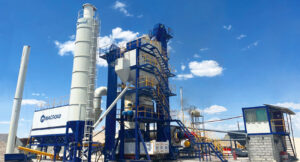
Heavy-Duty Multi-Deck Vibratory Screens Control Volumetric Sizing
Aviation and highway contracts leave zero margin for aggregate sizing variations, requiring exact fractional separation before hot-mix blending. When evaluating asphalt batch plants for sale, mining engineers must verify that the vertical batching tower incorporates high-amplitude, multi-deck vibratory screens driven by dual eccentric motors. This screening assembly must handle the erratic, high-volume surge feeds coming directly from secondary or tertiary crushing circuits. In light of this, the screening decks must feature quick-tensioning polyurethane or high-tensile wire mesh to withstand the continuous impact of sharp, freshly fractured stone fractions without blinding.
From a logistics perspective, precise mechanical screening within the batch tower prevents the dreaded phenomenon of aggregate carryover, where smaller particles contaminate larger hot bins. In standard, lower-specification asphalt plants, inadequate screen area forces oversized aggregates into fine-mix recipes, leading to immediate pavement rejection during density testing. By securing a high-capacity multi-deck system, the quarry operator ensures that the material matrix retains perfect volumetric uniformity. This sizing precision allows the facility to consistently generate premium-grade wear courses, maximizing the commercial value of the quarry’s daily mineral yield.
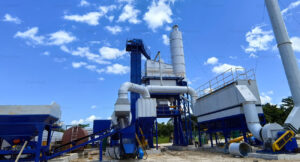
Wear-Resistant Liners Insulate the Plant Against Harsh Abrasion
The highly abrasive nature of typical mining aggregates, such as high-silica stone, can completely erode standard carbon steel plates within a single construction season. To protect the core asset, the engineering team must mandate the installation of replaceable, wear-resistant Hardox liners across all primary impact zones. This heavy-duty shielding must line the cold feed hoppers, aggregate batch weigh hoppers, continuous drying drum flights, and the internal housing of the twin-shaft paddle mixer. Specifically, utilizing Hardox 450 or 500 variants provides the exceptional structural hardness and impact toughness required to survive millions of aggregate friction cycles.
Furthermore, integrating a premium liner strategy reduces long-term operational expenditure by minimizing unscheduled maintenance shutdowns during peak summer paving windows. When an unlined pugmill mixer suffers from severe shell abrasion, the resulting structural cracks cause expensive liquid bitumen leaks and halt the entire fleet. Conversely, a robustly lined asphalt batching tower allows for rapid, localized liner plate replacement during routine winter maintenance overhauls. This mechanical resilience protects auxiliary asphalt plants and downstream transport logistics from costly supply chain bottlenecks, ensuring continuous cash flow generation.

VFD Aggregate Feeders Optimize Real-Time Blending Dynamics
Achieving a seamless, automated interface between a continuous aggregate crushing circuit and a cyclic batching process requires absolute control over raw material delivery. Engineering teams must demand that the cold feed bins of the asphalt plant utilize variable frequency drive (VFD) aggregate feeders coupled with automated belt scales. These electronic drives modulate the forward speed of the conveyor belts dynamically based on real-time commands from the central control house. In light of this, the plant can automatically adjust its intake to compensate for variations in aggregate moisture content or density fluctuations coming from the storage stockyards.
Specifically, VFD automation eliminates the mechanical strain associated with traditional, constant-speed belt feeders that rely on manual gate adjustments. When the plant logic detects a sudden shortage of a specific rock fraction, the VFD feeder accelerates instantly to balance the formula, preventing the weigh hoppers from running empty. This real-time synchronization optimizes the burner’s fuel burn rate inside the drying drum, as the thermal output correlates perfectly with a stable mass flow of stone. For strategic financial controllers, this technological integration translates into lower fuel consumption per ton and zero raw material waste, accelerating the amortization timeline of the asset.
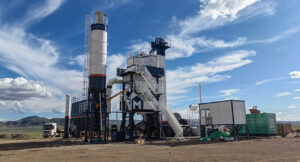
Conclusion: Industrial Engineering Guarantees Downstream Profitability
Successfully expanding a mining or quarry operation into the competitive asphalt market demands production machinery that matches the structural durability of heavy mineral processing equipment. Relying on lightweight commercial-tier asphalt plants frequently exposes the enterprise to catastrophic component fatigue and premature capital depreciation. Investing in high-capacity asphalt batch plants for sale that feature reinforced vibratory screens, Hardox wear liners, and VFD-driven feeding systems ensures uncompromised formula accuracy. By bridging the gap between raw extraction and premium pavement placement, verticalized operators can safely insulate their businesses from market volatility and maximize long-term infrastructure profit margins.