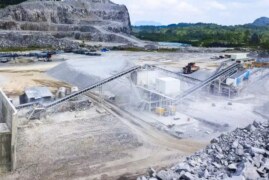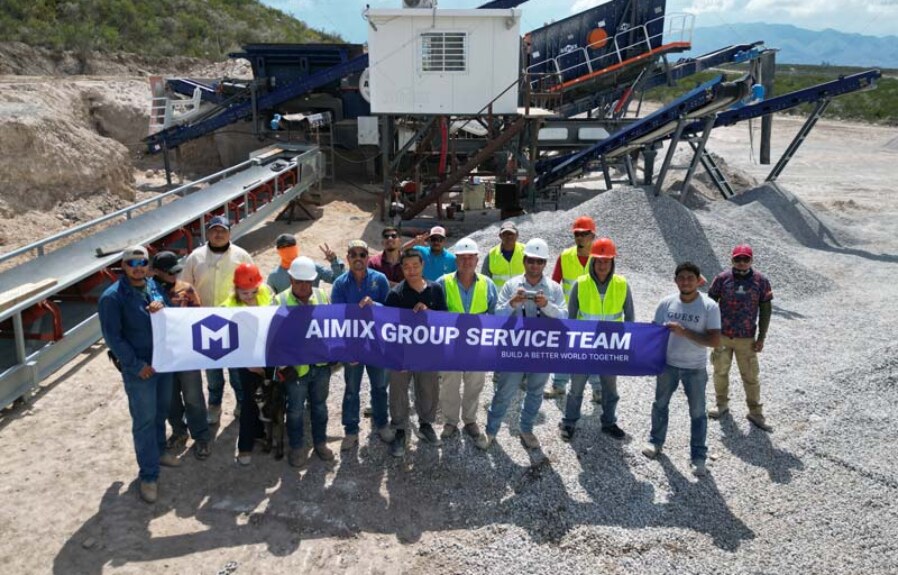
Many aggregate producers focus on the crusher when evaluating plant performance, but screening is where profitability is made or lost. Multi-stage screening separates crushed material into precise size fractions, reduces recirculating loads, and ensures final product specification. Without proper screening, even the most expensive stone crusher plant will produce off-spec material that buyers reject. This article explains why multiple screening decks matter, how to configure them, and what changes when you operate a portable stone crusher plant versus a stationary installation. We will look at practical examples from granite quarries and recycling sites.
Why One Screening Stage Is Never Enough
A single deck screen can separate material into two fractions: overs and unders. However, most construction specifications require three to five distinct sizes, such as 0–5 mm sand, 5–10 mm chips, 10–20 mm gravel, and 20–40 mm base course. A stone crusher plant(planta de trituración de piedra) with only one screen forces you to run material multiple times or blend fractions manually, both inefficient. Multi-stage screening uses stacked decks with progressively smaller openings, producing all required sizes in one pass. For a portable stone crusher plant that moves between sites, multi-stage screening is even more critical because you rarely have the space or time for re-screening circuits.
The Cost of Under-Screening
When a stone crusher plant lacks sufficient screening capacity, the crusher processes the same material repeatedly. This increases wear part consumption, fuel use, and fines generation. One quarry operator replaced a single-deck screen with a three-deck unit on their stone crusher plant and reduced recirculating load from 180% to 90%. Crusher wear life doubled. The same principle applies to a portable stone crusher plant: every tonne sent back to the crusher costs money twice – once for the initial crush, once for the recrush.
How Multi-Stage Screening Works in a Typical Stone Crusher Plant
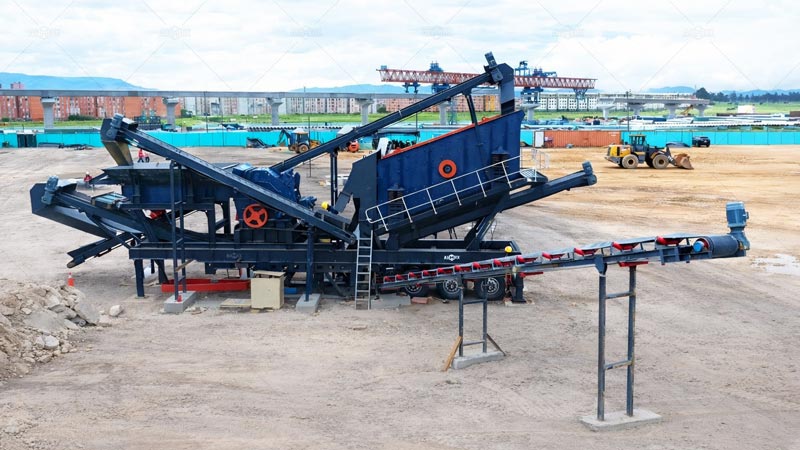
Let us walk through a conventional configuration. Feed material enters the primary crusher (jaw), then passes to a vibrating grizzly feeder. From there, material moves to the first screen. Overs (+40 mm) returns to the secondary crusher. Mid-size (10–40 mm) goes to a tertiary crusher or directly to a second screen. Fines (-10 mm) go to a third screen for sand production. A well-designed stone crusher plant uses three or four screening stages, each with its own deck configuration.
Deck Configurations and Wire Cloth Selection
Top decks use heavy punched plate or woven wire with large openings (40–80 mm). Middle decks use medium mesh (10–40 mm). Bottom decks use fine mesh (2–10 mm). For a portable stone crusher plant(planta trituradora de piedra portátil), wire cloth must be easy to change because different sites require different product sizes. Some portable stone crusher plant models feature quick-release tensioning systems that allow deck changes in under 30 minutes.
The Role of Screen Angle and Stroke
Screening efficiency depends on vibration amplitude, frequency, and deck angle. A stationary stone crusher plant typically runs screens at 15–20 degrees. A portable stone crusher plant may use steeper angles (25–30 degrees) to increase material travel speed when space is limited. However, steeper angles reduce efficiency. The operator of a portable stone crusher plant must find the balance between throughput and separation quality.
Closed-Circuit Screening for Cubical Product
Multi-stage screening becomes truly powerful when combined with closed-circuit crushing. After secondary crushing, material returns to a screen. Overs go back to the crusher; spec material proceeds. This circuit ensures that every particle in your stone crusher plant has passed through the correct number of crushing stages. For high-specification work like asphalt aggregate, closed-circuit screening is mandatory. A portable stone crusher plant with a return conveyor and double-deck screen can produce cubical material that fetches premium prices.
Reducing Fines Through Proper Screening
Excessive fines (<2 mm) ruin concrete aggregate and increase washing costs. Multi-stage screening allows you to remove fines early in the process. In a typical stone crusher plant, a bottom deck with 4 mm openings extracts manufactured sand before it reaches the tertiary crusher. This prevents over-crushing of fine material. A portable stone crusher plant processing river gravel should use a scalping screen before the primary crusher to remove natural sand and silt, saving wear on the crusher.
Portable Versus Stationary Screening Configurations
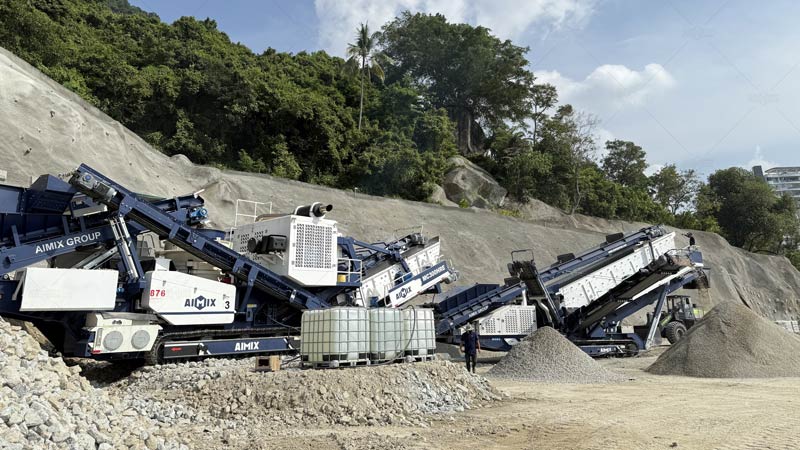
Stationary stone crusher plant operators can install large, multi-slope banana screens with up to five decks. These achieve 95% screening efficiency at high tonnages. However, a portable stone crusher plant has weight and transport constraints. Most portable units use two or three decks, with screen boxes sized to fit within legal road width (2.55 meters in most countries). Some portable stone crusher plant models feature folding side conveyors for each deck, allowing four product streams from a road-towable chassis.
Hybrid Solutions: Portable Plants With Stationary Screens
Some contractors operate a portable stone crusher plant for the primary and secondary stages, then feed into a stationary screening tower with four decks. This hybrid approach gives you mobility for the crushing circuit and high-efficiency screening for final products. The portable stone crusher plant relocates every few months, while the screen tower remains at a central yard. Material is stockpiled and fed to the screen as needed.
Common Screening Problems and Solutions
Blinding and Pegging
Fine material sticking to screen cloth (blinding) or elongated particles wedging in openings (pegging) reduces open area. For a stone crusher plant processing moist clayey material, install polyurethane or rubber screen media instead of woven wire. These self-cleaning panels flex slightly, releasing stuck particles. A portable stone crusher plant operating in wet conditions should carry spare screen sets for dry and wet materials.
Uneven Feed Distribution
If material loads one side of the screen, capacity drops by 40%. Install a feed box with spreading plates or a stepped distributor. In a portable stone crusher plant, ensure the discharge conveyor from the crusher is centered over the screen box. Some portable stone crusher plant designs include a vibrating feed box that spreads material across the full screen width.
Short Wire Cloth Life
Abrasiveness and impact kill screen cloth quickly. For a stone crusher plant processing granite or basalt, specify high-tensile oil-tempered wire with rubber edge protection. Replace cloth when 10% of openings are enlarged – waiting longer allows oversize material to pass, contaminating products. A portable stone crusher plant used in multiple sites should keep a log of wire life per material type to predict replacement intervals.
Final Advice for Plant Owners and Operators
Multi-stage screening is not an expense – it is an investment in product quality and crusher longevity. A stone crusher plant with insufficient screening will always have higher operating costs than one with the correct number of decks and screen area. Before buying any new equipment, calculate your required product suite. If you need four sizes, your stone crusher plant must have at least three screening stages (a scalper and two classifiers). For a portable stone crusher plant, verify that the screen box can be hydraulically raised for deck changes – doing this manually at waist height is unsafe and slow.
Finally, monitor screen efficiency weekly using a simple method: sample the overs from each deck and hand-sieve it. If more than 5% of material is smaller than the deck opening, your screen is overloaded or worn. Address this immediately. A portable stone crusher plant owner who checks screen cloth before each move will avoid costly downtime on site. Remember that the best crusher in the world cannot compensate for poor screening – the two work as a system. Optimize both, and your aggregate production will consistently meet spec, every shift, every site.