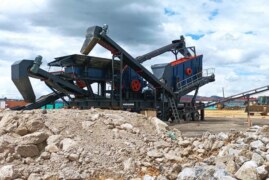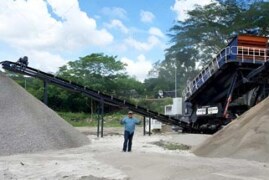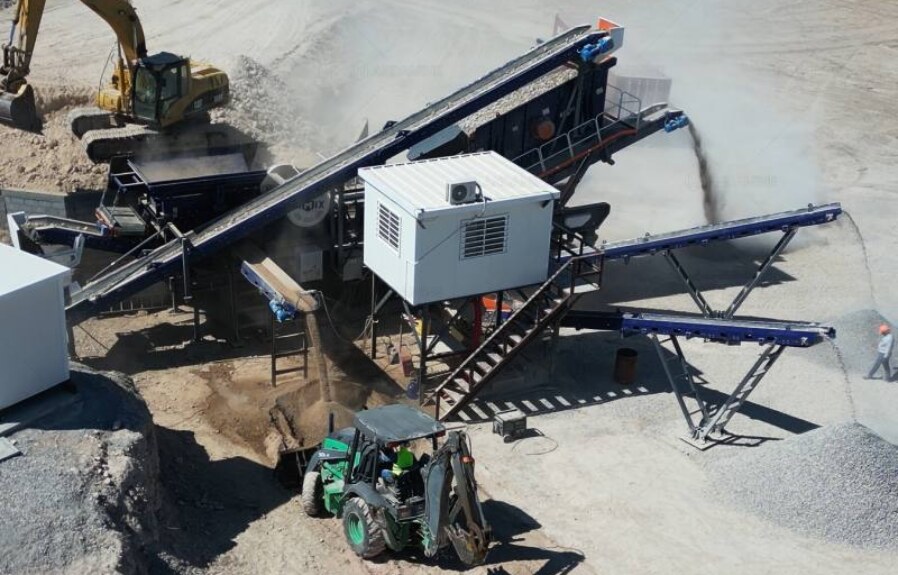
In hard rock mining, crushing is not simply a preliminary step before grinding. The way ore is reduced, screened, and transferred can directly affect mill feed size, energy consumption, throughput, and overall processing efficiency. A well-designed portable crusher plant should therefore be planned around the requirements of the grinding circuit, while also considering ore hardness, feed size, production targets, haulage distance, and the possibility of relocating the crushing equipment as mining progresses.
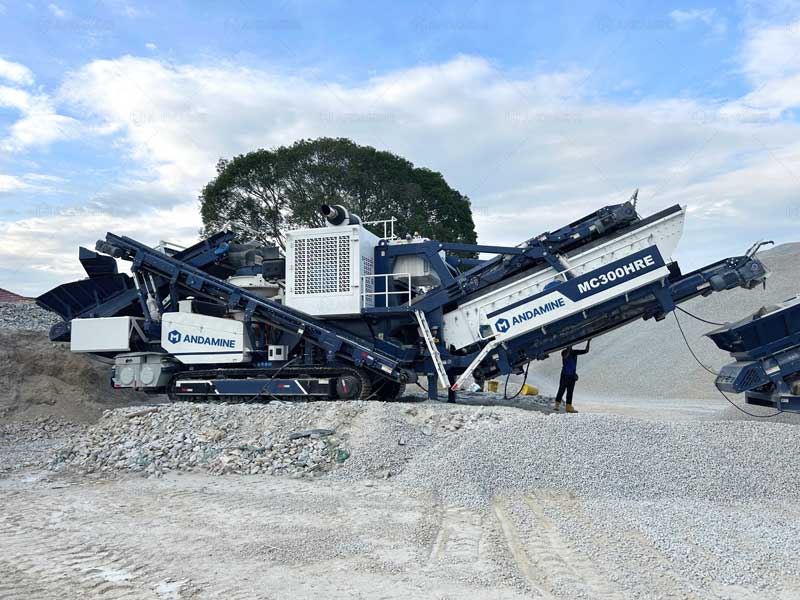
Why the Crushing Circuit Should Be Designed Before Grinding
Grinding is usually one of the most energy-intensive stages in mineral processing. If the crushing circuit produces inconsistent or excessively coarse feed, the grinding mill may need to consume more energy to achieve the required particle size.
For this reason, mine operators should define the required mill feed characteristics before selecting the crushing equipment. Important parameters include the maximum feed size, target product size, throughput, ore competency, and the amount of fines that can be accepted by downstream equipment.
The crushing circuit should then be configured to consistently deliver this material. Rather than selecting individual crushers first and trying to connect them later, engineers can work backward from the grinding requirements and determine how many crushing stages, screens, conveyors, and transfer points are needed.
Start with Ore Characteristics and Feed Size
Hard rock mines can process materials such as granite, basalt, copper ore, iron ore, gold-bearing rock, and other competent ores. These materials can vary considerably in hardness, abrasiveness, moisture content, and fracture characteristics.
The first stage is generally responsible for accepting large run-of-mine material and reducing it to a manageable size. A jaw crusher is commonly used for this duty because it can handle large and hard feed material.
However, the primary crusher should not be selected based only on its maximum capacity. Its discharge size must also be compatible with the next crushing stage. If the primary crusher produces material that is too large for the secondary crusher, the entire circuit can become constrained by oversize material.
Build the Circuit Around the Required Reduction Ratio
A single crusher may not be able to reduce large run-of-mine rock to the size required by a grinding mill efficiently. Multiple crushing stages are therefore often used in hard rock applications.
A typical circuit may include primary jaw crushing, secondary cone crushing, and screening. Depending on the required final feed size, a tertiary crushing stage may also be incorporated.
Each stage should perform a defined size-reduction task. The primary stage handles the largest particles, while secondary and tertiary stages progressively reduce the material. This staged approach helps prevent individual crushers from operating outside their efficient range.
The reduction ratio between stages is particularly important. If one crusher is expected to perform too much size reduction, energy consumption and wear can increase. A balanced circuit distributes the crushing duty across the available equipment.
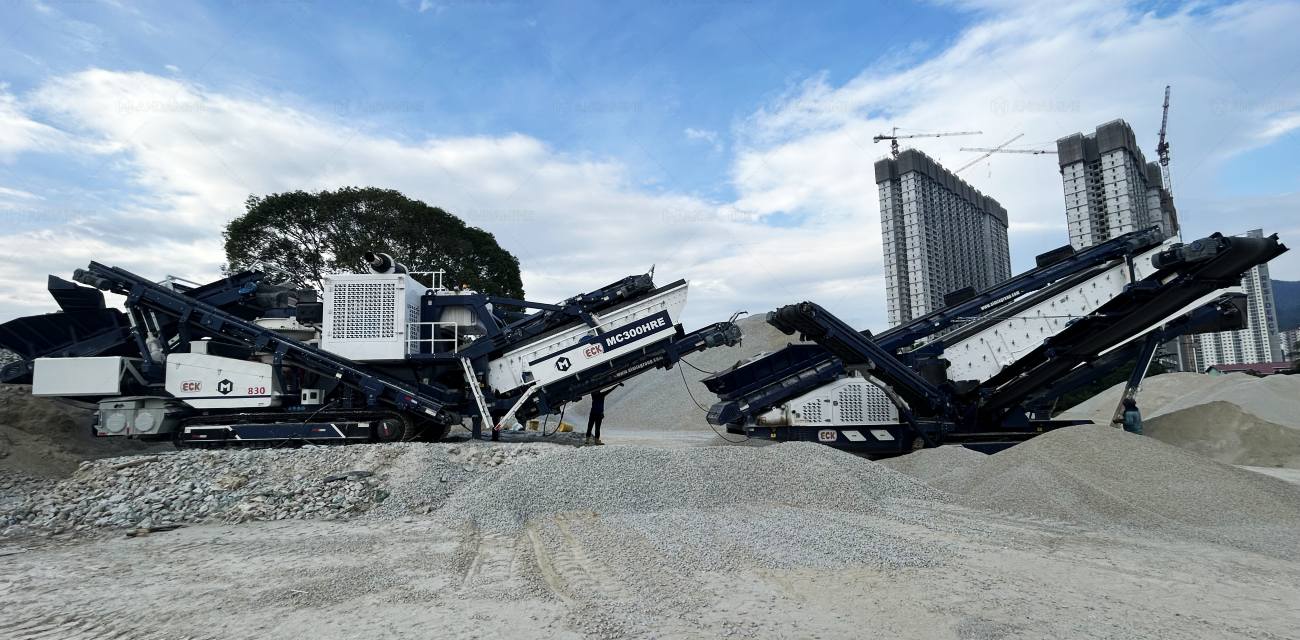
Where a Portable Impact Crusher Can Fit
A portable impact crusher can be considered when the rock characteristics and final product requirements make impact crushing appropriate. Impact crushers reduce material through impact forces and can produce relatively well-shaped particles, which may be useful when the crushed material also has aggregate applications.
However, impact crushing is not automatically the best choice for every hard rock mine. Highly abrasive materials can result in increased wear on impact components, making jaw and cone combinations more appropriate in some applications.
Therefore, the decision should be based on material testing, abrasiveness, required product shape, feed size, and operating cost rather than simply choosing a portable impact crusher because it is mobile.
Match Screening Capacity with Crushing Capacity
Screens are an essential part of the crushing circuit because they determine which particles move forward and which return for additional crushing.
If the screen is undersized, it can become a bottleneck even when the crushers have sufficient capacity. Excessive material accumulation can reduce the efficiency of separation and increase circulating load.
A closed-circuit arrangement can return oversize material to the crusher while allowing correctly sized particles to continue toward the grinding stage. This provides greater control over the final crusher product and helps prevent excessively large particles from reaching the mill.
The screen aperture should therefore be selected according to the required grinding feed size rather than simply using a standard configuration.
Consider Portable Plant Mobility from the Beginning
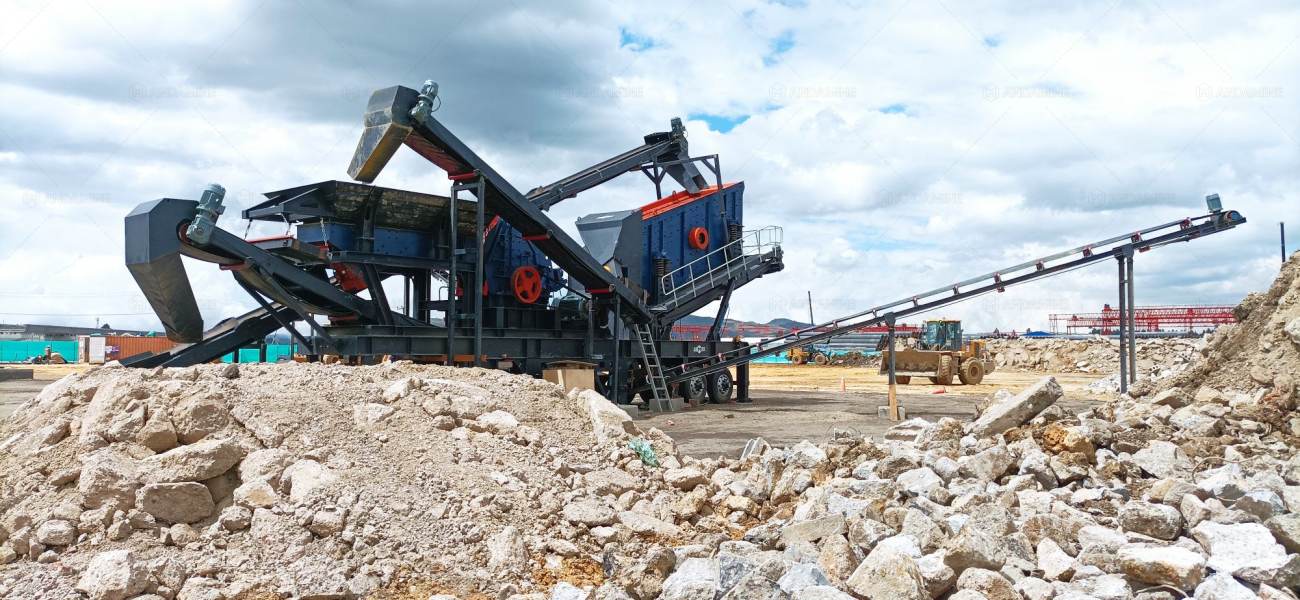
The major advantage of a portable crusher plant in mining is not simply easier transportation to the site. Its real value comes from the ability to adapt the crushing location as mining progresses.
In an expanding open-pit mine, the distance between the extraction area and a fixed crushing station can gradually increase. Trucks may then need to travel longer distances while carrying unprocessed ore. This can increase fuel consumption, tire wear, maintenance requirements, and haulage time.
A portable configuration can allow the primary crushing stage to move closer to the mining face when appropriate. This can shorten the distance over which large run-of-mine material needs to be transported.
However, relocation frequency must also be considered. Moving the plant too frequently can interrupt production and create additional logistical work. The most effective solution balances crusher mobility with the expected development schedule of the mine.
Plan the Connection to Grinding Equipment
Once the crushing circuit has been defined, the next step is to determine how crushed material will reach the grinding section. Conveyors, surge bins, stockpiles, feeders, and material transfer points all influence the stability of mill feed.
A surge capacity between crushing and grinding can help separate fluctuations between the two processes. For example, a temporary interruption in crushing does not necessarily need to stop grinding immediately if sufficient material has been accumulated in an intermediate stockpile or bin.
The crushing product should also remain within the acceptable feed-size range of the mill. Consistent feed helps the grinding circuit operate more predictably and makes process control easier.
Design for Maintenance and Wear
Hard rock mining can place significant stress on crushing equipment. Wear parts such as jaw plates, cone liners, impact components, and screen media may require regular inspection and replacement.
For a portable installation, maintenance planning becomes even more important because remote mining sites may have limited access to spare parts and specialized technicians. The circuit should therefore be designed with practical access to major components and sufficient space for maintenance activities.
Wear rates should also be considered when comparing different crusher configurations. A circuit with a lower purchase price may not necessarily provide the lowest operating cost if its wear consumption is significantly higher under the actual ore conditions.
Conclusion
Designing a portable crusher plant for hard rock mines should begin with the grinding requirements rather than the crusher itself. Ore characteristics, feed size, reduction ratios, screening capacity, mill feed specifications, haulage distances, and mine development plans all need to be considered together.
A well-balanced crushing circuit can provide consistent mill feed while reducing unnecessary energy consumption and improving overall process stability. Whether the circuit uses jaw and cone crushers, incorporates a portable impact crusher, or combines mobile primary crushing with a more centralized downstream system, the objective remains the same: produce the right-sized material for grinding as efficiently and consistently as the mine requires.