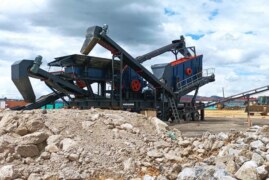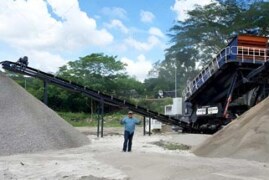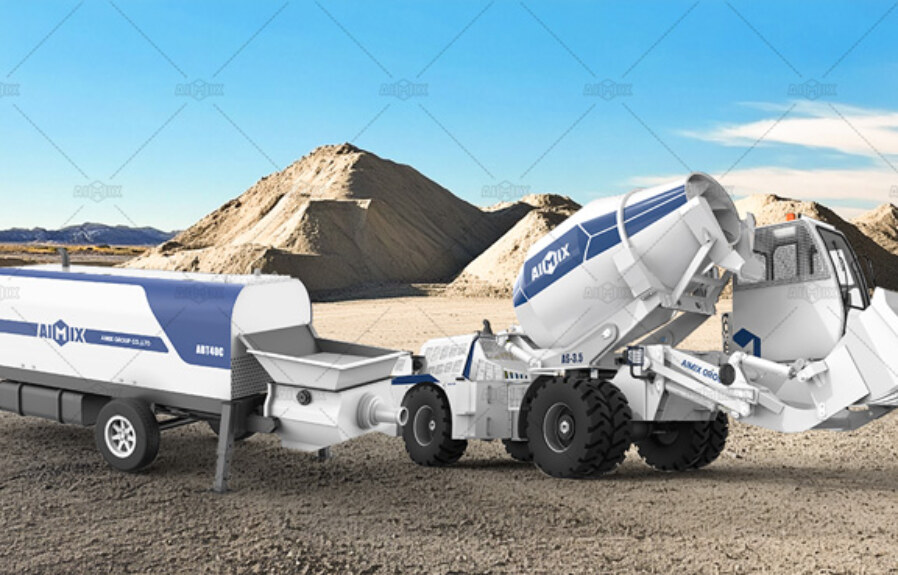
Mining operations in Guatemala often require crushing and screening plants to operate on demanding terrain, where equipment must remain stable under continuous vibration, impact loading, and heavy material flow. Concrete foundations play an important structural role in this environment. They provide a firm bearing surface for stationary crushers, screens, conveyors, hoppers, and other plant components while helping distribute equipment loads into the underlying ground. The foundation design must account for machinery weight, dynamic forces, soil conditions, drainage, and the intended operating life of the plant. Concrete supply can itself become a logistical consideration when a mining site is remote. Large quantities of concrete may be required during foundation construction, yet conventional ready-mix delivery can be difficult if the site is far from commercial batching facilities. In such situations, mobile concrete production and pumping equipment can provide greater control over the concrete supply process. A self loading concrete mixer in Guatemala, a concrete pump in Guatemala, or a combined self-loading mixer and concrete pump machine for mine work can help contractors produce and place concrete closer to the actual foundation site.
Why Concrete Foundations Matter for Crushing and Screening Plants
Foundations Transfer Equipment Loads to the Ground
A crushing and screening plant generates more than static weight. Crushers create substantial dynamic forces as large rocks are compressed, impacted, or broken inside the crushing chamber. Screens also generate continuous vibratory movement as material is separated by particle size. A properly engineered concrete foundation provides a stable interface between the equipment and the ground. It distributes static and dynamic loads over a defined area and helps prevent excessive settlement or unwanted movement.
Static and Dynamic Loads Require Different Considerations
The equipment’s own weight represents the static component of the load. Dynamic loading is generated during operation and can vary according to crusher type, feed characteristics, operating speed, material size, and equipment condition. For this reason, foundation design should be based on engineering calculations rather than simply pouring a large concrete slab. The dimensions, reinforcement, anchoring system, and concrete strength need to correspond to the specific equipment and site conditions.
Crusher Foundations Need Strong Equipment Anchorage
A crusher must remain securely positioned while processing rock. Anchor bolts and embedded components connect the machine structure to the concrete foundation, transferring operational forces into the supporting structure. If the foundation or anchoring arrangement is inadequate, vibration can become excessive. Over time, this may contribute to loosening connections, cracking, uneven settlement, or premature wear. The foundation is therefore part of the crushing system itself, not merely a platform beneath the machine.
How Concrete Is Supplied for Mine Plant Foundations in Guatemala
Remote Mine Locations Can Complicate Ready-Mix Delivery
Many mining sites are located away from large urban centers. Transporting fresh concrete from a commercial batching plant can involve long travel distances, difficult access roads, and tightly constrained delivery windows. Concrete placement adds another complication. Foundations for crushers and screening plants can contain multiple sections, equipment bases, retaining structures, slabs, and supporting elements. The contractor needs concrete to arrive at the right location while crews and reinforcement are ready. Long-distance transportation can make this process less predictable.
A Self-Loading Mixer Can Produce Concrete Close to the Work Area
A self loading concrete mixer in Guatemala can provide a flexible option for foundation construction at remote mining sites. The machine can load aggregates, combine the required ingredients, mix the concrete, and transport the fresh mixture around the project area. This integrated workflow can reduce the number of separate machines required for basic concrete production and site transport.
Production Can Follow Foundation Progress
Foundation work is rarely a single continuous activity. Excavation, reinforcement installation, formwork, anchor positioning, concrete placement, curing, and equipment installation occur in sequence. A self-loading mixer allows concrete production to follow these work stages. Contractors can prepare batches when individual foundation sections are ready instead of relying entirely on a fixed external delivery schedule.
Concrete Pumps Help Place Concrete Into Difficult Foundation Areas
Crusher foundations can contain deep sections, closely spaced reinforcement, embedded anchor systems, and locations that are difficult to reach with a mixer truck. A concrete pump in Guatemala can transport fresh concrete through pipelines or hoses from the mixing or discharge point to the required placement area. This can improve placement flexibility, particularly where direct truck access is restricted by excavation, structural steel, conveyors, or existing plant components.
Why Combining Mixing and Pumping Can Benefit Mine Construction
One Workflow Can Reduce Material-Handling Steps
A combined self-loading mixer and concrete pump machine for mine work integrates concrete production and placement into a more continuous workflow. The machine can load raw materials, mix concrete, and then deliver it toward the foundation through pumping equipment. This reduces the need to coordinate several independent stages between aggregate storage and final placement. The benefit is especially relevant where the mine site lacks convenient access for conventional ready-mix trucks.
Mobility Supports Changing Construction Areas
Mining projects can cover extensive areas, and plant construction may progress through different zones. A mobile concrete solution can move with the work rather than remaining fixed at one production point. This can be useful when constructing foundations for primary crushers, secondary crushers, vibrating screens, transfer towers, conveyors, feed hoppers, and other components.
Less Dependence on Permanent Concrete Infrastructure
A temporary mine construction phase does not necessarily justify the installation of a permanent concrete batching facility. A mobile system can provide localized production capacity during the foundation and infrastructure stage, after which it can be moved to another work area or project.
Concrete Quality Still Requires Rigorous Control
Equipment flexibility does not remove the need for concrete quality management. Foundation concrete should be produced according to the structural design, with controlled proportions of cement, aggregates, water, and admixtures where specified. Moisture content in aggregates, mixing time, water-cement ratio, slump, placement conditions, and curing all influence final concrete performance. The equipment should therefore support accurate batching and consistent mixing rather than simply maximizing production speed.
Foundation Planning Should Begin Before Equipment Installation
The concrete foundation for a crusher or screening plant should be coordinated with the equipment layout from the beginning. Anchor bolt positions, discharge points, conveyor interfaces, access routes, drainage arrangements, and maintenance clearances must all be considered. For Guatemalan mining projects, geological and environmental conditions add another layer of complexity. Ground investigation should establish bearing capacity, settlement characteristics, groundwater conditions, and other relevant parameters before foundation construction begins. A robust foundation is the product of coordination between civil engineering and mechanical equipment requirements. Ultimately, concrete serves as the structural backbone beneath a crushing and screening plant. It absorbs and distributes equipment loads, provides stable anchorage, and creates the fixed reference point from which the machinery can operate reliably. For remote mines in Guatemala, however, producing that concrete can be almost as important as designing the foundation itself. A concrete self loading mixer in Guatemala can bring batching and mixing closer to the work area, while a concrete pump in Guatemala can provide greater placement flexibility. When these functions are integrated into one mobile system, contractors can establish a more direct path from raw materials to finished foundation. The result is not simply faster concrete placement. It is a more adaptable construction workflow in which concrete production, transportation, and pumping can be coordinated around the evolving requirements of the mine site.