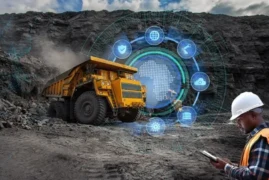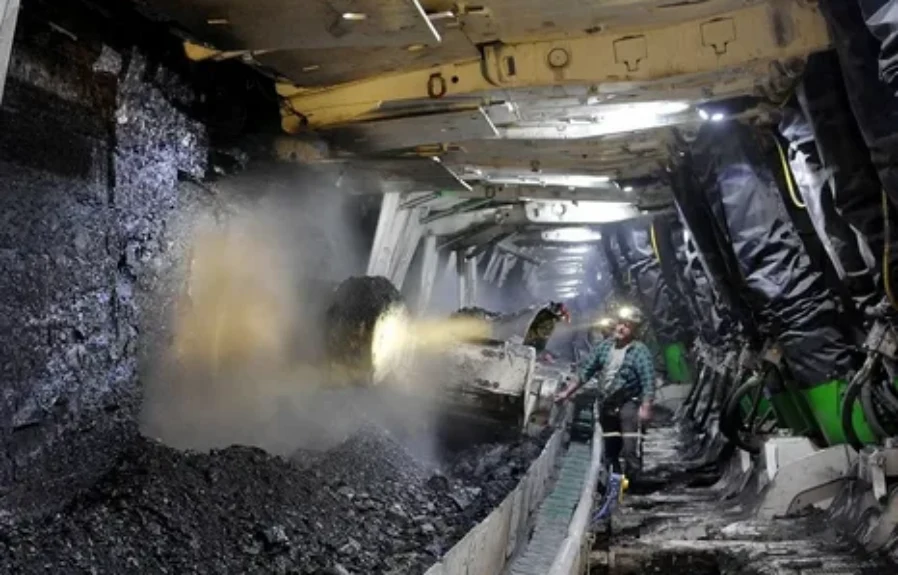
Mining equipment operates under demanding conditions. Excavators, haul trucks, crushers, conveyors, and grinding mills are exposed to heavy loads, vibration, dust, heat, and continuous operation. When a critical machine fails unexpectedly, production can slow down or stop completely.
Traditional maintenance practices include scheduled inspections, routine servicing, and repairs after a fault occurs. Although these methods remain important, they do not always identify a developing problem before it causes downtime. Artificial intelligence and data science offer another approach: using equipment data to detect early warning signs and support predictive maintenance.
What Is Predictive Maintenance?
Predictive maintenance uses information about equipment condition and operating history to estimate when maintenance may be needed. Instead of relying exclusively on fixed service intervals, maintenance teams examine evidence about the actual condition of a machine.
Sensors can record vibration, temperature, pressure, lubricant condition, and other operating variables. Maintenance records provide additional context, including previous repairs, component replacements, and known failure patterns.
By combining these sources, mining companies can identify unusual behaviour that may indicate a developing mechanical problem.
Predictive maintenance does not eliminate inspections or guarantee that failures will be prevented. Its purpose is to give technicians better information so they can investigate potential problems before they become more serious.
How AI Detects Early Warning Signs
Machine learning models can learn patterns from historical equipment data. They may compare current measurements with normal operating ranges or identify combinations of signals associated with previous faults.
For example, an increase in vibration combined with a gradual rise in bearing temperature may justify an inspection. Either measurement alone might be caused by normal operating variation, but the combined pattern could indicate a developing issue.
An anomaly detection system can flag these changes for further review. More advanced models may estimate the likelihood of a particular failure when enough reliable historical examples are available.
The quality of the prediction depends on the quality of the training data, sensor placement, operating conditions, and the type of fault being studied.
Applying Predictive Maintenance to Different Machines
Different types of mining equipment require different monitoring strategies.
Haul trucks
Engine performance, hydraulic pressure, temperature, and vibration data can help maintenance teams identify unusual operating conditions. Monitoring these variables may support earlier investigation of engine, transmission, or hydraulic problems.
Crushers and grinding mills
Crushers and mills are essential to mineral processing. Abnormal vibration, changes in motor current, and unusual temperature patterns may indicate mechanical wear, imbalance, or developing component problems.
These signals need to be interpreted in relation to feed characteristics and operating load. A change in vibration does not necessarily mean a component is failing.
Conveyor systems
Conveyors transport material across processing plants and mine sites. Monitoring belt speed, motor temperature, bearing vibration, and drive performance can help identify conditions that require attention.
Because conveyor failures can interrupt several connected processes, early warnings can be especially useful for planning inspections and maintenance windows.
Turning Alerts Into Useful Maintenance Decisions
An AI model that generates too many alerts can create more work instead of reducing it. Maintenance teams may begin ignoring warnings if most of them do not lead to actionable findings.
To avoid this problem, companies should evaluate alerts according to their accuracy, urgency, and operational consequences. A warning about a potentially critical failure should receive different treatment from a minor deviation that can be monitored during the next inspection.
A practical workflow includes automated detection, review by maintenance specialists, physical inspection, and documented follow-up. The results of each inspection can then improve future analysis.
Estimating Remaining Useful Life
Some predictive maintenance systems attempt to estimate the remaining useful life of a component. This means estimating how much longer it may operate before reaching a defined failure or performance threshold.
Such estimates can help planners coordinate spare parts, labour, and maintenance windows. However, remaining useful life is not a precise countdown. Operating conditions, maintenance quality, workload, and unexpected events can change the outcome.
Teams should treat these estimates as decision-support information rather than guarantees.
Challenges in Implementing AI Maintenance Systems
One major challenge is the availability of reliable historical failure data. Some machines may have operated for years without consistent sensor records, while maintenance logs may contain incomplete descriptions or inconsistent terminology.
Another challenge is model transferability. A model trained on one machine type or operating environment may perform poorly on another because equipment designs, loads, and environmental conditions differ.
Companies also need to consider cybersecurity, data ownership, system integration, and the skills required to interpret model outputs. Maintenance professionals should understand why an alert was generated and what evidence supports further investigation.
Communicating Maintenance Improvements
Maintenance projects often produce useful lessons about equipment reliability, operational planning, and risk reduction. Sharing these lessons internally can help standardize procedures and improve awareness across shifts.
For external educational updates, mining companies may use automated posting on social media through Predis.ai to organize and schedule approved content about maintenance practices and technology developments.
Public communication should avoid disclosing sensitive machine vulnerabilities, site security details, or confidential operating data.
The Future of Predictive Maintenance in Mining
AI-assisted maintenance is most effective when it complements established engineering practices. Reliable sensors, good maintenance records, skilled technicians, and clear escalation procedures are all necessary for successful implementation.
As monitoring systems improve, mining operators can gain better visibility into equipment condition and make more informed maintenance decisions. The long-term goal is not to replace technicians with algorithms, but to give them earlier warnings, stronger evidence, and more time to plan work safely.