
Choosing the right mobile crushing plant is an important decision for quarry owners, aggregate producers, construction companies, and mining contractors. Whether you are processing granite, basalt, limestone, river stone, or construction waste, the right mobile crushing solution can help reduce material transportation costs, improve production efficiency, and increase overall project profitability.
Compared with traditional stationary crushing plants, a mobile crushing plant offers greater flexibility and faster relocation. It integrates crushing, screening, conveying, and other functions into a compact system, allowing operators to move equipment between different working sites according to project requirements. For small and medium-sized quarries, road construction projects, and aggregate production businesses, this flexibility can significantly reduce initial site preparation work and improve equipment utilization.
However, purchasing a mobile crusher is not simply about comparing equipment prices or choosing a machine with a higher advertised capacity. Different raw materials, production targets, site conditions, finished aggregate requirements, and power supplies all influence the final equipment configuration.
Many overseas buyers, especially those operating quarries in Africa, Southeast Asia, and Latin America, face similar challenges when selecting crushing equipment. An unsuitable configuration may result in insufficient production capacity, excessive wear-part consumption, poor aggregate quality, and unnecessary operating expenses.
So, how can you choose the right mobile crushing plant for your project in 2026?
In this guide, we will explain seven essential factors that every quarry buyer should evaluate before purchasing a mobile crushing and screening plant.
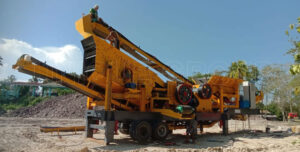
Confirm Your Raw Material Type and Crushing Requirements
The first step in selecting a suitable mobile crushing plant is identifying the material you intend to process. Different types of stone have different hardness levels, abrasiveness, moisture content, and crushing characteristics. These properties directly influence crusher selection, production efficiency, and equipment service life.
A mobile crusher that performs well when processing limestone may not be the most economical choice for granite or basalt. Therefore, it is important to provide your supplier with accurate information about the raw material before determining the equipment configuration.
Here are some common material types and their recommended crushing solutions:
Hard Rock: Granite and Basalt
Granite and basalt are hard, abrasive materials commonly used in road construction, railway projects, concrete production, and large infrastructure developments.
Because these materials place considerable stress on crushing components, a mobile jaw crusher combined with a mobile cone crusher is generally a suitable solution for hard-rock applications.
The jaw crusher performs primary crushing, reducing large rocks into smaller sizes. The cone crusher then handles secondary or further crushing to produce aggregates that meet specific size requirements.
This combination offers several advantages:
- Strong crushing capability for hard and abrasive materials.
- Better suitability for continuous quarry production.
- Reduced reliance on impact-type crushing in highly abrasive applications.
- Flexible adjustment of the crushing process to meet different aggregate specifications.
For projects requiring high-quality cubic aggregates, additional shaping equipment may also be considered depending on the final product requirements.
Medium-Hard Stone: River Stone and Limestone
River stone and limestone are widely used in concrete production, road construction, building materials, and other infrastructure applications.
For suitable material conditions, a mobile jaw crusher combined with a mobile impact crusher can provide an economical crushing solution.
The jaw crusher reduces large feed materials during the primary crushing stage, while the impact crusher further processes the material into smaller aggregate sizes.
Impact crushing can also help improve particle shape, which is important for certain construction aggregate applications.
Typical finished aggregate sizes include:
- 0–5 mm: Manufactured sand.
- 5–10 mm: Fine aggregate.
- 10–20 mm: Medium-sized aggregate.
- 20–31.5 mm: Coarse aggregate.
However, the abrasiveness of river stone and limestone should not be overlooked. Highly abrasive materials may cause rapid wear of impact crusher blow bars. A cone crusher may therefore be a more economical option in some applications.
Construction Waste Recycling
Mobile crushing plants are also widely used for recycling concrete, demolished buildings, and construction waste.
A mobile impact crusher equipped with a magnetic separator is a practical solution for many concrete recycling projects.
The crushing unit reduces concrete blocks and other construction debris into reusable materials. The magnetic separator helps remove steel reinforcement bars and other ferrous materials from the crushed products.
Depending on the project, the recycling system may also include a vibrating screen to separate different aggregate sizes.
This allows recycled concrete aggregates to be reused in road sub-base construction, backfilling, landscaping, and other suitable applications.
Buying Tip: Before requesting a quotation, prepare the raw material type, maximum feeding size, approximate hardness, abrasiveness, and moisture conditions. The more accurate your information is, the easier it will be for the supplier to recommend a suitable mobile stone crusher plant.
Determine Your Required Production Capacity (TPH)
Production capacity is another critical factor when purchasing a mobile crushing plant.
TPH stands for tons per hour and indicates how much material the crushing equipment can process within one hour under specified operating conditions.
Choosing an undersized mobile crusher may prevent your project from meeting its production targets. On the other hand, purchasing an oversized crushing plant can increase your initial investment, transportation expenses, and operating costs unnecessarily.
For many small and medium-sized aggregate projects, the following production ranges are common reference points:
| Production Capacity | Typical Project Applications |
|---|---|
| 40–60 TPH | Small quarries and local aggregate production |
| 80–100 TPH | Medium-sized quarry and construction projects |
| 120–180 TPH | Larger aggregate production and infrastructure projects |
These ranges are general equipment selection references. The actual capacity depends on the crusher model, material characteristics, feeding conditions, and final product specifications.
Why Does Actual Output Differ from the Rated Capacity?
One important mistake made by inexperienced buyers is assuming that the manufacturer’s rated capacity represents the actual production output under all working conditions.
In practice, several factors influence the real production capacity.
1. Raw Material Hardness
Hard and abrasive rocks require greater crushing force and may reduce processing efficiency compared with softer materials.
2. Maximum Feeding Size
If the feeding material is too large for the crusher’s inlet, the equipment may experience feeding difficulties, reduced efficiency, or blockages.
3. Feeding Continuity
A stable and continuous material supply helps maintain efficient operation. Irregular feeding can reduce the utilization rate of the entire crushing system.
4. Finished Product Requirements
Producing smaller aggregate sizes generally requires additional crushing work. If customers require several finished sizes with strict particle-size specifications, screening and recirculation conditions must also be considered.
5. Screening Efficiency
The vibrating screen plays an important role in determining the final output of qualified aggregates. Poor screening efficiency or unsuitable screen mesh sizes can reduce the effective production of finished products.
For example, a mobile crushing plant processing limestone into 20–40 mm aggregates may achieve a different output from the same equipment processing hard granite into 5–10 mm materials.
Buying Tip: Do not select a mobile crusher based only on its maximum advertised TPH. Tell your supplier your expected daily production, working hours, raw material characteristics, and finished product requirements. This will help determine a realistic equipment configuration.
Choose Between Tracked and Wheel-Mounted Mobile Crushing Plants
Mobile crushing plants are generally available in two main chassis configurations: tracked mobile crushing plants and wheel-mounted mobile crushing plants.
Both options provide mobility and flexible operation, but they are designed for different site conditions and project requirements.
Understanding their differences will help you avoid unnecessary investment.
Tracked Mobile Crushing Plant
A tracked mobile crushing plant is equipped with a crawler-type chassis and an integrated traveling system. It can move independently around the working site without requiring an external towing vehicle.
This makes it particularly suitable for quarries with uneven terrain, muddy ground, slopes, and frequently changing working positions.
Its main advantages include:
- Self-propelled movement within the working site.
- Better adaptability to rough and uneven ground.
- Convenient relocation between different crushing positions.
- Reduced dependence on external transportation equipment for short-distance site movement.
Tracked mobile crushers are commonly used in mining operations, large construction projects, demolition sites, and quarries where frequent movement is required.
However, tracked mobile crushing plants generally require a higher initial investment. Their transportation over long distances or public highways usually requires suitable trailers or other transport arrangements.
Wheel-Mounted Mobile Crushing Plant
A wheel-mounted mobile crushing plant is designed with a trailer-type chassis, allowing the complete crushing unit to be transported between working locations using a towing vehicle.
It is particularly suitable for relatively flat sites, river-stone quarries, aggregate production projects, and construction sites with convenient road access.
Its main advantages include:
- More economical initial investment in many configurations.
- Convenient transportation between different project locations.
- Suitable for relatively flat working environments.
- Flexible equipment combinations for crushing and screening applications.
For many small and medium-sized river-stone quarry projects in Africa, a wheel-mounted mobile crushing and screening plant is an attractive option because of its balanced investment cost and practical operating flexibility.
Tracked vs. Wheel-Mounted Mobile Crushing Plant
| Comparison Item | Tracked Mobile Crushing Plant | Wheel-Mounted Mobile Crushing Plant |
|---|---|---|
| Site Conditions | Rough, muddy, and uneven terrain | Relatively flat and accessible sites |
| Movement | Self-propelled on the working site | Requires a towing vehicle |
| Relocation | Convenient for frequent short-distance movement | Convenient for transportation between projects |
| Initial Investment | Generally higher | Generally more economical |
| Typical Applications | Mining, demolition, and difficult terrain | Quarries, aggregate production, and road construction |
| Transportation | Usually requires suitable transport equipment for long distances | Trailer-type transportation |
Which One Should You Choose?
If your quarry has rough terrain and requires frequent movement between different working positions, a tracked mobile crusher may be the better choice.
If your project operates on relatively flat ground and requires transportation between different job sites, a wheel-mounted mobile crushing plant may offer better investment efficiency.
The best option ultimately depends on your working environment, transportation conditions, budget, and production requirements.
Select the Right Power System: Diesel Generator or Grid Electricity
Power supply is another important consideration when selecting a mobile crushing plant, particularly for overseas projects in remote mining and quarry locations.
Some quarries have access to a stable electricity grid, while others operate in remote areas where grid power is unavailable or unreliable.
UNIQUEMAC mobile crushing plants can be configured with different power solutions according to project conditions.
Grid Electric Power
An electric-powered mobile crushing plant uses an external electricity supply to operate its crushing and screening equipment.
This option is suitable for projects with a stable and reliable local power supply.
Its advantages include:
- Lower daily energy costs in locations with affordable electricity.
- Reduced dependence on diesel fuel.
- Convenient operation where electrical infrastructure is already available.
- Potentially lower local emissions during equipment operation.
For long-term quarry operations with reliable electricity, an electric power configuration can help reduce overall operating expenses.
Integrated Diesel Generator
For remote quarries without access to grid electricity, a mobile crushing plant equipped with an integrated diesel generator is a practical solution.
The generator supplies electricity to the crushing, screening, and conveying systems, allowing the equipment to operate independently of the local power grid.
This configuration is particularly useful in remote mining areas and infrastructure projects across parts of Africa and other regions where electricity availability can be limited.
Its main advantages include:
- Independent operation without external grid electricity.
- Greater flexibility for remote working locations.
- Convenient power supply for temporary construction projects.
- Reduced dependence on local electrical infrastructure.
A dual-power configuration can also be considered where supported, allowing operators to switch between grid electricity and diesel-generated power according to actual site conditions.
Buying Tip: Before purchasing, confirm the local electricity voltage, frequency, available power capacity, and stability of the grid supply. If you plan to use a diesel generator, also consider fuel availability, consumption, and maintenance expenses.
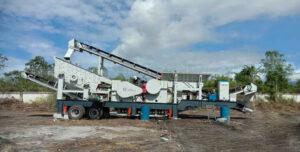
Define Your Finished Aggregate Sizes and Screening Requirements
The finished aggregate specifications directly influence the crushing process and screening equipment configuration.
Different construction projects require different aggregate sizes. If your mobile crushing plant cannot produce the required particle-size fractions efficiently, the finished products may not meet local market standards or customer requirements.
Common aggregate sizes used in construction and infrastructure projects include:
| Aggregate Size | Common Applications |
|---|---|
| 0–5 mm | Manufactured sand, concrete applications, and plastering |
| 5–10 mm | Fine concrete aggregate and other construction uses |
| 10–20 mm | Concrete production and road construction |
| 20–31.5 mm | Coarse aggregate for infrastructure and concrete projects |
These specifications are common examples. Actual aggregate requirements vary according to local construction standards, engineering designs, and customer specifications.
Why Is the Vibrating Screen So Important?
The vibrating screen separates crushed materials into different particle-size categories.
Its number of screening decks and screen mesh openings determine how many finished aggregate fractions can be produced simultaneously.
For example:
- A double-deck vibrating screen can commonly produce two to three aggregate fractions, depending on the feeding arrangement and discharge configuration.
- A triple-deck vibrating screen can separate materials into as many as four product fractions in a suitable configuration.
If your customers require manufactured sand, 5–10 mm, 10–20 mm, and 20–31.5 mm aggregates, you should communicate these specifications to your equipment supplier before purchasing.
The supplier can then select the appropriate screen box, screen mesh sizes, and material discharge arrangement.
Consider the Complete Crushing and Screening Process
A complete mobile crushing and screening plant may include:
- Feeding system – Supplies raw materials to the crushing unit.
- Primary crusher – Reduces large rocks into smaller sizes.
- Secondary crusher – Further reduces materials according to production requirements.
- Vibrating screen – Separates materials into different aggregate sizes.
- Belt conveyors – Transport materials between processing stages and discharge finished products.
The final configuration depends on the raw material and required finished products.
For example, a customer producing 0–5 mm, 5–10 mm, and 10–20 mm aggregates may require a different crushing and screening arrangement from a customer producing only 10–20 mm and 20–31.5 mm stones.
Buying Tip: Prepare a clear list of your target finished aggregate sizes before requesting a quotation. This helps the manufacturer design an appropriate crushing and screening system instead of providing a standard configuration that may not fully meet your market requirements.
Check Spare Parts Availability and After-Sales Service
When purchasing a mobile crushing plant from an overseas manufacturer, equipment quality is important, but after-sales support should receive equal attention.
A crushing plant operates under heavy loads and continuous working conditions. Even well-manufactured equipment requires regular inspection, maintenance, and replacement of wear parts.
Common wear parts include:
- Jaw plates for jaw crushers.
- Blow bars for impact crushers.
- Cone liners for cone crushers.
- Screen meshes for vibrating screens.
- Conveyor belts and other frequently replaced components.
The service life of these components depends on material hardness, abrasiveness, operating conditions, and maintenance practices.
If spare parts are difficult to obtain, even a minor equipment problem may result in extended downtime and lost production.
What Should You Check Before Purchasing?
1. Spare Parts Availability
Ask your supplier whether commonly used wear parts are available and whether they can be supplied quickly when required.
2. Warranty Policy
Understand the warranty period, coverage, exclusions, and responsibilities of both the manufacturer and buyer.
3. Technical Support
Check whether the supplier can provide remote technical guidance, installation instructions, operation manuals, and troubleshooting assistance.
4. Maintenance Guidance
A reliable manufacturer should help customers understand daily inspections, lubrication requirements, wear-part replacement, and routine maintenance procedures.
UNIQUEMAC Overseas Customer Support
UNIQUEMAC provides a one-year warranty for core units and supports overseas customers with remote technical guidance.
Our team can assist customers with equipment configuration, operating instructions, maintenance guidance, and technical communication to help reduce unnecessary equipment downtime.
For overseas quarry operators, having a responsive supplier is an important part of ensuring stable long-term production.
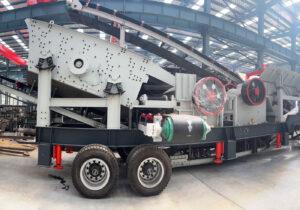
Compare the Total Cost of Ownership, Not Just the Initial Purchase Price
When comparing different mobile crushing plant manufacturers, many buyers focus primarily on the FOB equipment price.
Although the initial purchase price is important, it does not represent the complete investment required to operate a crushing plant.
A machine with a lower purchase price may eventually become more expensive if it consumes more fuel, requires frequent wear-part replacement, or experiences repeated production interruptions.
Therefore, buyers should evaluate the total cost of ownership (TCO) before making a final decision.
Major Costs to Consider
1. Initial Equipment Investment
This includes the purchase price of the mobile crushing plant, optional equipment, and any additional configuration required for your project.
2. Fuel and Electricity Consumption
Diesel consumption and electricity expenses directly influence daily operating costs. The actual energy consumption depends on the equipment configuration, material characteristics, and working conditions.
3. Wear-Part Replacement
Hard and abrasive materials may accelerate wear on jaw plates, cone liners, blow bars, and other crushing components.
Ask your supplier about the expected wear-part requirements under your specific working conditions.
4. Transportation and Shipping Costs
For overseas buyers, international ocean freight, port charges, inland transportation, and customs-related expenses should all be included in the investment calculation.
5. Installation and Commissioning
Although mobile crushing plants are designed for convenient transportation and installation, buyers should still consider unloading, site preparation, equipment assembly, commissioning, and operator training.
6. Maintenance and Downtime
Regular maintenance is necessary to keep equipment operating efficiently. Unexpected breakdowns may cause production losses and additional repair expenses.
How to Make a More Economical Purchasing Decision
Instead of choosing the cheapest machine, compare several suppliers based on equipment configuration, actual production requirements, energy consumption, wear-part costs, warranty conditions, and technical support.
A properly configured mobile crushing plant can help reduce unnecessary operating expenses and deliver better long-term economic performance.
For quarry owners and aggregate producers, the most economical solution is not necessarily the machine with the lowest purchase price, but the equipment that delivers reliable production at a reasonable overall operating cost.
Frequently Asked Questions About Mobile Crushing Plants
Q1: How much does a mobile crushing plant cost?
The price of a mobile crushing plant depends on several factors, including production capacity, crusher type, chassis configuration, power system, screening equipment, and optional accessories.
For example, a basic wheel-mounted mobile jaw crusher generally has a different investment cost from a complete mobile crushing and screening plant equipped with multiple crushing units.
To receive an accurate quotation, provide your raw material type, required capacity, feeding size, finished aggregate specifications, and project location.
Q2: How many tons per hour can a mobile crushing plant process?
The production capacity varies according to the equipment model and working conditions.
Common capacity ranges for small and medium-sized projects include 40–60 TPH, 80–100 TPH, and 120–180 TPH.
However, actual output depends on material hardness, feeding size, crusher configuration, feeding continuity, and final product requirements.
It is important to select equipment based on your actual production target rather than relying solely on the maximum capacity advertised by manufacturers.
Q3: Can a mobile crushing plant process granite and basalt?
Yes. A properly configured mobile crushing plant can process hard rocks such as granite and basalt.
For these abrasive materials, a mobile jaw crusher combined with a mobile cone crusher is generally a suitable configuration.
The final equipment selection should consider maximum feeding size, material abrasiveness, required output capacity, and finished aggregate specifications.
Q4: What is the difference between a tracked and a wheel-mounted mobile crusher?
The main difference is the chassis and transportation method.
A tracked mobile crusher uses a crawler-type chassis and can move independently around the working site. It is suitable for rough terrain and projects requiring frequent repositioning.
A wheel-mounted mobile crusher uses a trailer-type chassis and normally requires a towing vehicle for relocation. It is more economical in many configurations and is suitable for relatively flat sites with convenient transportation access.
Q5: Can one mobile crushing plant produce multiple aggregate sizes simultaneously?
Yes. A mobile crushing and screening plant equipped with a suitable multi-deck vibrating screen can separate crushed materials into several finished aggregate fractions simultaneously.
Depending on the screening configuration, customers can obtain products such as 0–5 mm, 5–10 mm, 10–20 mm, and 20–31.5 mm.
The number of finished products depends on the screen design, mesh sizes, material characteristics, and discharge arrangement.
Q6: Does a mobile crushing plant require a concrete foundation?
Most integrated mobile crushing plants are designed to operate without the need for large permanent concrete foundations.
However, the working site still needs suitable ground conditions and sufficient bearing capacity to support the equipment safely.
Site leveling, drainage, access roads, and proper equipment positioning should also be considered before installation.
Q7: How long does it take to install a mobile crushing plant?
The installation time depends on the equipment configuration, transportation condition, site preparation, and commissioning requirements.
For an integrated mobile crushing plant with factory-completed main assembly, on-site installation and commissioning may take approximately 1–3 days under suitable conditions.
More complex multi-unit systems may require additional time for connection, adjustment, and testing.
Q8: What information should I provide to get an accurate mobile crushing plant quotation?
To receive a suitable equipment proposal and accurate quotation, prepare the following information:
- Raw material type, such as granite, basalt, limestone, or river stone.
- Maximum feeding size of the raw material.
- Required hourly production capacity (TPH).
- Desired finished aggregate sizes.
- Working site conditions and terrain.
- Available power supply, including grid electricity or diesel generation.
- Project location and expected equipment transportation requirements.
Providing this information allows the manufacturer to recommend a more appropriate mobile crushing and screening solution.
Get Your Customized Mobile Crushing Plant Solution from UNIQUEMAC
Choosing the right mobile crushing plant requires more than comparing prices and production capacity. The ideal solution should match your raw material, quarry conditions, production targets, finished aggregate specifications, and long-term operating budget.
UNIQUEMAC specializes in crushing and screening equipment solutions for overseas quarry owners, aggregate producers, and construction companies.
Whether you need a mobile jaw crusher for primary crushing, a mobile cone crusher for hard-rock processing, a mobile impact crusher for suitable stone and recycling applications, or a complete mobile crushing and screening plant, our engineering team can help you evaluate your project requirements and recommend an appropriate configuration.
Send us the following project details to receive a customized proposal:
- Raw material type and maximum feeding size.
- Required production capacity (TPH).
- Finished aggregate sizes.
- Working site conditions.
- Preferred power supply.
Our team will help you select a suitable mobile crushing plant configuration based on your actual project needs.
Contact UNIQUEMAC Today