In the high-stakes world of industrial mining, geography is never static. As mineral veins are exhausted and new fronts are opened, the primary challenge for engineers is maintaining infrastructure without skyrocketing logistical costs. Traditional stationary plants, once the industry standard, are increasingly viewed as liabilities in dynamic environments. This shift has placed the spotlight on the concrete batching plant for sale specifically designed for rapid deployment—a solution that offers the mobility of a fleet vehicle with the production power of a permanent factory.
For regions with challenging terrain and a booming extractive sector, such as the concrete batching plant Philippines market, this mobility isn’t just a convenience; it is a fundamental requirement for operational survival.
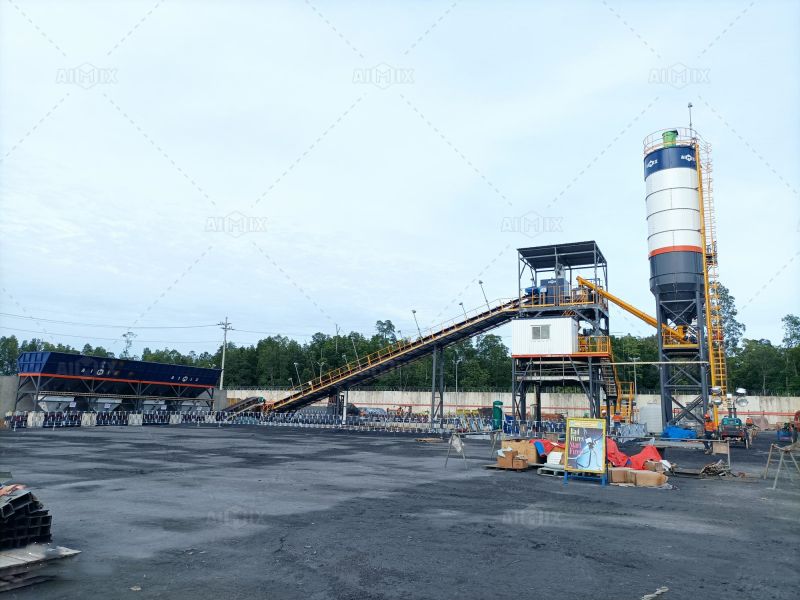
1. Eliminating the “Logistical Tax” of Remote Sites
The most significant drain on a mining budget is the transportation of wet concrete over long distances. In remote mining concessions, hauling concrete from a central stationary plant to a moving mine front can lead to “segregation” or premature setting, especially in tropical heat. By opting for a rapid-deploy concrete batching plant for sale, mining companies can position production exactly where the work is happening—at the portal of a new tunnel or the base of a new processing tower.
In the archipelago of the Philippines, where mines are often located in mountainous regions with restricted road access, the ability to move the plant closer to the front is revolutionary. A concrete batching plant Philippines operators deploy in these areas reduces the reliance on heavy transit mixer traffic over unstable haul roads, effectively eliminating the “logistical tax” associated with fuel, tire wear, and vehicle maintenance.
2. Rapid Mobilization and “Zero-Foundation” Engineering
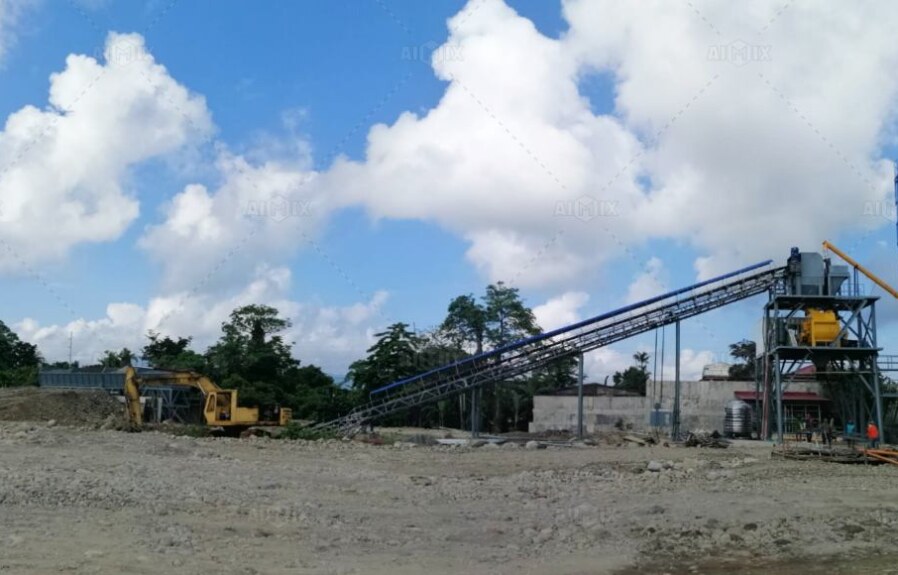
Traditional concrete plants require weeks of civil works, including massive concrete foundations, before they can begin production. For a mine front that may only be active for 12 to 18 months, this setup time is a sunken cost that never fully pays off. Rapid-deploy units are engineered with a “Zero-Foundation” philosophy. These plants are often built on integrated steel chassis or skid-mounted frames that require only a leveled, compacted earth surface.
When a mining company acquires this type of concrete batching plant for sale, they are buying speed. The modular components—silos, belt conveyors, and the mixing block—are pre-wired and pre-plumbed. In most cases, a team can have the plant fully operational within 48 to 72 hours of arrival. This agility allows mine managers to respond to geological discoveries in real-time, ensuring that structural supports and foundations for new machinery are poured the moment they are needed.
3. Maintaining Mix Integrity for Critical Mine Safety
Safety in mining is non-negotiable, particularly when it comes to shotcrete for underground support or the construction of heavy-duty tailings dams. The quality of concrete degrades every minute it spends in a transit mixer. By utilizing a mobile concrete batching plant for sale right at the mine front, engineers ensure that the “slump” and chemical properties of the mix are perfect at the moment of discharge.
This is especially vital for the concrete batching plant Philippines industry, where high humidity and sudden rainfall can drastically alter the moisture content of aggregates. A plant situated at the front allows the operator to monitor the environment in real-time and adjust the water-to-cement ratio instantly. This precision results in higher-strength concrete that meets the rigorous safety standards required for deep-vein mining and seismic-resistant infrastructure.
4. Scalability and Modular Fleet Management
Modern mining operations are rarely monolithic; they often consist of several active nodes spread across a vast lease. A rapid-deploy concrete batching plant for sale offers a “Lego-like” scalability. If a specific front requires a surge in production, two modular units can be synchronized to work in tandem. When that section of the mine is completed, one unit can be dismantled and hauled to a new location while the other continues to serve secondary needs.
This modularity has transformed the financial model of mining equipment. Instead of a single, massive capital expenditure on a stationary landmark, companies are building “fleets” of mobile plants. In the competitive landscape of the concrete batching plant Philippines market, this flexibility allows contractors to bid on multiple smaller mining projects simultaneously, moving their assets across the islands as contracts begin and end.
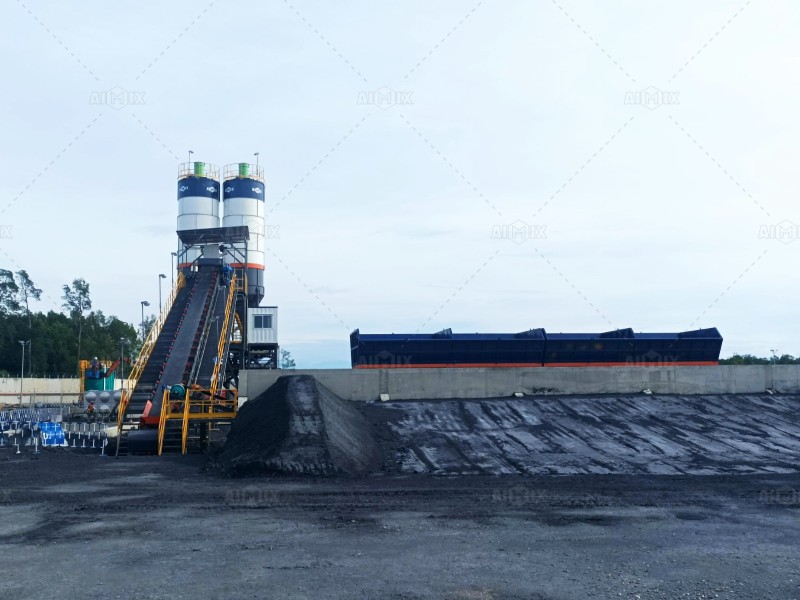
5. Sustainability and Environmental Footprint
Mining is under increasing scrutiny to reduce its environmental footprint. A stationary plant leaves behind a massive concrete “scar” on the land once it is decommissioned. Rapid-deploy plants, however, leave almost no trace. Because they do not require deep concrete foundations, the site can be reclaimed and remediated much more easily once the plant moves to the next front.
Additionally, reducing the travel distance of transit mixers significantly lowers the carbon emissions of the mining operation. By producing concrete on-site, a concrete batching plant Philippines-based project can reduce its fleet’s fuel consumption by up to 40%. This efficiency is a key component of “Green Mining” initiatives that are becoming mandatory for securing operating licenses in the 21st century.
Conclusion: The Future of Mining Infrastructure
As the mining industry moves into 2026 and beyond, the ability to be lean and agile is the hallmark of a successful operation. The rapid-deploy concrete batching plant for sale is no longer a niche product; it is a strategic asset that protects a mine’s schedule, budget, and safety record.
Whether it is supporting the massive infrastructure needs of a copper mine in the highlands or a nickel operation in the Philippines, these mobile powerhouses ensure that the concrete—the literal foundation of the industry—is always exactly where it needs to be. In the race to extract the minerals of the future, the companies that move their infrastructure as fast as they move their earth will be the ones that lead the market.