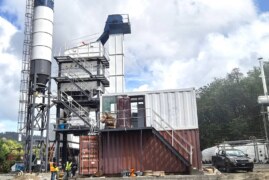
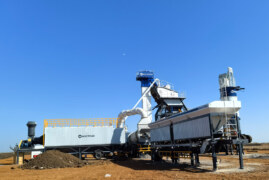
Heavy-duty asphalt mixer plant configurations transform mining haul road maintenance from operational vulnerability to managed capability in abrasive dust environments. Structural engineering withstanding fluctuating power supplies and plug-and-play modularity generate superior ROI through availability preservation where technician logistics face constraints. These capabilities distinguish mining-focused hot asphalt mixing plant deployments from standard construction specifications.
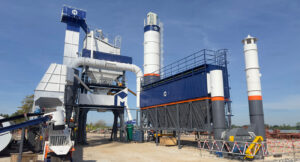
Abrasive Dust Protection Engineering
Mining regions generate silica concentrations exceeding 15,000 μg/m³, accelerating component degradation in standard configurations. Premium asphalt mixer plant designs utilize sealed bearing housings with triple-lip seals and automatic lubrication systems maintaining contamination exclusion. Specifically, these protections extend trunnion roller life from 2,000 hours to 8,000+ hours in open-pit environments where dust infiltration destroys conventional alternatives.
Drum liner specifications determine maintenance frequency. Chromium carbide overlay achieving 600 BHN hardness withstands quartz-rich aggregate abrasion that 400 BHN standard liners cannot survive. Hot asphalt mixing plant configurations with ceramic tile or high-alloy steel options maintain geometric precision across 40,000+ operating hours, preventing the dead zones and thermal stratification that accelerate wear in basic designs.
Electrical enclosure integrity accompanies mechanical protection. IP66-rated control cabinets with positive-pressure ventilation and HEPA filtration prevent conductive dust accumulation on circuit boards. This engineering eliminates the control system failures that account for 35% of downtime in unprotected mining deployments.
Power Supply Resilience
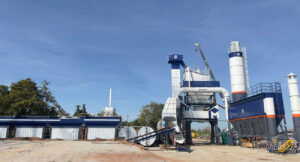
Remote mine sites experience voltage fluctuations of 15-25% and frequent outages that standard equipment cannot accommodate. Robust asphalt mixer plant configurations incorporate voltage regulators, surge protection, and uninterruptible power supplies maintaining control system integrity during grid instability. These protections prevent the parameter loss and restart sequences that destroy production continuity.
Dual-fuel burner systems provide operational continuity when electrical infrastructure fails. Automated switching between diesel and heavy fuel oil without manual recalibration ensures thermal stability during power transitions. Hot asphalt mixing plant designs with this capability maintain discharge temperature within specification even during 30-60 minute electrical interruptions.
Generator integration options eliminate grid dependency entirely. Self-sufficient configurations with integrated diesel power generation achieve immediate operational readiness without external electrical infrastructure. This autonomy proves essential when mine site expansion precedes permanent power installation by 12-18 months.
Modularity Enables Field Maintenance
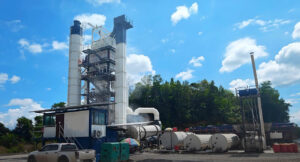
Restricted technician access in remote mining corridors demands repairability that integrated designs cannot provide. Modular asphalt mixer plant architectures with plug-and-play electrical harnesses, quick-release drum segments, and standardized bearing cartridges enable local maintenance teams executing repairs without specialized tooling.
Component standardization amplifies field repair capability. Common fastener specifications, interchangeable burner assemblies, and universal control modules allow parts scavenging and local procurement when supply chains face disruption. Specifically, this architectural choice reduces mean time to repair from 5-7 days awaiting specialist dispatch to 8-12 hours using on-site resources.
Diagnostic transparency supports autonomous troubleshooting. Plain-language fault codes, LED status indicators, and remote telemetry capability enable mine site technicians identifying issues without manufacturer dependency. Hot asphalt mixing plant configurations with this accessibility transform maintenance from logistics-constrained to operationally-managed.
Conclusion
Mining region asphalt mixer plant deployment demands structural durability and modularity that standard construction specifications cannot provide. Abrasive dust protection, power supply resilience, and plug-and-play field repairability generate superior ROI through availability preservation where technician logistics face constraints. Consequently, mining-focused hot asphalt mixing plant configurations distinguish operational continuity from vulnerability in harsh environments where standard alternatives would degrade into maintenance liabilities.