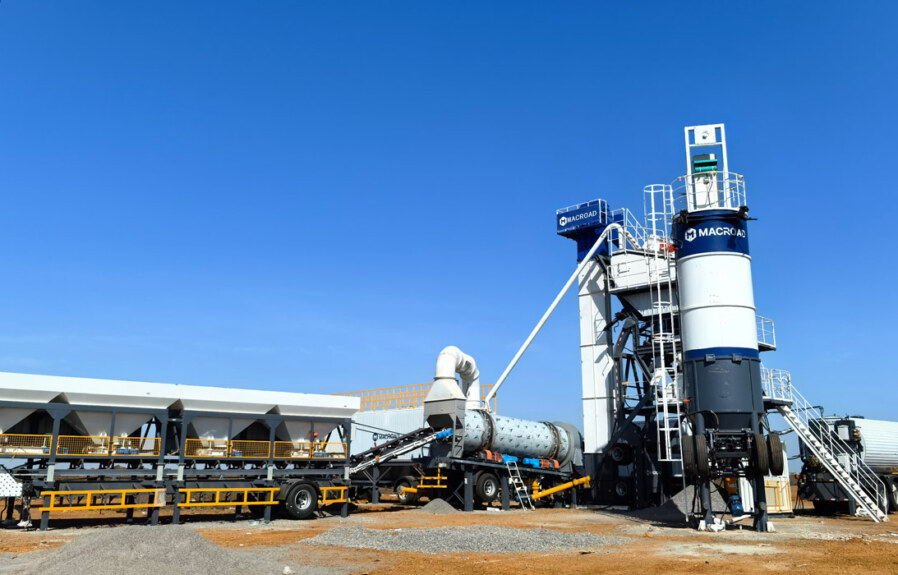
Deploying a high-mobility mobile asphalt batching plant for heavy-duty mining logistics road construction requires rigorous verification of the mobile trailer chassis under continuous mechanical stress. Because mining infrastructure demands rapid mobilization without pouring permanent concrete foundations, the mobile chassis must serve as the primary load-bearing and vibration-dampening substrate. Procurement engineers must demand comprehensive finite element analysis (FEA) data from portable asphalt plant manufacturers, specifically focusing on Von Mises stress distributions and high-frequency vertical screen vibration harmonics. Verifying these structural dynamics ensures the structural integrity of the trailer frame against fatigue cracking, securing long-term operational reliability in punishing haul-road environments.
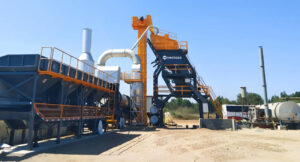
Critical Finite Element Stress Metrics for Foundation-Free Mobile Chassis
Operating a heavy-duty mobile asphalt batching plant directly on compacted earth or temporary steel pads shifts the entire dynamic load burden to the trailer chassis. The multi-stage vibrating screens positioned at the top of the mixing tower generate intense, continuous vertical harmonic forces that propagate downward through the support columns. To verify structural longevity, procurement teams must analyze the Von Mises stress plots provided by portable asphalt plant manufacturers to locate potential stress concentration zones around high-tensile bolted joints and primary weldments. This FEA data must prove that the maximum simulated stress under full operational load remains well below the yield strength of the structural steel alloy.
In light of this, the structural engineering review must evaluate fatigue life cycle predictions under cyclic harmonic loading. Mining logistics roads subject the plant to non-stop production schedules where components experience millions of stress cycles within a single season. Technical reviewers on platforms like miningdoc.tech emphasize that fatigue-critical areas, such as the transitions between horizontal bed beams and vertical outrigger mounts, require deep weld penetration profiles and gusset reinforcements. Ensuring that the manufacturer’s FEA models simulate continuous 4.5Hz to 6Hz screen vibration harmonics provides empirical proof that the chassis can absorb kinetic energy without developing micro-fractures over decades of remote service.
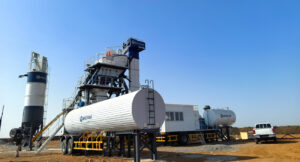
Harmonic Frequency Decoupling and Structural Isolation Mechanics
Preventing mechanical resonance within a foundation-free mobile asphalt batching plant requires precise frequency isolation engineering. If the natural frequency of the mobile trailer chassis matches or closely approaches the operational frequency of the vibrating screen deck, structural resonance occurs, amplifying the vibration amplitudes exponentially and causing rapid structural failure. Advanced portable asphalt plant manufacturers mitigate this risk by integrating heavy-duty elastomer or multi-layered composite rubber isolation mounts directly beneath the vibrating screen sub-frame to block the downward transmission of kinetic energy.
Consequently, the engineering submittals must include a comprehensive modal analysis detailing the first ten natural frequencies of the fully assembled trailer structure. This data must explicitly demonstrate a structural frequency separation—often referred to as a decoupling margin—of at least 20% from the machinery’s forced vibration frequencies. From a logistics perspective, utilizing these advanced isolation mechanics allows the plant to run safely on temporary timber matting or compacted hardcore without transferring destructive shifting forces to the underlying soil. This engineering precision eliminates the necessity for permanent concrete piers, allowing mining contractors to achieve rapid site commissioning and immediate hot mix production.
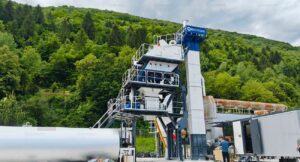
Heavy Machinery Procurement Protocols for Rugged Mining Environments
Establishing rigid technical compliance baselines during the bidding phase forces portable asphalt plant manufacturers to prioritize structural durability over aggressive pricing models. Procurement engineers managing remote mining infrastructure projects should utilize a standardized structural checklist that weights FEA validation and dynamic testing history heavily. For a mobile asphalt batching plant destined for isolated mine sites, this includes requesting certified physical strain gauge testing data from active prototype units to validate the accuracy of the digital FEA simulations.
Furthermore, because mining logistics haul roads accommodate ultra-heavy axle loads, the mobile plant’s outrigger jacks and load-spreading feet must be structurally rated for dynamic overturning moments caused by high wind loads and aggregate shifts. Top-tier portable asphalt plant manufacturers supply detailed calculation sheets for soil bearing capacity requirements, ensuring local site crews can prepare adequate non-concrete foundations. Aligning procurement specifications with these strict structural benchmarks, as championed by industrial engineering repositories like miningdoc.tech, guarantees that the chosen mixing asset will withstand the most punishing operating conditions while maintaining low lifetime maintenance overhead.
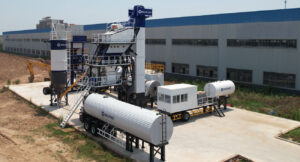
Conclusion
Securing a high-mobility mobile asphalt batching plant capable of sustaining demanding mining logistics projects depends on an uncompromising engineering audit of the trailer chassis. Demanding certified finite element analysis data and modal frequency tracking from portable asphalt plant manufacturers allows procurement teams to identify and eliminate structural vulnerabilities before the machinery arrives on site. By ensuring adequate dynamic isolation and frequency decoupling, operators can safely bypass permanent concrete foundation requirements, saving weeks of installation time. Ultimately, this rigorous technical vetting delivers a highly mobile, structurally resilient asphalt production asset that minimizes field downtime and accelerates infrastructure development in the world’s most challenging mining territories.