Conventional surface and sub-surface mining procedures struggle greatly with reduced grades, increased depth, and complicated geomechanical settings. Automated and autonomous drilling systems become a priority among extractive industrial enterprises in response to these problems. Advanced platforms can replace operator-dependent control of rig equipment with closed-loop digital control systems and sensors in combination with adaptive control algorithms.
There are several main factors that motivate such technological progress: elevated levels of occupational safety, constant output and substantial decrease in non-productive time (NPT). Workers are removed from dangerous mine pits and operate the equipment remotely while it is working consistently during shifts, adverse weather conditions, and waiting periods. This technical review discusses the latest innovations in automated drilling with the use of practical field benchmarks from open-pit copper mines, real-time detection of hazards using along-string monitoring, and control of the equipment in downhole conditions.
The autonomous procedure involves integration of rig control on the surface and downhole telemetry to provide predictable performance of drilling. Advanced autonomous rig controls allow maintaining stable drilling set-points with closed-loop sensing and frequent adjustment of parameters without human interference and variability. Thus, mine operations gain better penetration rates, accurate collaring and more effective blasting fragmentation to improve further crushing and grinding of rocks. Further sections will discuss practical application of the technology, downhole telemetry techniques for pack-off detection, and intelligent algorithm-based approach to autonomous equipment operation.
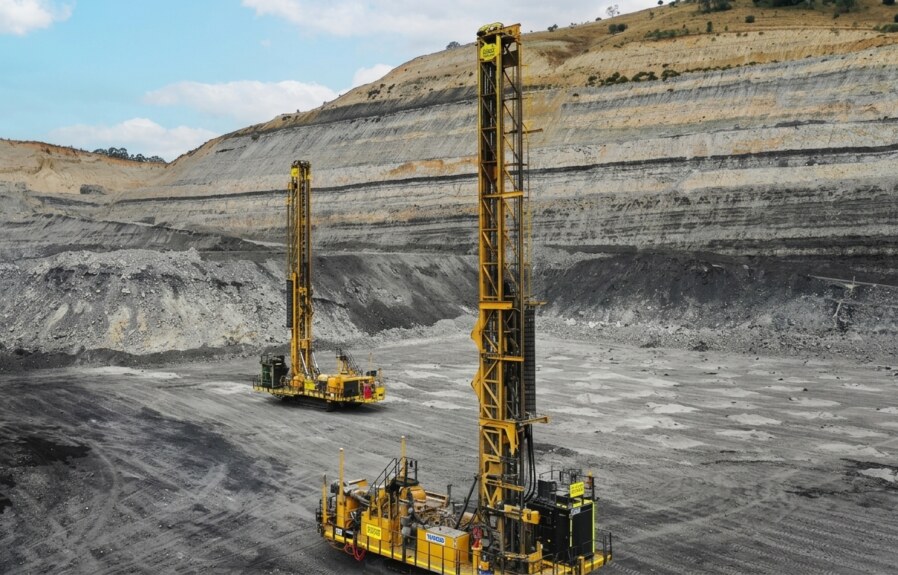
Field validation is evidence that conclusively demonstrates operational gains of autonomous drilling in surface mining. At KGHM’s Robinson mine in White Pine County, Nevada, there was an upgrade from outdated manual rotary drills to an autonomous Epiroc Pit Viper PV-271 XC drill rig fitted with Rig Control System (RCS5) software in active copper and gold pit operations. Evaluations for 18 months from baseline operations involving manual drills showed an average penetration rate of 174.7 feet per operational hour (FTPOH). Predictive autonomous modeling showed an increase in penetration rate of 16.7%. During autonomous operations, the Pit Viper had a penetration rate of 240.59 FTPOH translating to a 37.7% increase in capacity.
Drill cycle utilization showed significant gains because of the improved penetration rate. The cycle time per hole reduced by 25%, from 17.05 minutes of the baseline manual operation to 12.75 minutes. Additionally, automated routines such as Auto Level, Auto Nav, and Auto Drill improved setup times, tramming times between holes, and bit retraction times. Reduction in non-drilling delays due to shift changeovers and operator breaks also helped in calendar time. Spatial collar accuracy increased from 89% baseline to 99.49% during autonomous operations. Depth accuracy increased from 46% to 98.69%. Improved spatial accuracy reduces over-drilling and under-drilling, which results in uniformly levelled bench floors, uniform blast fragmentation, and energy saving in mill comminution.
Safety performance fits well into the company’s “Zero Harm” strategy. This is because autonomous drilling removes workers from rig cabs within open pits and places them at climate-controlled remote operator stations where they can operate the drill rig remotely. There is reduced risk of injury from hazards in open pits such as rockfalls from pit walls, collisions with equipment, vibrations, dust, and excessive noise levels. Network fail-safe protocols will ensure that operations automatically stop in case of communication links failure.
| Performance Metric | Manual Baseline | Epiroc Projected | Autonomous Actual |
| Penetration Rate (FTPOH) | 174.70 ft/hr | 203.87 ft/hr | 240.59 ft/hr (+37.7%) |
| Drill Cycle Time | 17.05 min/hole | 13.43 min/hole | 12.75 min/hole (-25.0%) |
| Spatial Collar Accuracy | 89.00% | 98.00% | 99.49% |
| Hole Depth Accuracy | 46.00% | 98.00% | 98.69% |
| Redrill Percentage | Variable | 1.50% | 0.00% (Failed Holes) |
Safety and efficiency at the bottomhole require quick hazard detection. One of the common problems with drilling operations is a pack-off situation when rock cuttings or collapsed debris of the wellbore accumulate and create a seal near the drill pipe or Bottom Hole Assembly (BHA).
This phenomenon causes restricted or blocked fluid flow, increasing equivalent circulating density (ECD) and often leading to pipe sticking or fracturing the formation. Conventional Pressure While Drilling (PWD) systems apply mud pulse telemetry that transmits data with the low sample rate (in most cases longer than 1 sample every 40 seconds).
Bandwidth limitations in the mud pulse system lead to competition between real-time data and directional or formation evaluation channels thus making difficult to observe short-term pressure pulses. Wired Drill Pipe (WDP) solves this problem and provides high-speed two-way telemetry network. The Networked pipe systems like National Oilwell Varco IntelliServ system transmit downhole data up to surface with the speed up to 57,600 bits per second. The system is combined with Along-String Measurement (ASM) tools such as BlackStream sensor nodes that are mounted along the drill string.
The high-density transmission allows detecting pack-off precursors before complete sealing of the pipe. As the pack-off develops, there appear distinct local ECD spikes and pressure gradients between neighbouring ASM sensors. Automated detection system starts the correction actions like temporarily stopping bit advancement, pumping the mud faster, or pipe reciprocation. Stopping bit advancement stops creation of new cuttings and allows washing them out by fluid flow.
Adaptive control systems are necessary for achieving optimized interaction between the bit and rocks depending on changing geological conditions. Drilling with rotary bits in heterogeneously composed rocks or layering requires the identification of the changes of the material to prevent the excessive bit wear, stick-slip oscillations, and stall of the drive motor. The research performed at Sandia National Laboratories provides the example of the Autonomous Operating Point Control (AOPC) architecture for rotary drag bit drilling, which is based on the phenomenological Detournay drag-bit model. This model reveals correlations between scaled weight-on-bit, scaled torque, and depth-of-cut, which define three drilling regimes.
The Phase II is the target drilling regime, when the energy consumption is transformed directly into removal of virgin rock. The transition from the Phase II to Phase III determines the founder point, when more weight produces regrinding, high friction and mechanical specific energy (MSE). Algorithms of AOPC provide continuous estimation of the rock parameters by means of sensor measurements, classification of the formation (for instance, sandstone, concrete, or granite), and determination of the optimal set-point. The golden section local search in real-time is used for fine-tuning the set-points for minimizing MSE. Moreover, anti-stall control loops monitor the torque limits of drive motors. The anti-stall controller reduces the target Weight-On-Bit to less than 80% of the system thresholds, if the torque goes beyond 80% of the limit during transitions into softer strata.
Moreover, machine learning frameworks allow enhancing the autonomous diagnostics capabilities. Modern research shows unsupervised deep learning architectures, which use the combination of Long Short-Term Memory Autoencoders (LSTM-AE) with Graph Neural Networks (GNN) to detect trajectory deviations. LSTM-AE identifies depth-based sequential trends, while GNN identifies the inter-parameters correlations of petrophysical and geomechanical nature. Additionally, the planetary exploration technologies like NASA’s TRIDENT rotary-percussive drill use Eigenstructure Subspace Tracking (ESST) of 40 Hz telemetry for the identification of binding, choking, and hard material inclusions without previously defined fault data.