Mining operations are becoming increasingly dependent on connected equipment and real-time data. From haul trucks and drills to loaders and other mobile assets, telemetry helps teams monitor machine performance, movement, and operating conditions.
One important factor is how frequently that data is collected and transmitted.
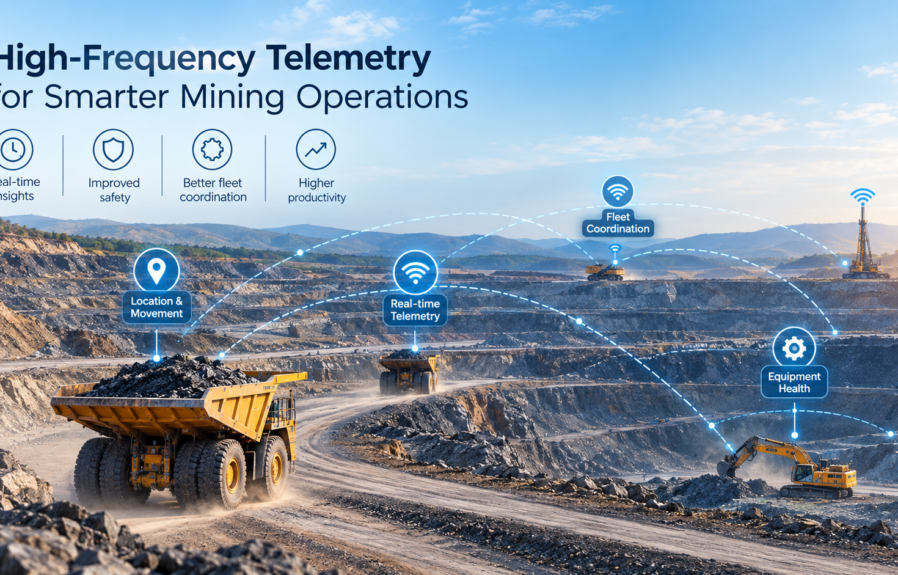
High-frequency telemetry refers to collecting and sending equipment data at short intervals. Instead of receiving updates every few minutes, mining teams can receive information more continuously. This can improve visibility into what is happening across the operation.
Earlier visibility into equipment issues
Frequent telemetry can help identify changes in machine behaviour sooner. Data such as engine temperature, vibration, fuel consumption, location, and operating status can indicate developing problems.
For example, an unusual change in vibration or temperature may trigger an inspection before the issue develops into a major equipment failure. The usefulness of this approach depends on how quickly and reliably the data reaches the monitoring system.
Better fleet visibility
Mining fleets operate across large and constantly changing areas. Trucks move between loading points, crushers, stockpiles, and haul roads, while drilling and other equipment may work in different zones throughout the day.
More frequent location and status updates can give fleet teams a more current view of equipment availability and movement. This can support better coordination and help identify delays or idle equipment.
Supporting safer operations
Telemetry can also contribute to safety by providing more current information about equipment location and operating conditions. During an abnormal event, having recent data can help teams understand what was happening before and during the incident.
The role of network connectivity
High-frequency telemetry generates a continuous flow of data, making network performance an important part of the overall system. Mining environments may require reliable coverage, low latency, and connectivity that can support mobile equipment across changing terrain.
Technologies such as wireless mesh Wi-Fi can be used to support connected mining environments where equipment and network coverage are constantly changing.
Ultimately, the value of high-frequency telemetry depends not only on the sensors and software collecting the data, but also on the connectivity infrastructure that carries that information reliably across the mine.