
As an open-pit mine expands, the distance between the excavation face and the crushing plant often increases, changing the cost and efficiency of material transportation. A fixed crushing installation may provide stable, high-volume production, but longer haul routes can increase truck fuel consumption, maintenance requirements, and cycle times. Mobile aggregate crushing equipment offers greater flexibility as mining areas shift, although relocation, operating conditions, and production capacity must be considered. Choosing between these setups requires evaluating the mine’s development plan, material characteristics, throughput requirements, and total operating costs rather than comparing equipment prices alone.
How Mine Expansion Changes Crushing Requirements
During the early stages of an open-pit mine, a fixed crusher can be positioned close to the initial extraction area. As mining progresses horizontally or deeper into the pit, the working face moves farther away. Trucks must travel longer distances to deliver run-of-mine material, potentially increasing transportation costs and reducing the number of loads delivered per shift.
This change affects more than haulage. Longer truck cycles can create an uneven supply of material to the crusher, particularly when fleet availability or road conditions fluctuate. Even when the crusher has sufficient rated capacity, inconsistent feeding may prevent the operation from achieving its production targets.
Aggregate crushing equipment should therefore be evaluated against the mine’s future layout, not just its current production area. A configuration that performs well during initial extraction may become less economical as the pit expands.
Fixed Crushing Installation: When Stability Matters Most
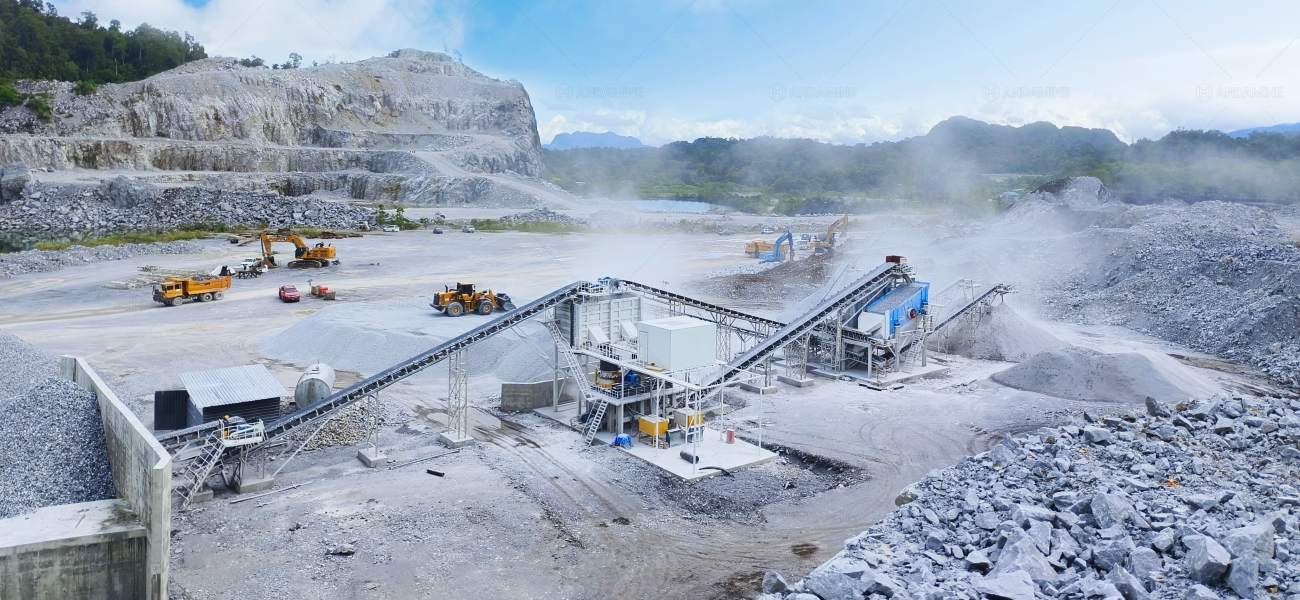
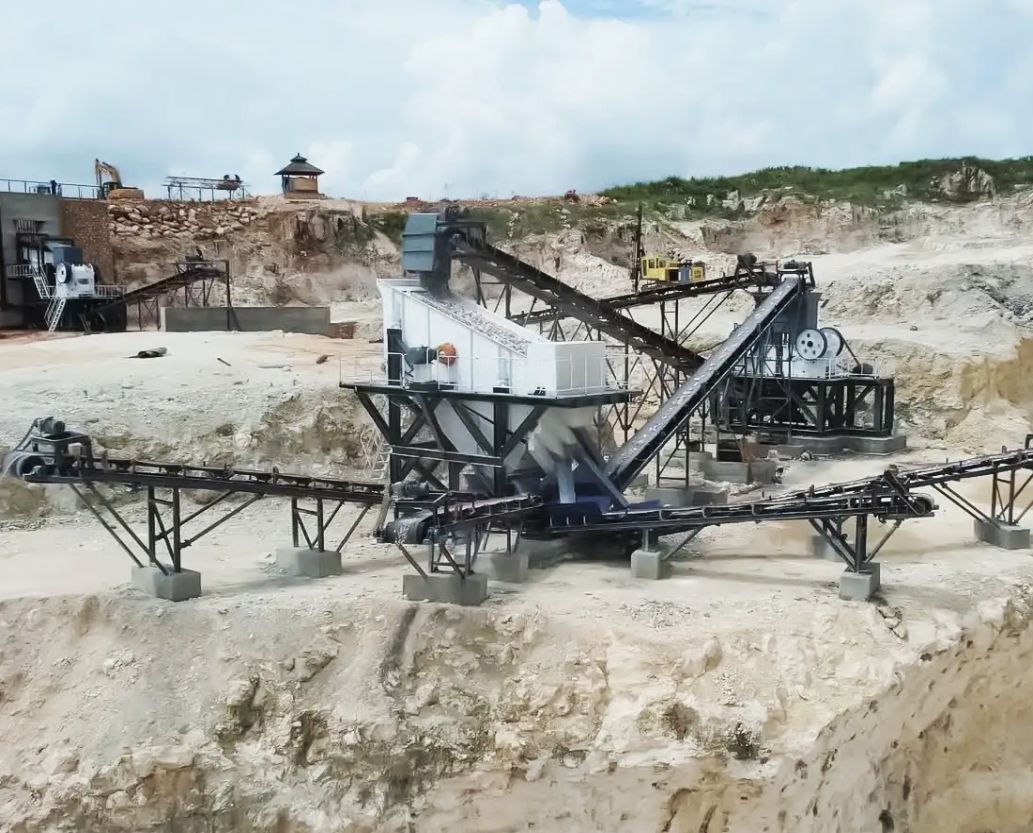
A fixed crushing plant is generally suited to long-term mining operations with predictable production requirements and sufficient space for permanent infrastructure. Its layout can accommodate large primary crushers, secondary and tertiary crushing stages, screening equipment, conveyors, and stockpiles. Once installed and commissioned, the system can support continuous production with a coordinated material-handling arrangement.
Conveyors can be particularly valuable when a mine has a long operating life and a suitable route for transporting crushed material. By reducing reliance on truck haulage over certain sections of the material flow, a well-designed fixed installation can improve transportation efficiency. However, conveyor construction, foundations, electrical infrastructure, and future modifications require substantial planning.
The main limitation is location. If the excavation face moves significantly away from the fixed crusher, raw material must travel farther before processing. Relocating a permanent installation can be expensive and disruptive, making a fixed setup less attractive when the mine’s development sequence changes frequently.
Mobile Crushing Setup: Following the Mining Face
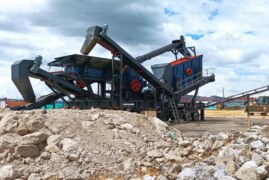
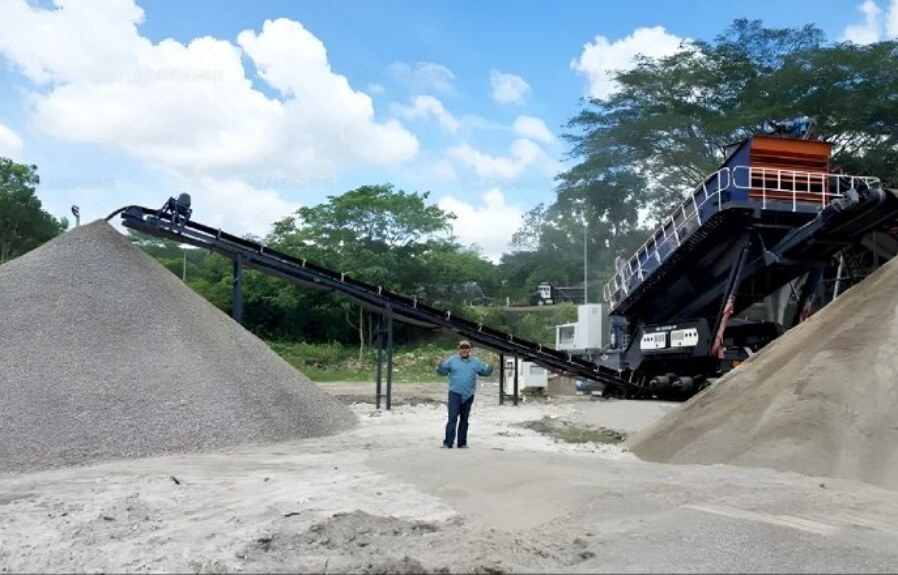
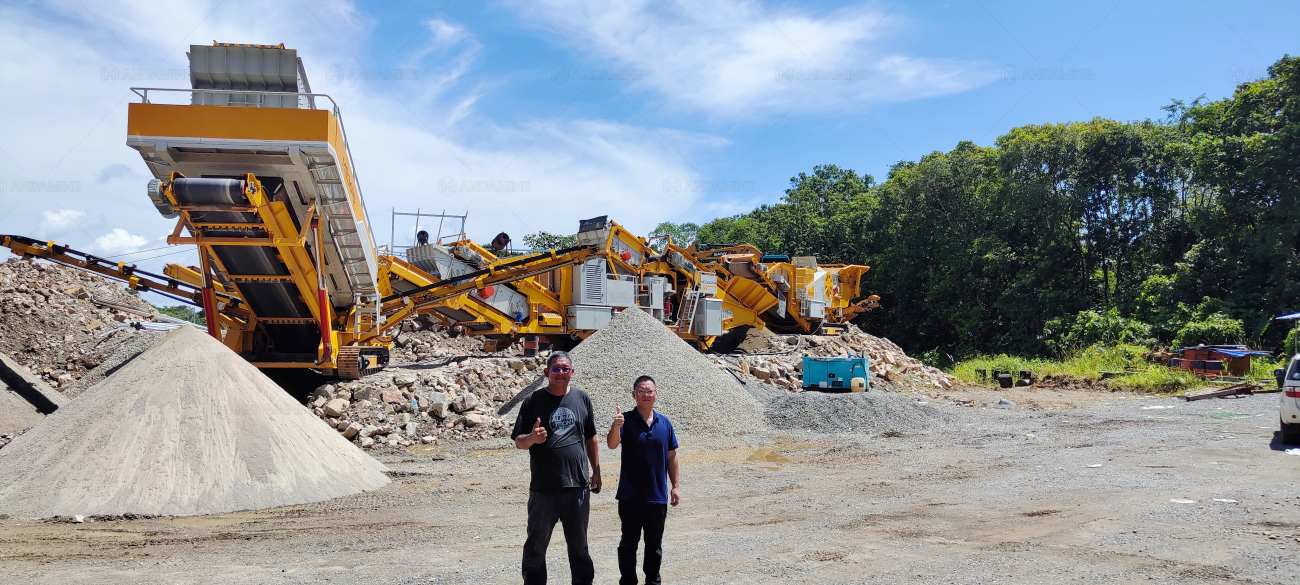
Mobile aggregate crushing equipment can be repositioned as extraction areas change, allowing crushing to take place closer to the source of material. Track-mounted units are particularly useful where machines must move across uneven ground or between working areas without relying on conventional road transport for every relocation. Depending on the configuration, a mobile setup may include feeding, primary crushing, screening, and conveying functions.
The main economic benefit comes from reducing the distance that unprocessed rock must travel. Since run-of-mine material can be bulky and expensive to haul, crushing closer to the excavation face may reduce truck movements and improve fleet utilization. Mobile systems can also support phased mine development where permanent infrastructure would be difficult to justify at an early stage.
However, mobility does not automatically guarantee lower costs. Relocation requires time, suitable access, and potentially additional transport or support equipment. Mobile crushers also have capacity limits, and their suitability depends on feed size, rock hardness, abrasiveness, and required product specifications. Mines with consistently high production volumes may need several units or a mobile-to-fixed crushing arrangement to meet demand.
Limestone and Hard-Rock Mining Require Different Considerations
Material characteristics influence the choice of aggregate crushing equipment as much as mine geometry. Limestone, for example, is generally less abrasive than many hard-rock ores, although its strength and abrasiveness vary by deposit. A lime stone crusher selected for a limestone mine must match the feed size, required reduction ratio, and final product specifications. Jaw crushers are commonly used for primary reduction, while impact or cone crushers may be appropriate for subsequent stages depending on material properties and the required aggregate shape.
In a limestone open-pit mine with relatively uniform geology and a long production horizon, a fixed crushing installation may be suitable for sustained output and integrated conveying. Where extraction shifts between separate benches or deposits, mobile crushing may offer greater flexibility and reduce unnecessary transportation of raw stone.
For harder and more abrasive rock, wear-part consumption and maintenance access become more important in the comparison. The best configuration should account for expected liner or jaw-plate life, replacement time, energy consumption, and the effect of material variability on throughput. Equipment should be selected using representative material tests and realistic operating conditions rather than rock type alone.
Compare Total Operating Costs, Not Equipment Prices
A practical comparison should include capital investment, haulage, energy, maintenance, labor, relocation, and downtime. Fixed installations generally require greater initial investment in civil works and infrastructure, while mobile setups may reduce some construction requirements but introduce relocation and mobility-related costs.
Mine planners should estimate the cost per ton over several stages of pit development. For a fixed setup, this calculation should account for increasing truck travel distances and any planned conveyor extensions. For a mobile setup, it should include repositioning frequency, production interruptions during moves, support requirements, and the cost of maintaining equipment under changing site conditions.
Production utilization is equally important. A high-capacity crusher may appear economical on paper but deliver poor results if the feed supply is inconsistent or downstream screening cannot handle its output. Conversely, a smaller mobile unit may provide better project economics when it reduces transportation requirements and operates close to the extraction face.
A Hybrid Strategy for Long-Term Mine Expansion
Fixed and mobile crushing do not always have to be competing alternatives. Some open-pit mines use mobile primary crushing near the working face and transport the crushed material by conveyor to a fixed secondary or tertiary plant. This arrangement can reduce the volume of material hauled by truck while retaining the benefits of centralized screening, product management, and downstream processing.
A hybrid configuration is most attractive when the mine has substantial production requirements but also faces significant changes in excavation location. Its feasibility depends on conveyor routing, elevation differences, relocation schedules, transfer points, and coordination between crushing stages. If the mobile unit cannot supply the downstream plant consistently, the benefits of reduced haulage may be offset by interruptions elsewhere in the process.
The decision should ultimately follow the mine’s development schedule and material-flow plan. Fixed aggregate crushing equipment is often appropriate for stable, long-life operations with predictable layouts, while mobile systems can suit expanding pits where haulage distance and extraction locations change frequently. For some mines, combining the two provides a practical balance between production stability and operational flexibility.
Before selecting a setup, mine operators should model future pit layouts, estimate haulage costs, confirm equipment capacity against tested material properties, and evaluate maintenance and relocation requirements. The most economical solution is the one that maintains the required production rate at the lowest sustainable cost per ton throughout the mine’s development, not simply the one with the lowest purchase price.