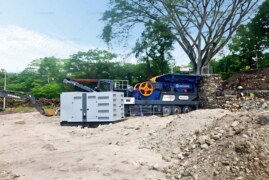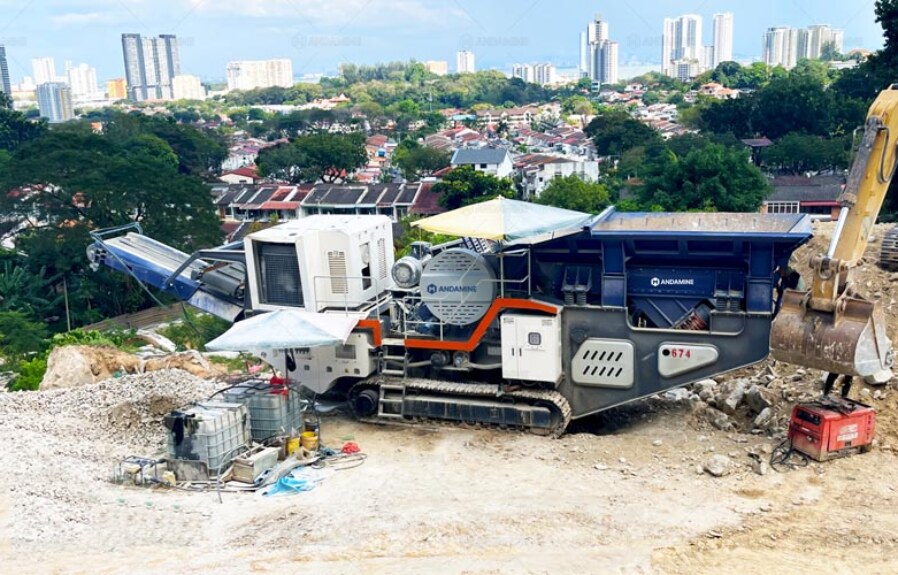
Determining the required crushing capacity is one of the most important decisions when planning a quarry project. Choosing equipment based only on the expected daily production can lead to insufficient output, unnecessary investment, or bottlenecks between processing stages. A properly designed stone crushing plant must account for working hours, material characteristics, product specifications, equipment availability, and future demand. Whether the project processes granite, limestone, or river gravel, calculating the actual production requirement helps investors select suitable machinery, including a stone crusher for gravel applications. For operations involving additional mineral processing, the capacity of a mining mill should also be considered as part of the overall production plan.
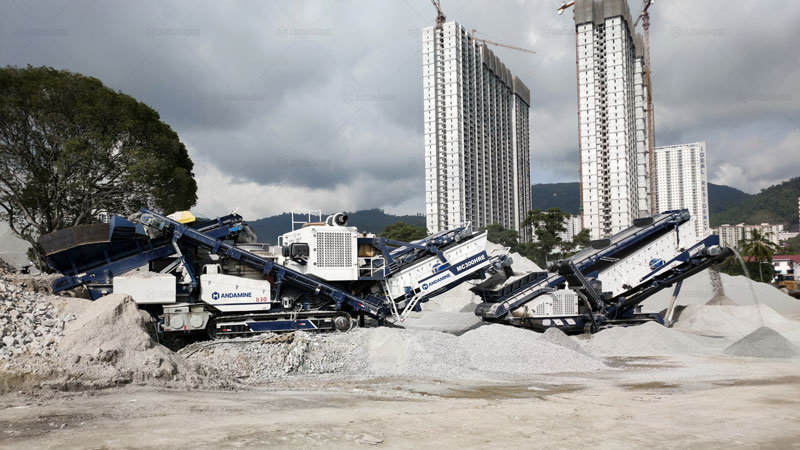
Start With the Quarry’s Actual Production Target
The first step is to determine how much finished aggregate the quarry needs to produce within a specific period. This figure should come from market demand and project supply commitments rather than the maximum capacity advertised by equipment manufacturers.
Calculate the Required Hourly Output
Use the following formula:
Required Hourly Capacity = Daily Production Target ÷ Effective Operating Hours
For example, assume a quarry needs to supply 1,600 tons of finished aggregate per day and operates for 8 effective production hours.
1,600 ÷ 8 = 200 TPH
This means the project needs to produce 200 tons of finished aggregate per hour.
However, the required feed capacity may be higher because not all incoming material becomes saleable aggregate. Screening rejects, oversized particles, and recirculated materials can affect the final output.
Account for Working Efficiency
A stone crushing plant(planta de trituración de piedra) rarely operates at its rated capacity continuously. Equipment maintenance, material interruptions, adjustments, and changes in feed conditions can reduce actual production.
If the expected operating efficiency is 80%, the required rated capacity can be estimated as:
200 ÷ 0.80 = 250 TPH
Therefore, a plant rated at approximately 250 TPH may be more appropriate than a 200 TPH configuration.
Evaluate Raw Material Characteristics Before Selecting Capacity
Two quarries with identical production targets may require different equipment configurations because their raw materials behave differently during crushing.
Consider Rock Hardness and Abrasiveness
Hard rocks such as granite and basalt generally require more crushing energy and may cause faster wear of crusher components. Softer limestone can often be processed with different crusher configurations.
For gravel operations, a stone crusher for gravel(trituradora de piedra para grava) must also handle the characteristics of the feed material, including particle size, hardness, moisture, and the proportion of naturally rounded stones.
Before determining equipment capacity, collect the following information:
- Maximum feed size and average particle size.
- Rock hardness and abrasiveness.
- Material moisture content.
- Clay or soil contamination.
- Bulk density and feed size distribution.
These parameters help determine whether the selected stone crushing plant can maintain the expected throughput under actual quarry conditions.
Calculate Capacity for Each Crushing Stage
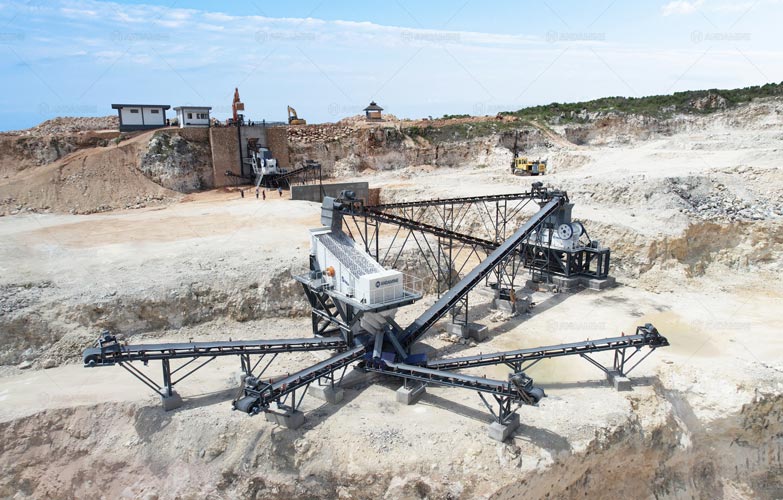
A crushing line consists of several interconnected machines. The production capacity of the entire system depends on how well these stages are balanced.
Primary Crushing
The primary crusher receives raw material directly from the feeding system. Its capacity must accommodate the maximum incoming feed rate without creating excessive accumulation.
Jaw crushers are commonly selected for primary crushing because they can handle large feed sizes and a wide range of hard-rock materials.
Secondary and Tertiary Crushing
Secondary crushers reduce material to the required intermediate size, while tertiary crushers provide additional size reduction and particle shaping.
A typical production arrangement may include:
- Vibrating feeder for controlled material feeding.
- Jaw crusher for primary reduction.
- Cone crusher or impact crusher for secondary crushing.
- Additional crushing equipment when finer products are required.
- Vibrating screens for aggregate classification.
For a stone crusher for gravel, the configuration should also consider whether the final products need improved particle shape or specific size distributions.
The capacity of each downstream machine must match the material flow from the previous stage. Otherwise, one undersized crusher can restrict the production of the entire plant.
Include Screening and Recirculation in the Calculation
Screening efficiency has a direct influence on finished-product output. Material that does not meet the required size specifications may return to the crusher for further processing.
For example, if a screening system sends 25% of the material back for additional crushing, the crushers must process more material than the final saleable output.
A simplified calculation is:
Crusher Throughput = Finished Product Output ÷ (1 − Recirculation Rate)
If the required finished output is 200 TPH and the recirculation rate is 25%:
200 ÷ 0.75 = 266.7 TPH
This means the crushing circuit needs to handle approximately 267 TPH.
Actual plant design should also consider screening efficiency, material losses, and the distribution of different product sizes.
Consider Whether Additional Processing Equipment Is Needed
Some quarry projects produce aggregates for construction, while others supply materials for mineral processing applications. These operations may require different production arrangements.
For example, a mining mill(molino minería) is used for grinding materials into finer particle sizes after appropriate crushing and preparation. Its processing capacity should be matched to the upstream crushing output and the required final product fineness.
When a project includes both aggregate production and mineral grinding, calculate the material flow for each processing line separately. Avoid assuming that the rated capacity of a mining mill is directly equivalent to the output of the crushing circuit.
This distinction helps prevent material accumulation between crushing, storage, and grinding stages.
Plan for Future Demand Without Oversizing the Plant
Quarry demand may increase as new construction contracts or aggregate markets develop. However, purchasing equipment far beyond current requirements can increase capital costs, energy consumption, and maintenance expenses.
A practical capacity plan should consider:
- Current annual aggregate demand.
- Expected production growth over the next three to five years.
- Available working hours and seasonal interruptions.
- Possibilities for adding secondary or tertiary crushing stages.
- Space for additional screens and conveyors.
A modular stone crushing plant can provide opportunities for gradual expansion without replacing the entire production system.
Turn Production Targets Into the Right Equipment Configuration
Calculating the required crushing capacity involves more than dividing daily production by working hours. Quarry operators must also account for operating efficiency, material characteristics, crushing-stage capacity, screening recirculation, and future demand. A suitable stone crusher for gravel should match the actual feed conditions and finished aggregate specifications, while projects involving finer mineral processing must coordinate crushing capacity with the mining mill.
By evaluating the complete material flow before purchasing equipment, investors can avoid production bottlenecks, control unnecessary capital expenditure, and establish a crushing system that delivers consistent output throughout the quarry’s operating life.