
At Brazilian mineral processing facilities, internal roads do much more than connect buildings and work areas. They support the daily movement of loaded dump trucks, wheel loaders, maintenance vehicles, fuel tankers, and other heavy equipment. As a result, poor road conditions can increase vehicle maintenance costs, slow down material transportation, and disrupt production schedules. Dust during dry periods and muddy surfaces during the rainy season can create additional operational challenges.
For mine operators and mineral processing companies planning road construction or rehabilitation, an 80–100 TPH asphalt plant may offer a practical production solution. However, the right capacity depends on more than the plant’s hourly output. Road length, pavement width, truck traffic, asphalt layer thickness, aggregate availability, and the daily paving schedule all influence equipment selection. So, would this capacity range meet the requirements of a Brazilian mineral processing facility? The answer depends on how the project is organized and how much asphalt the site needs to produce.
1. Why Do Brazilian Mineral Processing Facilities Need Reliable Internal Roads?
Before selecting an asphalt plant, it is important to understand the actual working conditions inside a mineral processing facility. Unlike ordinary residential roads, these routes often carry heavy vehicles throughout the day. Their pavement must support repeated loading while maintaining safe and efficient traffic circulation.
Heavy-Duty Transportation Routes
Mining and mineral processing operations rely on continuous transportation between extraction areas, crushing stations, screening facilities, stockyards, loading points, and processing workshops. Loaded trucks place substantial pressure on pavement structures, especially near turning areas, intersections, and loading platforms.
Therefore, internal roads need suitable pavement thickness, stable foundations, and an asphalt mixture designed for the expected traffic conditions. Simply increasing asphalt production capacity cannot compensate for an inadequate pavement structure.
Dust Control Around Processing Equipment
Unpaved roads can generate considerable dust when trucks and loaders move across dry surfaces. This dust may affect visibility, vehicle filters, nearby equipment, and working conditions. It can also create additional cleaning and maintenance requirements.
Asphalt paving provides a more stable road surface and can help reduce dust from vehicle movement. For facilities near populated areas or environmentally sensitive locations, this benefit may also support broader environmental management objectives. However, operators still need appropriate dust collection and environmental controls throughout the processing operation.
Rainy-Season Road Conditions
Brazil has diverse climatic conditions. Some mining regions experience significant seasonal rainfall, while others face longer dry periods. In areas with heavy rainfall, unpaved roads can develop mud, potholes, and drainage problems.
Consequently, road improvement projects should consider surface drainage, road gradients, shoulder protection, and pavement durability. Asphalt paving can improve vehicle circulation, but the underlying drainage and foundation design remain essential.
These operating conditions explain why many facilities consider producing asphalt directly or establishing a dedicated supply arrangement instead of relying entirely on external asphalt suppliers.
2. Is an 80–100 TPH Asphalt Plant the Right Production Capacity?
Once the road requirements become clear, the next step is to estimate the amount of asphalt needed. An 80–100 TPH asphalt mixing plant generally falls within a practical capacity range for medium-sized industrial road projects. It can support internal road construction, vehicle circulation areas, access roads, and phased pavement rehabilitation.
Nevertheless, buyers should distinguish between rated production capacity and actual operating output. The rated capacity describes the plant’s nominal production under specified conditions. Actual output can change with aggregate moisture, fuel quality, mix design, operating efficiency, and other site conditions.
What Can an 80 TPH Asphalt Plant Produce?
An 80 TPH plant has a nominal production capacity of approximately 80 tons of asphalt mixture per hour under its specified operating conditions. This capacity can support several medium-sized paving activities without requiring the investment associated with a much larger commercial asphalt production facility.
For example, a mineral processing company may use an 80 TPH plant to produce asphalt for internal transportation roads, workshop access routes, equipment circulation areas, and parking sections. It can also supply asphalt for phased road rehabilitation while the facility continues normal operations.
What Can a 100 TPH Asphalt Plant Produce?
A 100 TPH plant offers additional production capacity for facilities with larger paving areas or tighter construction schedules. It provides more flexibility when several road sections need asphalt at the same time or when the project requires a larger daily production volume.
However, higher output only creates value when the paving operation can consume the additional mixture. If the paver, roller fleet, transport trucks, or road preparation team cannot keep up, excess production may result in unnecessary waiting time and temperature loss.
80 TPH vs. 100 TPH: Which Capacity Should Buyers Choose?
- 80 TPH: Suitable for medium-sized internal road projects, phased rehabilitation, and facilities with moderate daily asphalt requirements.
- 100 TPH: More suitable for larger circulation networks, multiple paving sections, and projects that need greater production flexibility.
- Both capacities: Can serve industrial roads and vehicle circulation areas, provided that the plant configuration, mixture design, and paving equipment match the project requirements.
Therefore, buyers should not automatically choose the 100 TPH option simply because it offers higher output. Instead, they should calculate the expected asphalt consumption per shift and compare it with the plant’s realistic operating capacity.

3. How Much Asphalt Is Needed for Internal Roads and Vehicle Circulation Areas?
Production capacity becomes easier to evaluate when buyers calculate the project’s approximate asphalt demand. Road area, compacted layer thickness, and mixture density determine the total material requirement.
A useful preliminary calculation is:
Asphalt Mixture Requirement (tons) = Road Area (m²) × Compacted Asphalt Thickness (m) × Asphalt Mixture Density (t/m³)
For an initial estimate, buyers may use an assumed compacted mixture density of approximately 2.35–2.45 t/m³. However, the actual density must come from the approved mix design and material specifications.
Example: A 10,000 m² Internal Road Project
Suppose a mineral processing facility plans to pave 10,000 m² of internal roads. The project uses a preliminary compacted asphalt thickness of 50 mm and an assumed mixture density of 2.40 t/m³.
- Road area: 10,000 m².
- Compacted asphalt thickness: 0.05 m.
- Assumed mixture density: 2.40 t/m³.
- Estimated asphalt requirement: 1,200 tons.
This calculation provides a preliminary material estimate. It does not represent a complete pavement design, since heavy-duty mining roads may require multiple asphalt layers and a different structural thickness.
How Long Would Production Take?
At a nominal production rate of 80 TPH, producing 1,200 tons would theoretically require 15 hours. At 100 TPH, the theoretical production time would be 12 hours.
These figures represent production time only. They do not include equipment startup, mixture changes, maintenance, material handling interruptions, or other operational delays. Furthermore, asphalt must reach the paving site within an appropriate temperature range, so transportation and paving capacity must support the production schedule.
This example shows why an 80–100 TPH asphalt plant can be suitable for medium-sized industrial road projects. However, the final selection should also account for the actual construction period and the number of working shifts.
4. Which Areas of a Mineral Processing Facility Can Use Asphalt Paving?
Not every section of a mineral processing facility requires the same pavement structure. Some areas experience continuous heavy truck traffic, while others mainly accommodate light vehicles and occasional maintenance activities. Identifying these differences helps buyers estimate asphalt demand more accurately and avoid unnecessary construction costs.
Internal Transportation Roads
Internal transportation roads connect processing workshops, crushing areas, storage facilities, and loading zones. These routes often carry dump trucks and other heavy vehicles throughout the working day.
For these sections, pavement design should consider axle loads, traffic frequency, turning movements, and subgrade conditions. An appropriate asphalt mixture and sufficient pavement thickness are particularly important at locations where trucks repeatedly accelerate, brake, or turn.
Truck Circulation and Loading Areas
Vehicle circulation areas near loading stations and material stockpiles often experience concentrated traffic. Trucks may slow down, stop, reverse, and change direction frequently.
These movements create different pavement stresses from those found on straight road sections. Therefore, engineers should evaluate the risk of rutting and surface deformation when selecting the asphalt mixture and pavement structure.
Workshop Access Roads and Maintenance Areas
Maintenance workshops, equipment storage buildings, fuel service areas, and administrative facilities also need reliable access. Compared with primary haul routes, these sections may experience lower traffic volumes and lighter vehicle loads.
Consequently, the facility can divide the project into different pavement zones. This approach helps control material consumption while ensuring that heavily trafficked sections receive suitable structural support.
Entrance Roads and Connections to Public Highways
Many mineral processing facilities need to connect internal transportation networks with municipal roads or state highways. These entrance sections may carry frequent heavy truck movements and require coordination with external road access conditions.
When planning these areas, project managers should consider turning radii, vehicle queuing space, drainage, traffic safety, and the transition between existing and new pavement surfaces.
By separating the facility into these functional zones, buyers can develop a more realistic asphalt demand estimate before choosing between an 80 TPH and a 100 TPH plant.
5. Batch Mix or Drum Mix: Which Asphalt Plant Type Is More Suitable?
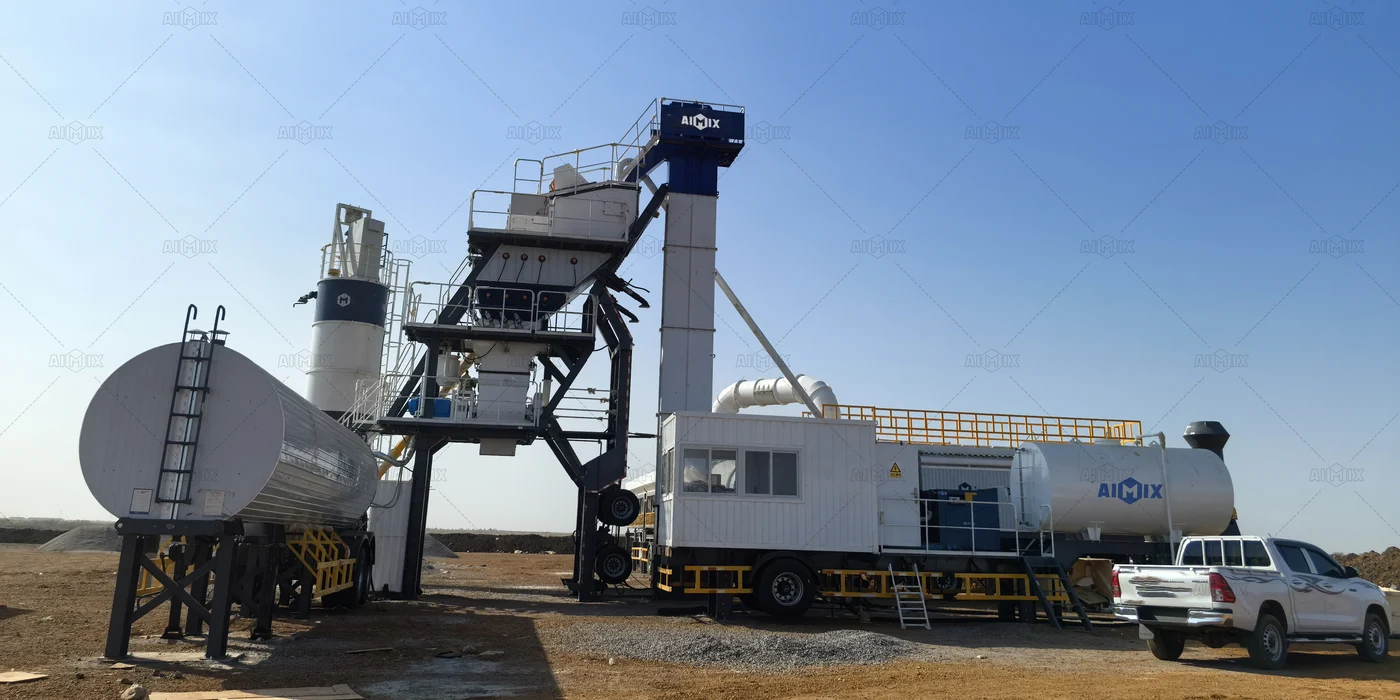
After confirming the production capacity, buyers should consider the asphalt mixing technology. An 80–100 TPH plant can serve different project requirements depending on its configuration. For mineral processing facilities, the choice often comes down to mixture flexibility, operating frequency, and production management.
Batch Mix Asphalt Plant
A batch mix asphalt plant produces asphalt in separate batches. It typically includes cold aggregate feeding, drying and heating, screening, hot aggregate storage, weighing, and mixing systems.
This production method offers greater control over aggregate proportions and mixture composition. It is particularly useful when a facility needs to produce different asphalt mixtures for primary roads, circulation areas, workshop access routes, and other pavement sections.
For example, a project may require different aggregate gradations or binder contents for different pavement layers. A batch plant makes it easier to manage these production changes through its weighing and mixing processes.
Therefore, an 80–100 TPH batch mix asphalt plant can be a strong option for facilities that prioritize mixture flexibility and consistent production control.
Drum Mix Asphalt Plant
A drum mix asphalt plant combines aggregate drying, heating, and mixing in a continuous production process. It can offer a relatively straightforward production arrangement for projects that use a consistent asphalt mixture over an extended period.
For facilities with large, relatively uniform road paving requirements, a drum continuous asphalt mixing plant may provide a practical production solution. Its continuous operation can also support projects that need a steady supply of asphalt rather than frequent changes between mixture specifications.
However, buyers should examine the actual plant configuration, aggregate feeding accuracy, binder control, emission treatment, and mixture quality requirements before making a decision.
How Should Buyers Make the Final Choice?
- Choose a batch mix configuration when the project requires multiple mixture designs, frequent gradation changes, or more flexible production management.
- Consider a drum mix configuration when the project mainly requires continuous production of a relatively consistent asphalt mixture.
- Compare actual fuel consumption, aggregate moisture conditions, maintenance requirements, environmental controls, and operating costs rather than relying only on rated capacity.
In other words, production capacity determines how much asphalt a plant can potentially produce, while mixing technology determines how the facility manages different production requirements.
6. What Should Brazilian Buyers Consider Before Installing an Asphalt Plant?
Selecting the right plant is only one part of the investment. Brazilian mineral processing facilities also need to evaluate local site conditions, material supply, environmental requirements, and construction logistics. These factors can directly affect installation costs and long-term operating performance.
Aggregate Availability and Material Quality
Aggregate supply is an important consideration because mineral processing facilities may already operate crushing and screening equipment. This can create opportunities to use suitable locally produced aggregates in asphalt manufacturing.
However, not all crushed stone is automatically suitable for asphalt mixtures. Buyers should evaluate particle size distribution, particle shape, abrasion resistance, cleanliness, and other relevant material properties.
Laboratory testing and an approved job mix formula should determine whether the available aggregates meet the project specifications. The asphalt plant should then match the required feeding, drying, screening, and mixing processes.
Aggregate Moisture and Fuel Consumption
Moisture content has a direct effect on the energy required to heat and dry aggregates. During periods of heavy rainfall, wet stockpiles can increase the drying workload and reduce actual plant output.
For this reason, Brazilian buyers should consider covered aggregate storage, effective drainage, stockpile management, and the expected moisture conditions throughout the year.
Fuel consumption should also form part of the equipment comparison. Buyers need to examine the burner configuration, fuel options, drying efficiency, and local fuel availability. Actual consumption depends on aggregate moisture, production temperature, mixture requirements, and operating conditions.
Installation Space and Site Layout
An asphalt plant requires sufficient space for equipment installation, aggregate storage, hot asphalt storage, truck movement, and maintenance access.
Mineral processing facilities may have limited available land because existing crushers, conveyors, stockpiles, and workshops already occupy much of the site. Therefore, buyers should evaluate the complete plant layout before purchasing equipment.
A well-planned arrangement can reduce unnecessary material handling, improve truck circulation, and simplify daily operation.
Environmental and Regulatory Requirements in Brazil
Asphalt production involves fuel combustion, aggregate drying, dust generation, and potential emissions from bitumen handling. Brazilian projects should therefore review the applicable environmental licensing and air emission requirements before installation.
Depending on the project location and licensing authority, buyers may need to consider requirements established under federal, state, and municipal environmental regulations. CONAMA standards and the applicable requirements of the relevant state environmental agency should form part of the compliance review.
Equipment selection should account for baghouse dust collectors, suitable burner systems, emission monitoring where required, noise management, and safe bitumen storage. The specific requirements depend on the facility, its location, and the environmental license.
Addressing these issues during the planning stage can help prevent installation delays and unexpected investment costs.
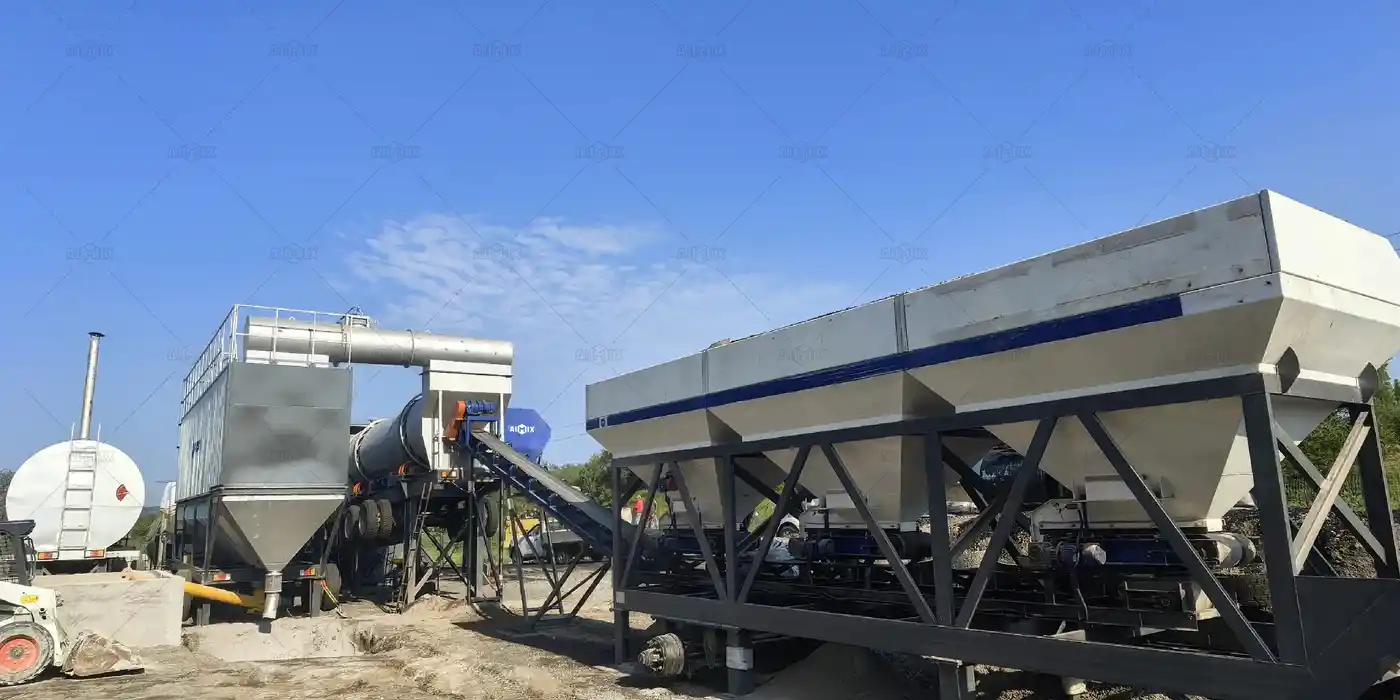
7. Should a Mineral Processing Company Produce Asphalt In-House or Buy It from External Suppliers?
Even when an 80–100 TPH plant matches the estimated production demand, the investment decision still depends on the company’s long-term operating strategy. Producing asphalt in-house is not automatically cheaper than purchasing it from an external supplier.
Advantages of In-House Asphalt Production
- Greater production control: The facility can coordinate asphalt manufacturing with its road construction and maintenance schedule.
- Reduced dependence on external supply: On-site production can reduce exposure to supplier availability and delivery scheduling problems, especially in remote mining locations.
- Flexible maintenance planning: The company can organize road rehabilitation according to operational priorities rather than relying entirely on external contractors.
- Potential long-term cost savings: Facilities with sufficient recurring asphalt demand may benefit from controlling production and material supply.
- Better integration with existing operations: Suitable aggregates from the facility’s crushing and screening operations may support the asphalt production process, subject to quality testing.
When Is External Asphalt Supply More Practical?
External purchasing may be more suitable when the project involves a relatively small paving area, infrequent maintenance, or a short construction period. It can also reduce the need to manage an additional production facility, specialized operators, fuel supply, and maintenance inventory.
However, transportation distance and delivery reliability can change the cost comparison. A supplier located far from a mining facility may create higher hauling expenses, longer delivery times, and greater risks of asphalt temperature loss.
How to Evaluate the Investment
Buyers should compare the total cost of in-house production with the delivered cost of externally purchased asphalt. The calculation should include more than the initial plant price.
- Asphalt plant purchase and installation costs.
- Foundation, electrical systems, and site preparation.
- Fuel, electricity, labor, and routine maintenance.
- Aggregate, bitumen, and other material costs.
- Transportation, storage, and asphalt handling expenses.
- Environmental compliance and dust control systems.
- Expected annual asphalt consumption and plant utilization rate.
For example, a facility with continuous road maintenance requirements and a large internal transportation network may achieve better long-term utilization than a facility that only needs to pave a few access roads once. Therefore, annual asphalt demand is an important factor in determining whether an in-house plant can justify its investment.
When comparing investment options, buyers should also review the overall configuration of an asphalt production plant, including its aggregate handling, heating, mixing, storage, and dust collection systems. This helps ensure that the quotation covers the equipment needed for the intended production process rather than only the main mixing unit.
8. What Supporting Equipment Is Needed for an 80–100 TPH Asphalt Plant?
A complete asphalt production and paving operation requires more than a mixing plant. The supporting equipment must work together to ensure that the finished mixture reaches the construction area at the right time and temperature.
Asphalt Production Equipment
- Cold aggregate feeding system: Supplies different aggregate sizes to the production line at controlled rates.
- Drying drum: Removes moisture and heats aggregates to the required production temperature.
- Burner system: Provides the thermal energy needed for aggregate drying and heating.
- Dust collection system: Collects dust generated during aggregate processing and supports environmental compliance.
- Mixing system: Combines heated aggregates, mineral filler, and bitumen according to the approved mixture design.
- Bitumen storage and supply system: Stores and supplies bitumen at the required temperature.
Asphalt Transportation and Paving Equipment
- Insulated dump trucks: Transport hot asphalt while helping maintain its temperature.
- Asphalt paver: Spreads the mixture at the required width and preliminary thickness.
- Steel-wheel rollers: Compact the asphalt layer and help achieve the specified density.
- Pneumatic tire rollers: Provide additional compaction where required by the paving specification.
- Road preparation equipment: Supports grading, base preparation, cleaning, and surface treatment before paving.
The equipment fleet should match the plant’s realistic output and the distance between the production and paving locations. If the plant produces asphalt faster than trucks can transport it, the paver may experience supply interruptions. Conversely, insufficient plant output can leave the paving team waiting for additional material.
Therefore, coordinating the mixing plant, transportation fleet, and paving equipment is essential for achieving consistent construction progress. In particular, selecting a suitable asphalt paving machine helps match mixture delivery with paving width, working speed, and the planned construction area.
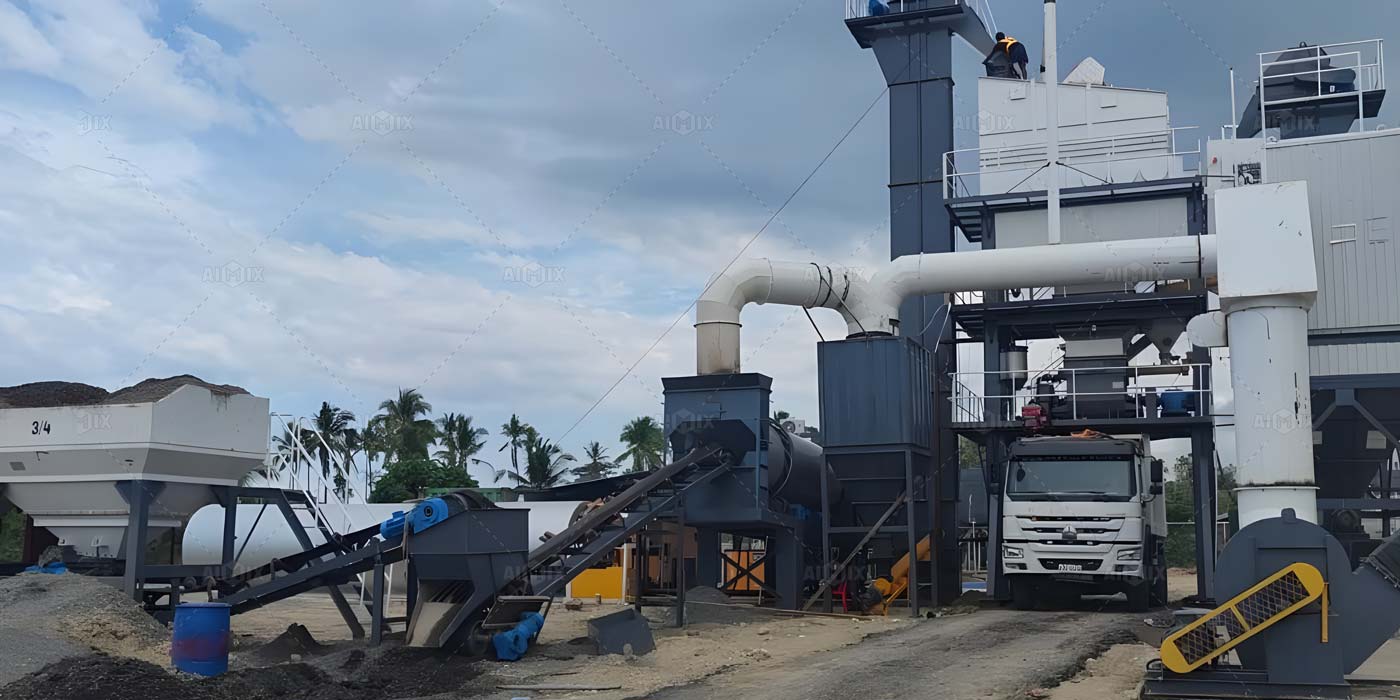
9. How to Improve the Efficiency of an 80–100 TPH Asphalt Production Operation?
Choosing the correct capacity creates a good starting point. However, daily operating efficiency determines whether the plant delivers the expected production performance. For mineral processing facilities, several practical measures can help improve coordination and control operating costs.
Plan Asphalt Production Around the Paving Schedule
Production should follow the actual paving plan rather than operating continuously without considering material consumption. Project managers should coordinate the plant’s working hours with truck availability, road preparation, and paving progress.
This approach helps reduce unnecessary asphalt storage and limits the risk of producing more mixture than the construction team can use.
Control Aggregate Moisture and Stockpile Conditions
Wet aggregates increase drying energy requirements and may reduce production efficiency. Separate stockpiles, effective drainage, and proper material handling can help maintain more consistent feeding conditions.
Operators should also monitor aggregate gradation and avoid unnecessary mixing of different material sizes during storage and transportation.
Maintain Consistent Mixture Quality
Stable asphalt quality depends on accurate aggregate proportions, bitumen content, mixing temperature, and production control. Regular sampling and laboratory testing can help identify deviations before they affect large sections of the road.
For heavy-duty industrial roads, mixture selection should reflect expected axle loads, traffic frequency, climate, and pavement structure. A qualified pavement engineer should determine the appropriate mix design and construction specifications.
Reduce Unnecessary Equipment Downtime
Routine inspections of burners, conveyors, bearings, dust collectors, weighing systems, and mixing components can help identify problems before they interrupt production.
Facilities should also prepare a maintenance schedule and maintain essential spare parts. This is particularly important for remote mining locations where replacement components may take longer to obtain.
With these measures in place, an 80–100 TPH plant can operate more consistently and support a more predictable internal road construction schedule.
10. Final Recommendation: Is 80–100 TPH a Practical Choice for Brazilian Mineral Processing Facilities?
For many medium-sized mineral processing facilities in Brazil, an 80–100 TPH asphalt plant can provide a reasonable balance between production capacity, investment requirements, and internal road construction needs. It can support transportation roads, truck circulation areas, workshop access routes, and phased pavement rehabilitation.
Nevertheless, the best choice depends on the actual project requirements rather than the plant capacity alone.
- Choose an 80 TPH plant when the facility has a moderate asphalt demand, plans to pave roads in stages, or needs a dedicated production solution for regular maintenance.
- Choose a 100 TPH plant when the facility has a larger internal road network, needs to complete paving within a shorter construction period, or expects higher recurring asphalt consumption.
- Consider a batch mix plant when the project requires different asphalt mixture specifications and greater production flexibility.
- Consider a drum mix plant when the facility mainly needs continuous production of a relatively consistent asphalt mixture.
- Evaluate external asphalt supply when annual consumption is low or the facility does not expect to use the plant frequently enough to justify the investment.
Most importantly, buyers should calculate the total asphalt demand, evaluate the actual site conditions, confirm the required pavement structure, and coordinate the plant output with the paving fleet before finalizing their equipment selection.
11. Get an Asphalt Plant Configuration for Your Brazilian Mining Project
Every mineral processing facility has different road layouts, traffic conditions, material resources, and construction schedules. A plant that works well for one mining operation may not be the most economical solution for another. Therefore, selecting an asphalt plant should start with your actual project requirements.
At AIMIX, we provide asphalt mixing plant solutions for road construction, industrial infrastructure, and other pavement projects. Our team can help evaluate the appropriate production capacity, batch or drum mixing configuration, aggregate feeding system, heating equipment, and supporting components according to your project conditions.
If you are planning to pave internal roads or vehicle circulation areas at a Brazilian mineral processing facility, share the following project information with our team:
- Project location: Which Brazilian state or mining region is your facility located in?
- Paving area: How many square meters or kilometers of internal roads need paving?
- Road application: Are you paving heavy-duty truck routes, loading areas, workshop access roads, or general circulation areas?
- Required asphalt output: How many tons of asphalt mixture do you expect to produce per day or per shift?
- Plant preference: Do you prefer an 80 TPH or 100 TPH asphalt plant, or would you like our team to recommend a suitable capacity?
- Installation conditions: Do you have an existing production site, aggregate supply, and available installation space?
With these details, we can assess your expected production demand and recommend a suitable asphalt plant configuration. Contact us to discuss your Brazilian mining infrastructure project and obtain a solution based on your actual paving requirements.