
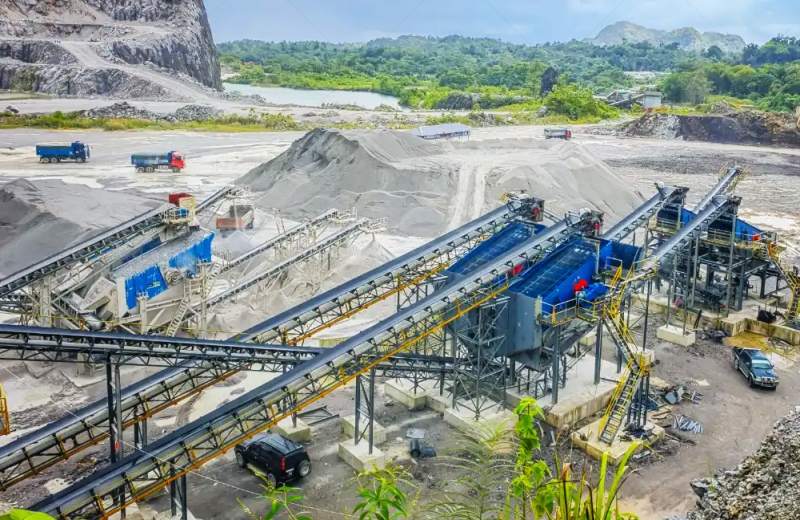
Oversized blasted rocks are a common challenge in open-pit mining and quarry operations. Although blasting breaks solid rock into manageable fragments, uneven fragmentation often leaves large boulders that exceed the maximum feed size of primary crushers. These oversized materials can cause feeder blockages, reduce crushing efficiency, and interrupt downstream production. A well-designed sand and aggregate production line must therefore incorporate effective oversize handling measures to maintain stable material flow, protect crushing equipment, and meet continuous production targets.
1. Why Do Oversized Rocks Occur During Mining Blasting?
Oversized rocks typically result from variations in rock properties, blast-hole spacing, explosive distribution, and blasting conditions. Hard rock formations such as granite and basalt may contain different fracture patterns and geological structures, making uniform fragmentation difficult. If the explosive energy is insufficient or poorly distributed, large blocks may remain after blasting.
Another contributing factor is the relationship between blast design and the intended crushing equipment. For example, a primary jaw crusher has a defined maximum feed opening. Rocks exceeding this limit cannot enter the crushing chamber efficiently. Even when oversized blocks are technically smaller than the crusher opening, irregular shapes may prevent smooth feeding and create bridging problems.
These challenges are particularly important in large mining operations where hundreds or thousands of tons of material must be processed daily. Without a suitable oversize management strategy, operators may experience repeated equipment stoppages, additional handling costs, and reduced overall plant utilization.
2. How to Identify and Separate Oversized Blasted Rocks?
The first step is to inspect blasted material before it enters the crushing system. Excavator operators can identify oversized boulders during loading, while visual inspection at the receiving hopper helps prevent unsuitable materials from entering the primary crusher. For larger operations, fragment size monitoring technologies can provide more consistent information about blast fragmentation.
Oversized rocks should be separated from regularly sized material whenever possible. Excavators can place large boulders in designated areas for secondary breaking, while appropriately sized fragments continue toward the primary crushing stage. This separation prevents oversized materials from occupying valuable hopper space and disrupting normal feeding operations.
The required separation threshold should be determined by the crusher’s maximum feed size, feed opening, and material characteristics. For instance, a granite crusher plant processing hard, abrasive rock needs particular attention to boulder dimensions and feeding conditions. Granite’s high hardness and abrasiveness make it important to avoid forcing oversized blocks into equipment that is not designed to handle them.
3. Effective Methods for Breaking Oversized Rocks
Several methods can be used to reduce oversized blasted rocks to manageable dimensions, depending on their size, quantity, location, and project conditions.
Secondary Breaking With Hydraulic Breakers
Hydraulic breakers mounted on excavators are widely used to reduce oversized boulders at mining sites. Operators can break large rocks into smaller fragments directly at designated breaking areas or near the primary crusher feed station. This approach is suitable for operations that encounter occasional oversized materials rather than consistently high volumes of large boulders.
The main advantage is operational flexibility. A hydraulic breaker can handle irregularly shaped rocks without requiring the entire crushing line to stop. However, breaking productivity depends on rock hardness, boulder size, breaker capacity, and operator experience. Mining sites should also maintain safe working distances and establish controlled breaking zones.
Secondary Blasting
For exceptionally large boulders or concentrated oversize accumulations, secondary blasting may be considered. Small secondary blast holes are drilled into selected blocks and loaded with controlled explosive charges to reduce their size.
This method can handle large quantities of oversized material, but it requires additional drilling, explosives, safety controls, and blasting procedures. It may also require temporary exclusion zones, making it less suitable when continuous nearby operations must be maintained. Therefore, secondary blasting is generally selected according to site conditions rather than used as the default solution.
4. Optimizing the Primary Crushing Stage to Prevent Blockages
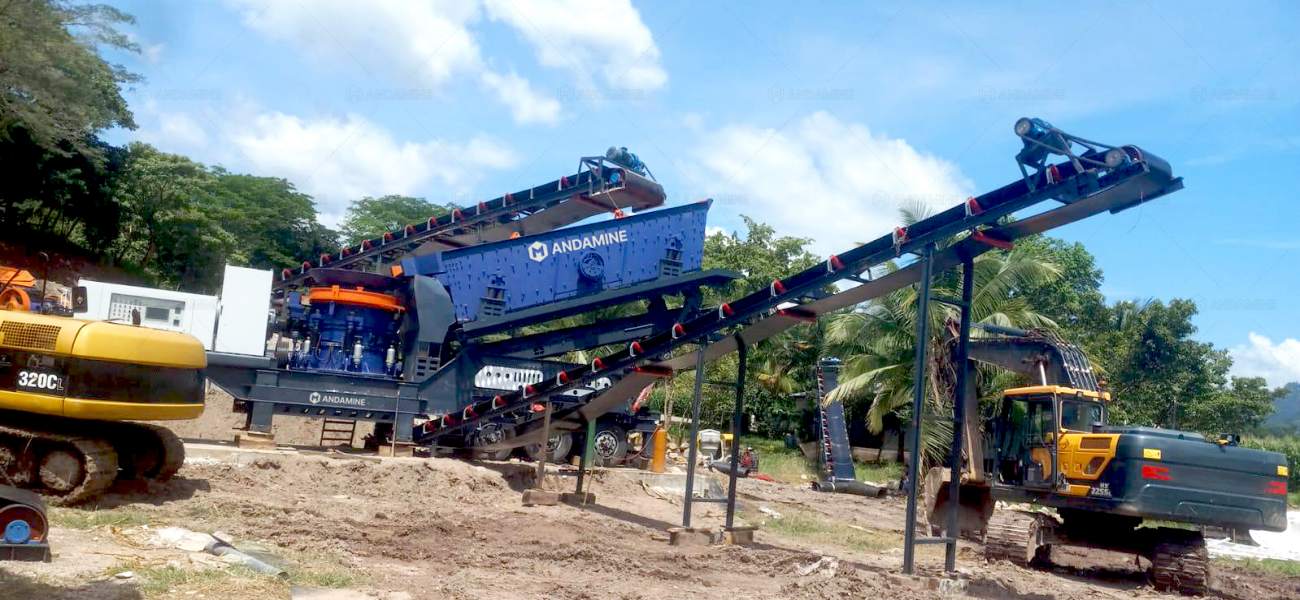
Effective oversize handling should be supported by appropriate primary crusher configuration. Jaw crushers are commonly used in mining applications because their large feed openings and robust structures allow them to process blasted hard rock. However, their maximum feed size must still match the actual fragmentation characteristics of the mine.
A suitable vibrating grizzly feeder can also improve feeding stability. By separating smaller materials before they enter the crusher, the feeder reduces unnecessary crushing loads and helps maintain a more consistent feed rate. Its spacing and configuration should be selected according to the incoming material size distribution.
For granite and other abrasive rocks, wear-resistant jaw plates and suitable crusher configurations are essential for maintaining reliable operation. Operators should regularly inspect the crushing chamber, feeding equipment, and discharge system to identify early signs of blockage or abnormal wear. These measures help reduce unexpected shutdowns and maintain stable production throughout the mining shift.
5. Coordinating Material Handling With Continuous Mining Operations
Oversized rock management should be integrated into the overall mining material flow rather than treated as an isolated crushing problem. Excavators, haul trucks, feeding systems, and crushers need to operate at compatible capacities. If trucks deliver material faster than the primary crusher can process it, stockpiles may accumulate and create additional handling requirements.
One practical solution is to establish separate material handling routes for regular blasted rocks and oversized boulders. Regular material can move directly to the crushing plant, while oversized rocks are transported or moved to a dedicated breaking area. Once reduced to an acceptable size, they can re-enter the production process.
Temporary buffer stockpiles also help maintain production when blasting or secondary breaking activities cause irregular material supply. By keeping an appropriate reserve of crusher-ready material, mining operators can reduce the impact of short-term interruptions in upstream operations. The required stockpile capacity depends on daily production targets, haulage distance, and the reliability of material supply.
6. Monitoring Performance and Reducing Oversize-Related Costs
Mining operators should track several indicators to evaluate the effectiveness of their oversize management strategy. These include the percentage of oversized rocks after blasting, secondary breaking time, crusher blockage frequency, equipment downtime, and overall tons processed per operating hour.
Comparing these indicators before and after adjustments to blast design or material handling procedures can reveal where improvements are needed. For example, frequent blockages may indicate that blast fragmentation is poorly matched to the primary crusher, while excessive secondary breaking costs may justify reviewing drilling patterns and explosive distribution.
Preventive maintenance is equally important. Regular inspection of hydraulic breakers, excavator attachments, vibrating feeders, and crusher wear parts helps identify developing problems before they affect production. By combining fragmentation control, suitable breaking methods, and equipment maintenance, mining operations can reduce unnecessary costs while improving plant availability.
Conclusion
Handling oversized blasted rocks effectively requires coordination between blasting, material separation, secondary breaking, and primary crushing. Mining operators who match rock fragmentation to crusher capacity and establish dedicated oversize handling procedures can reduce blockages, improve equipment utilization, and maintain more consistent production. For a sand and aggregate production line, these measures are particularly important when processing hard materials such as granite, where proper feeding and crushing conditions directly influence long-term operating efficiency.