
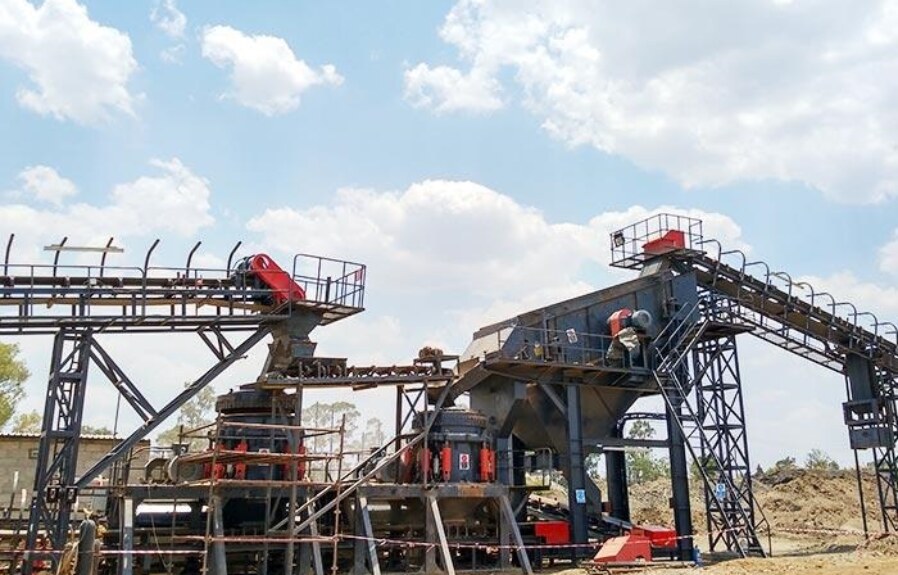
River pebbles are widely used in construction, road building, concrete production, and other infrastructure projects. With their high hardness, excellent durability, and natural appearance, they are valuable raw materials for producing high-quality construction aggregates. However, processing river pebbles efficiently is not as simple as crushing ordinary limestone or other soft rocks.
When selecting crushing equipment, many quarry owners and aggregate producers consider impact crushers because of their ability to produce well-shaped aggregates with relatively low flakiness. However, when these machines are used for processing hard, highly abrasive river pebbles, several operational problems may arise, including excessive wear of blow bars, frequent maintenance, reduced production efficiency, and unstable operating costs.
The main reason is the physical characteristics of river pebbles. Most river pebbles contain a high proportion of hard mineral components, particularly quartz, and have smooth, rounded surfaces formed through long-term water erosion. These characteristics make them considerably more difficult to process using conventional impact crushing equipment.
Does this mean impact crushers are completely unsuitable for river pebble crushing? Not necessarily. However, for most medium- and large-scale aggregate production projects requiring long-term operation, a cone crusher is generally a more economical and reliable choice for secondary crushing.
In this article, we will examine five important reasons why impact crushers are often not the ideal solution for river pebble processing, compare their performance with cone crushers, and introduce a recommended river pebble crushing plant configuration.
High Wear Resistance of River Pebbles Causes Rapid Wear of Impact Crusher Blow Bars
One of the biggest challenges when using an impact crusher to process river pebbles is the extremely high consumption of wear parts.
To understand this problem, it is necessary to examine the mineral composition and physical properties of river pebbles.
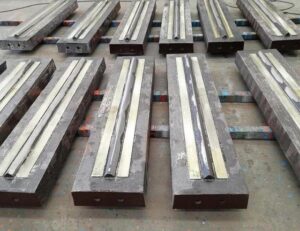
River pebbles commonly contain a significant proportion of quartz and other hard minerals. According to the material characteristics described in this application, their silica content may reach approximately 70%–85%, with a Mohs hardness of around 7–8. This makes them highly abrasive during crushing operations.
An impact crusher primarily relies on high-speed rotating blow bars to strike incoming materials against impact plates. During this process, the blow bars repeatedly come into direct contact with hard rock surfaces. When processing highly abrasive materials, continuous friction and impact gradually wear down the working edges of the blow bars and the internal impact liners.
As a result, the service life of wear components can decrease dramatically.
For example, the original field data provided for this application indicates that high-chromium blow bars may last approximately 600–800 operating hours when processing limestone. However, when crushing high-silica river pebbles, their service life may fall to around 80–150 hours, depending on material properties, feed conditions, and operating parameters.
This difference has a direct impact on production costs.
Consider a 1315-model impact crusher with a blow bar set costing approximately RMB 40,000. Under the operating conditions described in the original field data, one set may process approximately 120,000–160,000 tons of limestone, while the processing volume for river pebbles may fall below 40,000 tons.
This means that the wear-part cost per ton of finished aggregate can increase significantly.
For aggregate producers operating continuously throughout the year, the problem becomes even more serious. Frequent replacement of blow bars and impact liners not only increases spare-parts expenses but also creates additional labor costs and production interruptions.
Although an impact crusher may have an attractive initial purchase price, its total cost of ownership can become considerably higher when processing highly abrasive river pebbles.
Key takeaway: When processing hard and abrasive river pebbles, the cost of wear parts should be considered alongside the initial equipment investment. A lower purchase price does not necessarily mean a lower long-term operating cost.
Frequent Maintenance and Replacement of Wear Parts Reduce Production Efficiency
Another important disadvantage of using impact crushers for river pebble crushing is the frequent maintenance required during continuous operation.
The performance of an impact crusher is closely related to the condition of its blow bars. As these components gradually wear down, their original shape and working dimensions change, affecting the crushing gap and the impact process.
Even relatively small changes in the blow bar profile can influence the crushing result, especially when the production line needs to maintain consistent aggregate specifications.
When blow bars reach their wear limit, operators must stop the machine and carry out maintenance. The procedure may involve opening the crusher housing, removing worn components, installing replacement blow bars, adjusting the clearance, checking the rotor balance, and conducting a test run.
Depending on the equipment structure and maintenance conditions, this process can take considerable time.
The original field data indicates that replacing a set of blow bars may require approximately 1.5–3 hours of downtime. For production lines processing river pebbles continuously, maintenance may be necessary at least once a week under certain operating conditions.
Although a single maintenance shutdown may appear manageable, the cumulative production losses can be substantial.
For example, consider an aggregate plant designed to produce 150 tons per hour. If the secondary crushing stage stops for maintenance several times each month, the resulting production losses can affect the entire plant’s output.
Furthermore, the impact is not limited to the crusher itself. A complete crushing line usually includes vibrating feeders, belt conveyors, screening machines, and other supporting equipment. When the secondary crusher stops unexpectedly, the operation of these connected machines may also be interrupted.
This creates several additional problems:
- Reduced overall production line utilization.
- Increased labor requirements for equipment maintenance.
- Additional electricity consumption during repeated shutdown and restart cycles.
- Greater difficulty maintaining delivery schedules.
- Increased pressure on spare-parts inventory management.
According to the operational figures in the original article, some river pebble processing lines using impact crushers have equipment utilization rates of approximately 65%–75%, while comparable cone crusher configurations may achieve rates above 85%.
These figures should be evaluated against actual project conditions, but they illustrate why maintenance frequency is an important factor in equipment selection.
For large-scale aggregate producers, stable production is often more valuable than a small difference in the initial equipment price.
Key takeaway: Frequent maintenance reduces not only the operating efficiency of an impact crusher but also the productivity of the entire crushing plant. Equipment selection should therefore consider maintenance intervals and overall production line availability.
Smooth and Rounded River Pebbles Reduce Impact Crushing Efficiency
The physical shape of river pebbles is another important reason why conventional impact crushers may not perform efficiently in this application.
Unlike freshly blasted rocks, river pebbles have been exposed to flowing water for long periods. Continuous friction between stones and natural erosion gradually remove sharp edges, creating smooth, rounded, or elliptical surfaces.
This characteristic affects how the material responds to crushing forces.
An impact crusher uses high-speed rotating blow bars to generate strong impact forces. When angular and relatively brittle limestone enters the crushing chamber, the impact force can initiate cracks and break the material into smaller particles.
However, river pebbles behave differently.
Because of their rounded surfaces, they may rebound, roll, or slide when struck by the blow bars. Instead of efficiently transferring the impact energy into internal fractures, part of the energy may be lost through rebound and movement.
As a result, some materials may require repeated impacts before reaching the target particle size.
This creates a greater burden on the screening and recirculation system.
In a closed-circuit crushing process, materials that do not meet the required particle size are returned to the crusher for further processing. When the crushing efficiency decreases, more oversized materials may enter the return circuit.
The original field data suggests that circulating loads in some impact-crushing applications involving river pebbles may reach approximately 25%–35%, compared with around 10%–18% for cone crusher configurations under the stated operating conditions.
A higher circulating load means that the crushing equipment must repeatedly process materials that have already passed through the machine.
This can result in:
- Increased electricity consumption.
- Greater pressure on the crushing chamber and wear components.
- Reduced effective output of finished aggregates.
- Increased workload for vibrating screens and conveyors.
- Lower overall production efficiency.
For example, an impact crusher with a nominal capacity of 150 tons per hour may achieve a significantly lower effective finished-product output when processing difficult river pebble materials.
It is important to distinguish between the rated capacity of an individual machine and the actual output of qualified finished aggregate. The latter is determined by the entire production process, including crushing efficiency, screening performance, recirculation, and final product specifications.
Key takeaway: The smooth and rounded structure of river pebbles can reduce the effectiveness of conventional impact crushing. For high-hardness materials requiring stable secondary crushing, compression-based equipment is often a more suitable option.
Unstable Impact Loads Can Increase the Risk of Rotor and Bearing Damage
In addition to wear-part consumption and production efficiency, the long-term reliability of major mechanical components should also be considered.
An impact crusher operates through a high-speed rotating rotor equipped with blow bars. During operation, the rotor continuously accelerates and strikes incoming materials inside the crushing chamber.
When the feed material has relatively consistent physical properties, the equipment can operate within its designed working conditions.
However, when processing hard river pebbles, variations in particle size, shape, hardness, and feeding conditions may create more demanding operating conditions.
The impact forces generated during crushing are transferred through the blow bars, rotor, main shaft, bearings, and supporting structures.
If the equipment experiences repeated abnormal impacts, uneven feeding, or excessive vibration, the mechanical components may be subjected to additional stress.
Over time, improper operating conditions and insufficient maintenance can contribute to problems such as:
- Increased bearing temperatures.
- Abnormal vibration and noise.
- Loosening of rotor connections.
- Fatigue damage to structural components.
- Premature failure of certain mechanical parts.
The original article cites an approximate major overhaul interval of 3,000 operating hours for impact crusher rotors used in river pebble applications, compared with more than 6,000 hours for major components in certain cone crusher applications.
These figures should not be treated as universal service-life guarantees. Actual maintenance intervals depend on equipment design, feed conditions, installation quality, operating practices, and maintenance standards.
The fundamental difference is that cone crushers use compression-based crushing rather than relying primarily on high-speed impact.
In a cone crusher, material is compressed between the mantle and concave. Multiple particles can be crushed through continuous compression and interparticle interaction, providing a more controlled crushing process for hard and abrasive materials.
This operating principle is generally better suited to demanding secondary crushing applications involving river pebbles.
For quarry owners planning long-term production, mechanical reliability is an important part of the investment calculation. Unexpected failures of major components can result in expensive repairs and extended production interruptions.
Key takeaway: For continuous river pebble crushing, equipment reliability and mechanical stability should be evaluated carefully. A suitable compression-based crushing solution can help reduce the risks associated with demanding operating conditions.
Unstable Aggregate Gradation and Excessive Fines Can Affect Final Product Quality
For aggregate producers supplying ready-mix concrete plants, asphalt plants, and infrastructure projects, crushing efficiency is only one part of the production requirement.
The final aggregate must also meet specific requirements regarding particle size distribution, fines content, particle shape, and other quality indicators.
An impact crusher can produce relatively well-shaped aggregates under suitable operating conditions. This is one of the reasons why it is widely used in limestone processing and other aggregate production applications.
However, when processing highly abrasive river pebbles, maintaining consistent product quality can become more difficult.
One reason is the continuous wear of blow bars.
As the blow bars become worn, their working profiles and effective striking positions change. This can influence the crushing gap and the way materials move through the crushing chamber.
Consequently, the particle size distribution and crushing performance may change over time.
Another concern is the generation of fine particles.
High-speed impact and repeated crushing can produce additional fines, particularly when materials are subjected to multiple crushing cycles. If the crushing process is not properly controlled, the proportion of smaller particles may increase.
This creates several potential problems for aggregate producers:
Unstable particle size distribution
Changes in crushing conditions can affect the proportion of different aggregate sizes. The screening system may need additional adjustment to maintain the required product specifications.
Excessive fines content
Too many fine particles may require additional screening or washing processes, increasing production costs and complicating material handling.
Inconsistent aggregate quality
Differences in wear-part conditions, feeding conditions, and operating parameters can make it more difficult to maintain stable product quality over extended production periods.
For commercial aggregate plants, consistent product specifications are essential for maintaining customer confidence and fulfilling long-term supply contracts.
A practical solution is to separate the secondary crushing process from the final shaping process.
Instead of relying entirely on an impact crusher for both size reduction and particle shaping, many aggregate production lines use a cone crusher for secondary crushing and a Vertical Shaft Impact (VSI) crusher for final shaping.
The cone crusher handles the main secondary crushing workload, while the VSI crusher is used to improve particle shape and produce more cubic aggregates.
This configuration allows each machine to perform a more specialized function.
The result is a more balanced production process that considers crushing efficiency, wear-part costs, product quality, and long-term operating stability.
Key takeaway: Producing high-quality aggregates requires more than achieving a good particle shape. Stable gradation, controlled fines content, and consistent product specifications are equally important.
Impact Crusher vs. Cone Crusher: Which Is Better for River Pebble Crushing?
After understanding the five major challenges, the next question is which type of crusher should be selected for river pebble processing.
Both impact crushers and cone crushers have important applications in aggregate production. However, their working principles and suitable material conditions are different.
An impact crusher relies primarily on high-speed impact forces, while a cone crusher uses compression between the mantle and concave.
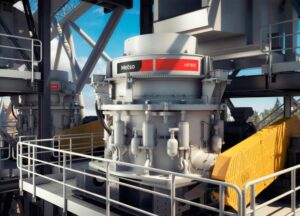
For high-hardness and highly abrasive river pebbles, these differences can have a significant influence on operating costs and production stability.
| Comparison Item | Impact Crusher | Cone Crusher |
|---|---|---|
| Crushing Principle | High-speed impact | Compression crushing |
| Suitable Materials | Soft to medium-hard materials | Medium-hard to very hard materials |
| High-Abrasivity Applications | Generally less economical | Generally more suitable |
| Wear Part Consumption | Can be relatively high with river pebbles | Generally better suited to abrasive materials |
| Maintenance Requirements | Frequent blow bar inspection and replacement may be required | Routine inspection and liner maintenance |
| Production Stability | Can be affected by blow bar wear | Suitable for continuous secondary crushing |
| Aggregate Shape | Good particle shaping capability | Can produce consistent aggregates with proper adjustment |
| Typical Application | Limestone, concrete recycling, softer rocks | River pebbles, granite, basalt, and other hard rocks |
The comparison above describes general application characteristics. Actual performance depends on the crusher model, feed size, material properties, chamber configuration, and required finished-product specifications.
For most medium- and large-scale river pebble aggregate plants, a cone crusher is generally the preferred choice for secondary crushing because of its compression-based crushing principle and suitability for abrasive materials.
However, if the project has specific requirements for aggregate particle shape, a VSI crusher can be added as a dedicated shaping machine.
Recommended River Pebble Crushing Plant Configuration
Selecting the correct crusher is only one part of designing an efficient river pebble processing plant. The complete production line must be designed according to raw material characteristics, feed size, required capacity, finished aggregate specifications, and available investment.
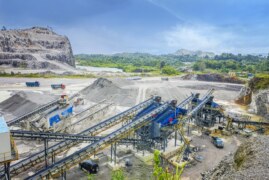
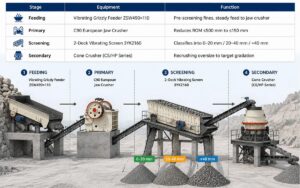
For many river pebble aggregate projects, a combination of jaw crushers, cone crushers, VSI crushers, and vibrating screens provides a practical solution.
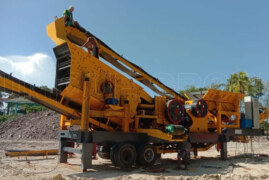
1. Primary Crushing: Jaw Crusher
A jaw crusher is commonly used as the primary crushing machine in river pebble processing plants.
Large river pebbles are fed into the crushing chamber, where they are compressed between the fixed and movable jaw plates. The material is gradually reduced to a smaller size suitable for secondary crushing.
The jaw crusher provides a relatively simple structure, reliable operation, and strong capacity to handle large feed materials.
Its main function is to reduce the initial rock size and prepare the material for the next crushing stage.
2. Secondary Crushing: Cone Crusher
After primary crushing, the material is transferred to a cone crusher for secondary size reduction.
The cone crusher compresses materials between the mantle and concave, making it suitable for processing hard and abrasive river pebbles.
Depending on the required finished-product size and production capacity, different cone crusher models and chamber configurations can be selected.
A properly configured cone crusher can provide stable secondary crushing performance while helping control wear-part consumption.
3. Fine Crushing and Shaping: VSI Crusher
If the finished aggregates need a more cubic shape, a VSI crusher can be installed after the secondary crushing stage.
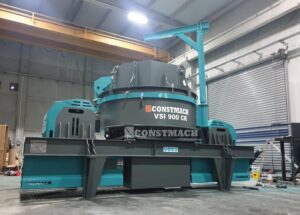
Unlike a conventional impact crusher, a VSI crusher uses a high-speed rotor to accelerate materials and create impact between particles or between particles and the crushing chamber lining, depending on its configuration.
It is commonly used for fine crushing and aggregate shaping.
By adjusting the feed rate, rotor speed, and operating configuration, the VSI crusher can help improve the particle shape of the final products.
However, because VSI crushers also use impact-based crushing principles, wear-part consumption should still be evaluated when processing highly abrasive river pebbles.
4. Screening System: Vibrating Screen
A vibrating screen separates crushed materials into different particle-size fractions.
For example, a river pebble processing plant may produce several aggregate products for different construction applications.
Oversized materials can be returned to the appropriate crusher for further processing, while qualified aggregates are transported to finished-product stockpiles.
The screening system plays an important role in controlling final product gradation and maintaining consistent aggregate quality.
Recommended Process Flow
River Pebbles → Vibrating Feeder → Jaw Crusher → Cone Crusher → VSI Crusher (Optional) → Vibrating Screen → Finished Aggregates
The actual process flow may vary according to raw material size, production capacity, product requirements, and project conditions. Some plants may use a closed-circuit cone crushing stage or additional screening and washing equipment.
Are Impact Crushers Completely Unsuitable for River Pebble Processing?
The answer is no.
Impact crushers are not inherently incapable of crushing river pebbles. In certain small-scale or temporary projects, they may still be considered depending on the available budget, expected production volume, operating period, and local equipment conditions.
For example, if a project only needs to operate for a relatively short period, has limited production requirements, and does not require extremely strict aggregate specifications, an impact crusher may provide an acceptable solution.
However, for long-term commercial aggregate production, especially projects involving large annual output and continuous operation, the total operating cost should be carefully evaluated.
The main considerations include:
- Expected service life of blow bars and impact liners.
- Replacement costs of wear components.
- Maintenance frequency and downtime.
- Actual finished-product output.
- Electricity consumption per ton of qualified aggregate.
- Final product quality and gradation requirements.
For most long-term river pebble crushing projects, a jaw crusher combined with a cone crusher is a more practical configuration for primary and secondary crushing. A VSI crusher can then be added if improved aggregate shaping is required.
The objective is not simply to purchase a crusher with a lower initial price. It is to establish a production line that delivers stable output, controlled operating costs, and consistent product quality over its entire service life.
How to Choose the Right Crusher for Your River Pebble Project
Before purchasing a river pebble crushing plant, it is important to evaluate several technical factors.
Raw Material Characteristics
Determine the hardness, abrasiveness, silica content, maximum feed size, and general particle shape of the river pebbles. These properties directly influence crusher selection and wear-part requirements.
Required Production Capacity
The required output should be calculated according to the actual demand for finished aggregates rather than simply the nominal capacity of a single crushing machine.
For example, a plant designed to produce 100 tons per hour requires a different configuration from a large commercial aggregate plant producing several hundred tons per hour.
Finished Product Specifications
Different construction applications require different aggregate sizes and quality standards. The crushing and screening system should be designed around the required finished products.
Operating Costs
Do not focus exclusively on the initial equipment investment. Compare electricity consumption, wear-part costs, labor requirements, maintenance expenses, and expected production downtime.
Future Expansion Requirements
If the project is expected to expand in the future, consider whether the initial production line can accommodate additional crushing capacity, screening equipment, or aggregate shaping systems.
A properly designed crushing plant should meet current production requirements while allowing reasonable flexibility for future development.
Conclusion:
River pebbles are hard, abrasive materials with smooth and rounded surfaces. These characteristics create specific challenges for conventional impact crushing equipment.
Excessive blow bar wear, frequent maintenance, reduced crushing efficiency, additional mechanical stress, and unstable aggregate specifications can all increase the operating costs of an impact crusher when processing river pebbles.
For this reason, a cone crusher is generally a more suitable choice for secondary crushing in medium- and large-scale river pebble aggregate production plants.
For projects requiring better particle shape, a VSI crusher can be added as a dedicated shaping machine.
At UNIQUEMAC, we provide crushing and screening equipment solutions for different aggregate production requirements. Whether you are planning a small river pebble crushing project or a large commercial aggregate production line, selecting the correct equipment configuration is essential for achieving reliable performance and long-term operating efficiency.
Looking for a suitable river pebble crushing plant?
Contact UNIQUEMAC and share your raw material information, required production capacity, feed size, and finished aggregate specifications. Our team can help evaluate your project and recommend a suitable crushing plant configuration.
Frequently Asked Questions About River Pebble Crushing
Q1: Why are impact crushers not recommended for hard river pebbles?
Impact crushers rely on high-speed impact forces to break materials. Hard and highly abrasive river pebbles can cause rapid blow bar and impact liner wear. Their rounded surfaces may also reduce impact energy utilization, increasing maintenance requirements and operating costs. For long-term secondary crushing, cone crushers are generally a more economical option.
Q2: Which crusher is best for processing river pebbles?
A jaw crusher is commonly used for primary crushing, while a cone crusher is generally preferred for secondary crushing because of its compression-based working principle and suitability for hard, abrasive materials. A VSI crusher can be added for final shaping when better aggregate particle shape is required.
Q3: Can a jaw crusher crush river pebbles?
Yes. Jaw crushers are widely used for primary crushing of river pebbles. Their compression-based crushing principle makes them suitable for handling large feed materials and reducing them to a size appropriate for secondary crushing.
Q4: What is the difference between an impact crusher and a VSI crusher?
Both machines use impact-based crushing principles, but their structures and applications are different. Conventional impact crushers are often used for secondary crushing and size reduction, while VSI crushers are commonly used for fine crushing and aggregate shaping. A VSI crusher should not automatically be considered a direct replacement for a cone crusher in demanding secondary crushing applications.
Q5: Does a cone crusher produce good-shaped aggregates?
A cone crusher can produce relatively consistent aggregate gradation and particle shape when properly selected and operated. However, if a project requires more cubic and well-shaped aggregates, a VSI crusher can be installed after the cone crusher for additional shaping.
Q6: How can I reduce wear-part consumption when crushing river pebbles?
The most important factors include selecting suitable crushing equipment, maintaining stable feeding conditions, choosing appropriate wear-resistant materials, controlling feed size, and regularly inspecting the crushing chamber. For highly abrasive river pebbles, using a cone crusher for secondary crushing can help reduce the dependence on frequently replaced impact crusher blow bars.
Q7: What information is needed to design a river pebble crushing plant?
To recommend a suitable configuration, equipment suppliers generally need the following information:
- Raw material type and hardness.
- Maximum feeding size.
- Required production capacity in tons per hour.
- Finished aggregate sizes.
- Whether aggregate shaping or sand production is required.
- Available installation space and project location.
Based on these details, a suitable crushing and screening configuration can be developed for the project.