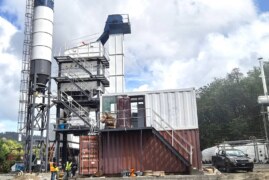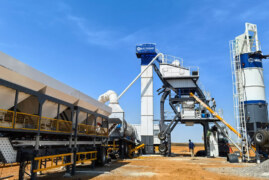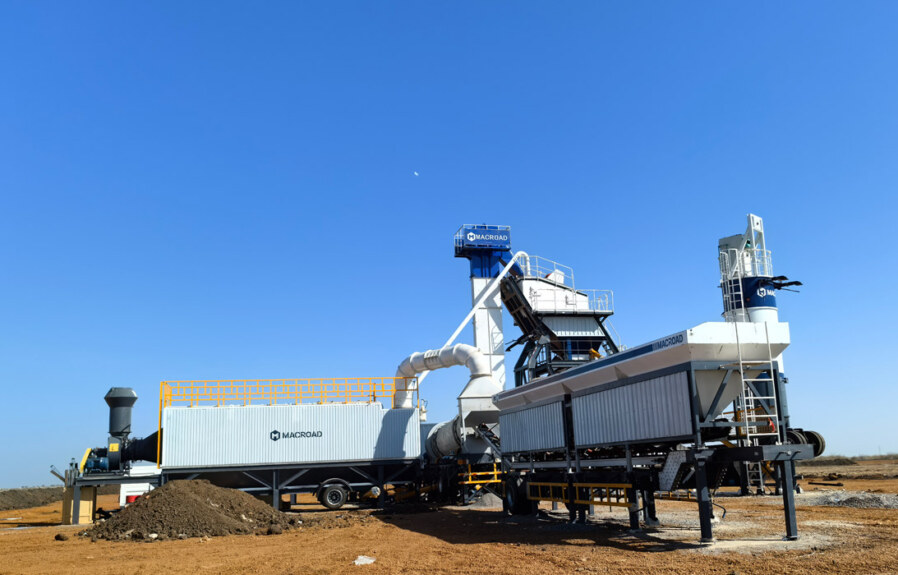
For mining engineers specifying haul road paving solutions in 2026, deploying a high-capacity mobile asphalt batching plant directly at a remote mine site transforms the thermal management and mix quality control challenges of heavy-duty road construction into engineered outcomes rather than logistical compromises. Against continuous hot mixing plant alternatives, the batching system’s aggregate screening precision and modified bitumen handling capability provide decisive performance advantages when haul roads must resist the rutting forces that 400-ton ultra-class trucks impose across extended operational cycles.
Just-in-Time Thermal Management and Haul Road Mix Delivery
Remote mine site haul road paving imposes thermal management requirements that centralized off-site production cannot satisfy across the transport distances typical of large mining operations. High-viscosity polymer-modified bitumen mixes specified for ultra-class haul road surfaces have narrow compaction temperature windows — material arriving below minimum laydown temperature from extended transport loses the workability that heavy vibratory roller compaction requires to achieve the density specifications that rutting resistance depends upon.
A mobile asphalt batching plant positioned within the mine site boundary produces mix at the compaction crew’s demand rate — eliminating transport distance as a temperature variable and ensuring that each batch reaches the paver within the thermal window that modified bitumen workability requires. This just-in-time delivery model is particularly valuable during night shift paving operations where ambient temperature drops accelerate mix cooling — on-site production timing can compensate for ambient conditions through elevated discharge temperature adjustments that off-site supply logistics cannot implement responsively.
The batching architecture provides an additional thermal management advantage over continuous hot mixing plant systems for just-in-time mine site delivery: discrete batch production allows supervisors to hold production between roller passes without the continuous output commitment that drum plant operation imposes — preventing the mix accumulation that creates temperature loss waiting for compaction crews to complete preceding sections.

Aggregate Screening Precision and Waste Rock Utilization
On-site crushed waste rock presents aggregate quality variability challenges that continuous hot mixing plant cold feed systems handle less reliably than mobile asphalt batching plant hot screening processes. Waste rock from blasting and crushing operations contains irregular particle size distributions, elevated fines content, and variable angularity profiles that cold feed proportioning cannot compensate for with the precision that heavy-duty haul road mix specifications require.
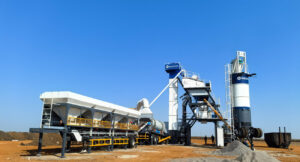
The multi-deck vibrating screen system of a batching plant classifies dried aggregate into discrete hot bin fractions after thermal processing — separating actual particle size distribution rather than proportioning unverified cold feed gradations. For waste rock aggregate with inherent size variability, this post-drying classification produces hot bin inventories whose gradation is verified rather than assumed, enabling batch-level mix design compliance that continuous systems achieve only when cold feed gradation remains consistent — a condition that waste rock processing rarely sustains across shift-length production periods.
Specifically, the ability to blend hot bin fractions in precise proportions per batch allows mining engineers to optimize waste rock aggregate utilization by compensating for gradation deficiencies in specific size fractions through complementary hot bin adjustments — maximizing the proportion of on-site material that meets specification while maintaining the blend accuracy that structural haul road layer compliance requires.
Modified Bitumen Handling and Ultra-Class Truck Rutting Resistance
The pavement stiffness required to resist rutting from 400-ton ultra-class haul trucks demands high-viscosity polymer-modified bitumen formulations whose processing requirements expose the limitations of standard hot mixing plant. Polymer-modified binders at the viscosity levels that ultra-class load rutting resistance requires need elevated injection temperatures, high-pressure metering pump capacity, and heated distribution lines that maintain binder fluidity through the injection system without the temperature drop that standard bitumen circuit specifications generate at high-viscosity operating conditions.
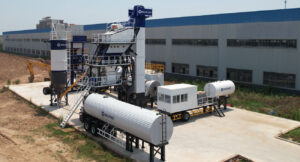
Premium mobile asphalt batching plant configurations for mine site deployment specify bitumen circuit components — heated storage tanks with PLC-controlled temperature management, high-pressure progressive cavity metering pumps, and fully traced injection lines — that handle polymer-modified binder viscosity ranges without the flow restriction and metering inaccuracy that standard circuit designs generate. This binder circuit capability directly determines whether the finished haul road layer achieves the modified bitumen content accuracy that rutting resistance specifications require across the full production volume of a haul road paving program.
Conclusion
Deploying a mobile asphalt batching plant directly at a remote mine site delivers just-in-time thermal management, waste rock aggregate utilization precision, and modified bitumen handling capability that continuous hot mixing plant alternatives cannot match for ultra-class haul road applications. For mining engineers in 2026, the batching system’s combined production control advantages translate directly into reduced rutting risk, lower long-term maintenance OPEX, and improved haul fleet fuel efficiency across the mine’s operational road network.