The global demand for high-quality sand, gravel, and mineral aggregates is surging, putting immense pressure on mining operators and quarry owners to optimize their processing efficiency. In modern aggregate production, flexibility and rapid deployment have become critical factors for success. Traditional stationary crushing lines, while powerful, often fall short when projects require frequent relocation or when material deposits are scattered across different sites. This operational shift has led to the widespread adoption of versatile mobile processing equipment. However, achieving a profitable return on investment requires more than just purchasing random machinery. Correctly configuring equipment based on target hourly output is the foundational step in building a reliable, cost-effective system that meets strict product specifications without wasting capital.
Understanding Core Equipment Dynamics in Aggregate Production
Designing a high-performing configuration begins with matching raw material characteristics to the appropriate crushing technology. Different stone types—ranging from highly abrasive granite and basalt to softer limestone—demand specific crushing mechanisms to optimize throughput and minimize wear costs.
Sourcing the Foundational Hardware
When operators evaluate new project requirements, selecting a versatile mobile stone crusher plant(planta trituradora de piedra móvil) serves as the starting point for design. These tracked or wheeled units integrate feeders, crushers, and onboard conveyors into a single chassis, allowing for immediate operation upon arrival at the quarry. Depending on the scale of the operation, this primary hardware must be systematically balanced with secondary and tertiary processing units to ensure a smooth material flow.
Balancing Multi-Stage Configurations
- Primary Stage: Tasked with accepting large run-of-mine (ROM) feed and reducing it to a manageable size, typically utilizing heavy-duty jaw crushers.
- Secondary Stage: Focuses on shaping and further size reduction, commonly employing cone crushers for hard rock or impact crushers for non-abrasive materials.
- Screening Stage: Separates the crushed material into distinct commercial sizes, recirculating oversized aggregates back into the system.
Tailoring Configurations for Low to Medium Capacity (50–150 TPH)
For small-scale quarries, recycling operations, and short-term road construction projects, a production capacity of 50 to 150 tons per hour (TPH) is generally the standard benchmark. The design philosophy for this range focuses on simplicity, compact footprints, and maximum portability.
Single-Chassis and Combined Solutions
In this capacity bracket, a highly efficient setup often combines multiple processing functions onto one or two mobile frames. A popular choice is a closed-loop mobile stone crusher plant that houses both a primary jaw crusher and a small vibrating screen. This setup minimizes the need for extensive external interlocking conveyors, drastically reducing setup times and lower operational costs.
Optimal Setup for Soft to Medium-Hard Rock
- Feeding System: Heavy-duty vibrating grizzly feeder to remove natural fines before the crushing chamber.
- Crushing Combination: A single impact crusher configuration is highly effective for limestone, delivering excellent cubical product shape in a single pass.
- Transport Logistics: Onboard folding conveyors that allow the entire plant to be prepared for highway transport within hours.
Designing Systems for High-Capacity Industrial Operations (200–500+ TPH)
Large-scale mining concessions, major dam construction projects, and regional infrastructure hubs demand high-capacity solutions exceeding 200 to 500 TPH. At this scale, single-chassis units are insufficient, requiring a multi-stage, multi-chassis modular approach to handle massive material volumes without creating bottlenecks.
Multi-Unit Synchronized Systems
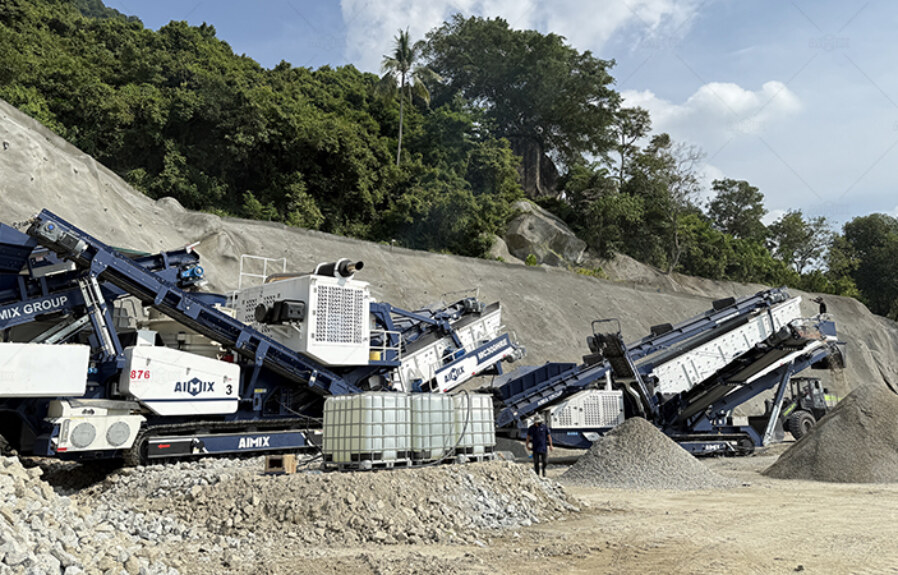
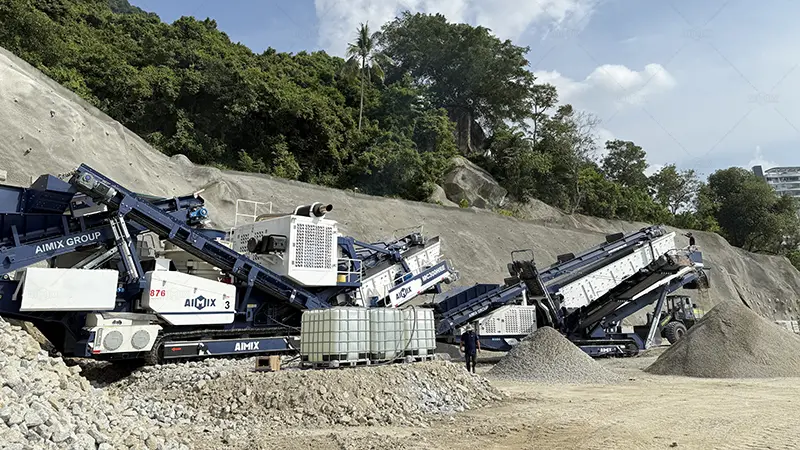
To establish a high-output aggregate crusher plant(planta trituradora de agregados), engineers must deploy a synchronized fleet of independent mobile units. This multi-stage configuration typically separates the primary, secondary, and screening phases onto distinct chassis. By decoupling these stages, operators can fine-tune each component’s speed and closed-side settings independently, maximizing total system efficiency.
High-Output Hard Rock Configuration Matrix
- Primary Processing Unit: A dedicated mobile jaw crusher capable of accepting feed sizes up to 800mm, delivering a steady stream of pre-crushed material.
- Secondary Processing Unit: A high-capacity mobile cone crusher equipped with advanced hydraulic adjustment systems to handle abrasive stones efficiently.
- Tertiary Shaping Unit: An optional vertical shaft impact (VSI) crusher chassis deployed specifically when premium, perfectly cubical manufactured sand is required.
- Sorting Unit: A heavy-duty mobile screening plant featuring triple-deck screens to precisely sort finished aggregates into multiple stockpiles simultaneously.
Advanced Automation and Material Flow Optimization
Operating a high-capacity aggregate crusher plant successfully requires advanced automation. Modern configurations utilize intelligent material-level sensors inside the crusher cavities to automatically adjust feeder speeds. This real-time synchronization prevents under-feeding or over-feeding, protecting the machinery from premature wear while keeping the entire processing line running at peak volumetric efficiency.
Engineering a Resilient Asset for Long-Term Market Success
Ultimately, designing the perfect mobile crushing configuration is a balancing act between initial capital expenditure and long-term operational efficiency. Over-engineering a plant for a low-capacity project creates unnecessary financial strain, while under-engineering a high-capacity site leads to frequent breakdowns, high maintenance costs, and missed production targets.
By carefully calculating raw material hardness, analyzing exact grain size distribution requirements, and selecting a properly scaled mobile stone crusher plant or multi-stage aggregate crusher plant network, construction and mining enterprises can secure absolute control over their production costs. This meticulous approach to hardware configuration ensures that your processing fleet remains highly productive, adaptable to changing site locations, and capable of delivering premium aggregates that meet the strictest industrial standards.