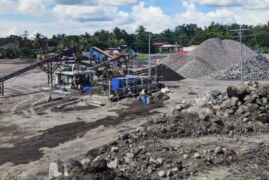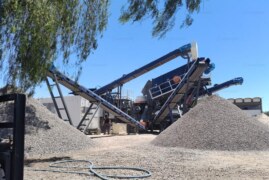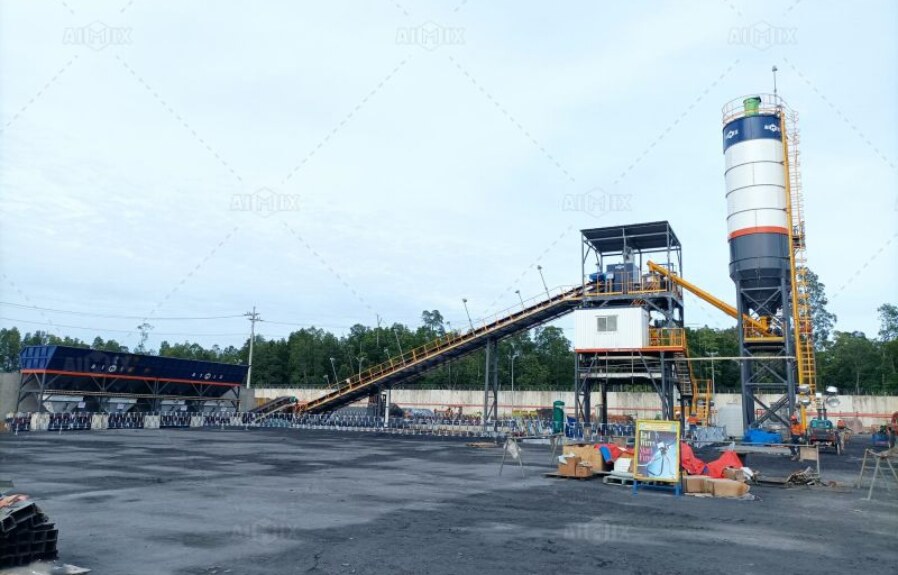
Mining projects are among the most demanding construction environments in the world. Whether it is an open-pit mine, underground tunnel, or mineral processing facility, every stage of development requires strong, durable, and continuously supplied concrete. In recent years, mining companies have increasingly adopted ready mix concrete batching plants to improve construction speed, reduce logistics challenges, and ensure stable material supply in remote and harsh locations.
The use of modern batching systems, especially the mobile RMC plant, has transformed how mining infrastructure is built. Instead of relying on long-distance concrete transport or inconsistent manual mixing, mining operators can now produce high-quality concrete directly on-site or near the project area, significantly improving efficiency and project control.
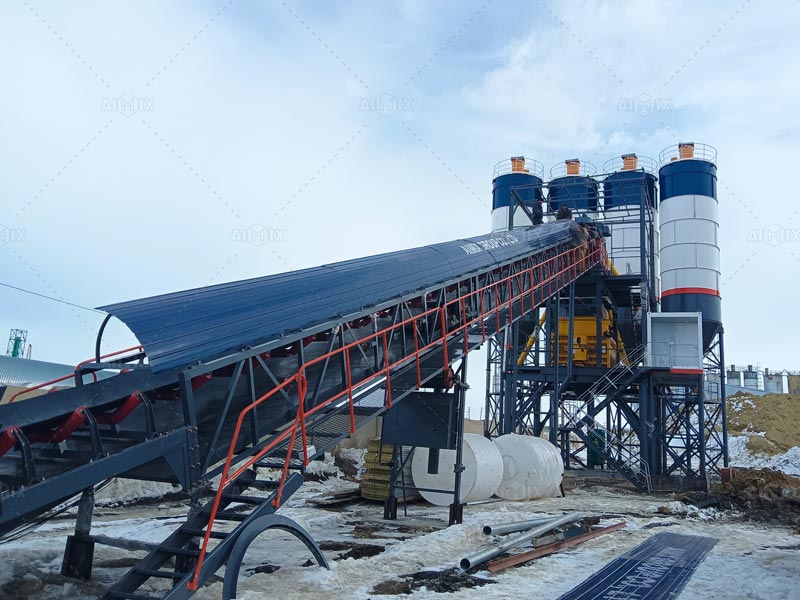
The Role of Concrete in Mining Construction
Concrete plays a critical role in nearly every part of mining infrastructure. It is used in foundations, haul roads, retaining walls, processing plants, tailings storage facilities, and underground tunnel linings. Because mining sites often operate under heavy loads and extreme environmental conditions, the concrete must meet strict strength and durability standards.
Traditional concrete supply methods often struggle to meet these requirements, especially in remote mining areas where transportation time is long and weather conditions are unpredictable. Any delay in concrete delivery can slow down excavation, equipment installation, and structural construction.
This is where ready mix concrete batching plants become essential. They provide a controlled production environment where materials are precisely measured, mixed, and delivered consistently to the construction site.
Why Mining Projects Use Ready Mix Concrete Batching Plants
Mining operations require continuous construction activity, often running 24/7. A reliable concrete supply system ensures that work is not interrupted due to material shortages or quality issues.
One of the key advantages of using a batching plant is production consistency. Each batch of concrete is produced according to a predefined mix design, ensuring uniform strength and performance. This is especially important in mining structures where safety and load-bearing capacity are critical.
Another advantage is operational efficiency. Instead of waiting for external suppliers, mining companies can control production schedules based on project demand. This reduces downtime and improves coordination between excavation, structural work, and equipment installation.
In addition, on-site or near-site production reduces transportation costs and minimizes the risk of concrete setting during transit. This is particularly important in large mining areas where distances between supply points and construction zones can be significant.
Mobile RMC Plant: A Key Solution for Mining Sites
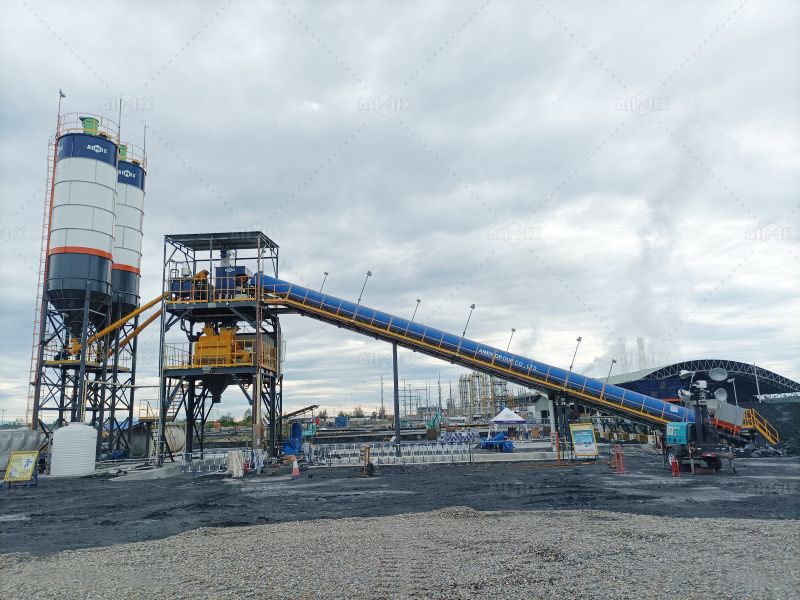
The mobile RMC plant has become one of the most practical solutions for mining construction projects. Unlike stationary batching plants, mobile units are designed for fast installation, easy relocation, and flexible deployment.
Mining projects often move through different phases and locations, especially in large extraction zones. A mobile RMC plant allows operators to shift production closer to active construction areas without building permanent infrastructure at each site. This reduces setup time and increases overall productivity.
Mobile plants also require less foundation work and can be assembled quickly, making them ideal for remote mining regions where construction conditions are challenging. Despite their compact design, modern mobile plants still offer high production capacity, often ranging from 30 m³/h to 120 m³/h, depending on configuration.
Improving Construction Speed in Mining Operations
Speed is a critical factor in mining development. Delays in infrastructure construction can directly affect production timelines and operational profitability. Ready mix concrete batching plants help accelerate construction in several ways.
First, they provide immediate access to fresh concrete, eliminating waiting time for external deliveries. This allows construction teams to work continuously without interruption.
Second, automation systems in modern plants ensure fast batching cycles. PLC-controlled systems can store multiple mix designs and switch between them quickly, reducing setup time between production batches.
Third, mobile RMC plants can be positioned strategically near different construction zones, reducing transportation distance and improving delivery speed. This is especially useful in large mining sites where multiple structures are built simultaneously.
Enhancing Cost Efficiency and Resource Management
Mining companies also adopt batching plants to optimize operational costs. While the initial investment may be higher, long-term savings are significant.
On-site production reduces dependency on third-party suppliers and lowers transportation expenses. It also minimizes material waste because raw materials are stored and measured on-site with high precision.
Furthermore, mobile systems help reduce labor costs by automating many production processes. This allows mining operators to allocate human resources more efficiently across different parts of the project.
Environmental and Operational Advantages
Modern mining projects must also comply with strict environmental regulations. Ready mix concrete batching plants are designed with dust collection systems, noise reduction features, and water recycling systems to minimize environmental impact.
Mobile RMC plants further support sustainability by reducing truck movements and fuel consumption associated with long-distance concrete transport. This not only lowers emissions but also improves overall site safety by reducing heavy vehicle traffic in mining zones.
Strategic Importance for Large Mining Projects
In large-scale mining operations, infrastructure development often determines how quickly production can begin. Roads, foundations, processing facilities, and support structures must be completed before full mining operations can start.
By integrating ready mix concrete batching plants into the project workflow, mining companies gain greater control over construction timelines. The ability to produce concrete on demand ensures that each phase of construction progresses without delay.
The flexibility of mobile RMC plant systems also supports phased development strategies, allowing mining operations to expand gradually while maintaining consistent construction quality.
Conclusion
Mining operations depend heavily on reliable, efficient, and high-quality concrete supply systems to support their complex infrastructure needs. Ready mix concrete batching plants play a crucial role in ensuring that construction processes remain fast, consistent, and cost-effective.
The introduction of the mobile RMC plant has further enhanced this capability by offering flexibility, rapid deployment, and reduced logistics challenges in remote mining environments. As mining projects continue to expand in scale and complexity, the use of advanced batching technology will remain a key factor in achieving faster construction, improved efficiency, and long-term operational success.