Every quarry operator in Peru faces the same dilemma. You need a crushing plant that delivers high throughput, produces consistent gradation, and withstands the abrasive nature of Andean rock. But you also have a budget to protect. The price of stone crusher Peru suppliers quote can vary by 40% or more between different brands and configurations. Does a higher price always mean better performance? Not necessarily. And does a lower price guarantee a bargain? Rarely. This article provides a practical framework for making that trade-off wisely, so you invest in equipment that matches both your production targets and your financial reality.
Understanding the True Cost of Ownership
The purchase price is only the starting point. To balance cost and performance, you need to look at the full lifecycle cost of the equipment.
What Makes Up Total Cost of Ownership
- Initial purchase price and import duties.
- Installation and commissioning expenses.
- Fuel or electricity consumption over the machine’s life.
- Wear parts replacement frequency and cost.
- Maintenance labour and scheduled downtime.
- Resale value at the end of your ownership period.
When you evaluate the price of stone crusher Peru(precio de chancadora de piedra en Perú) options, always ask for a projected operating cost per tonne. A machine that costs 20% more upfront but consumes 15% less fuel and has 25% longer wear part life will quickly overtake a cheaper alternative on total cost.
The Performance Side of the Equation
Performance is not just about tonnes per hour. It includes product shape, consistency, and the ability to handle variations in feed material. A crusher that produces flaky material forces you to screen out and reprocess a significant portion, reducing effective output. An impact crusher or a well-tuned cone crusher typically delivers better particle shape than a jaw crusher alone. Consider these factors when weighing performance against the price of stone crusher Peru models.
Key Factors That Influence Price and Performance
Several variables affect both cost and capability. Understanding each helps you make informed trade-offs.
Brand and Country of Origin
European and American brands generally command higher prices due to advanced engineering, better metallurgy, and comprehensive support networks. Chinese and Brazilian brands offer lower entry points but may have shorter component life or limited local parts availability. For Peruvian operators, the choice often comes down to whether you have access to a reliable local distributor for the brand you choose.
Automation and Control Systems
Modern crushers with advanced automation cost more but deliver better performance consistency. Automated systems adjust crusher settings in real-time based on load, feed size, and wear conditions. This reduces human error and keeps production at optimal levels even with variable feed. If your operation runs multiple shifts with different operators, automation pays for itself quickly.
Mobility vs. Stationary Configuration
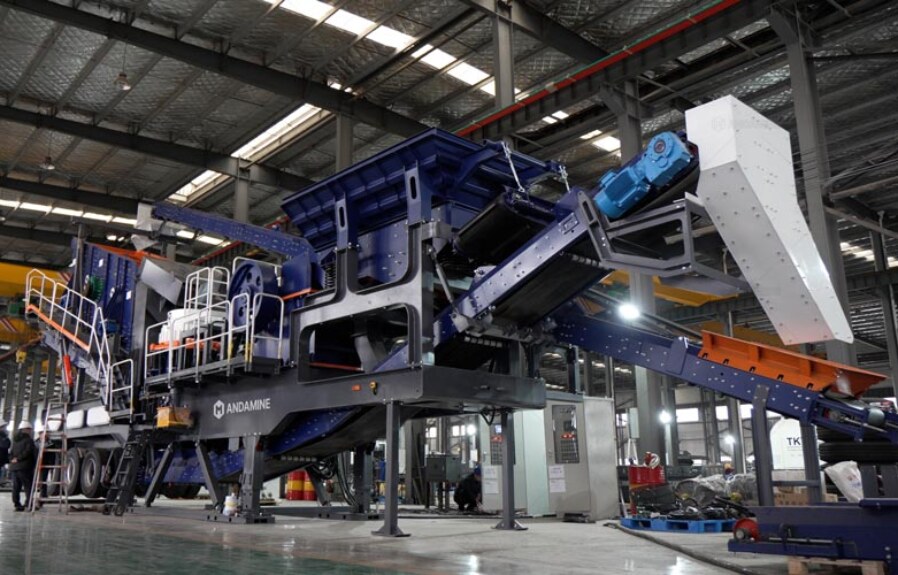
Mobile plants offer flexibility but come with higher mechanical complexity and higher per-tonne fuel costs. Stationary plants have lower operating costs but lock you into one location. For projects with finite life or multiple sites, the mobility premium is worth paying. For long-term quarries, a stationary plant gives better long-term value.
Practical Strategies for Balancing Cost and Performance
Here is a step-by-step approach to making the right decision for your operation.
Strategy 1: Define Your Performance Floor First
Before looking at any price of stone crusher Peru quotes, define your minimum acceptable performance. This includes:
-
Required throughput in tonnes per hour (average and peak).
-
Acceptable product gradation envelope.
-
Maximum allowable downtime per month.
-
Desired fuel or power consumption per tonne.
Once you have these non-negotiable parameters, you eliminate options that cannot meet your operational needs, regardless of price.
Strategy 2: Compare Lifecycle Costs, Not Sticker Prices
Request from each supplier a 5-year cost projection. Include wear parts replacement schedules, expected maintenance interventions, and energy consumption at your local tariff. This exercise often reveals that the lowest initial price is actually the most expensive option over time. Share your local operating conditions—altitude, ambient temperature, and typical feed abrasiveness—so the supplier can tailor the projection accurately.
Strategy 3: Consider the Chilean Equipment Market
Many Peruvian buyers look across the border when evaluating options. The stone crusher Chile(trituradora de piedra Chile) market is more mature, with a wider range of used and refurbished equipment available. Due to Chile’s long mining history, there is a larger inventory of heavy-duty crushers that have been well-maintained. Importing from Chile can sometimes offer better value for the same model, especially for cone crushers and heavy screens. However, factor in cross-border logistics and customs clearance when comparing delivered prices.
Strategy 4: Negotiate Spare Parts Packages
Suppliers are often willing to include a starter kit of wear parts at no extra cost to close a deal. This starter kit—typically jaw plates, blow bars, or mantle and concave sets—can represent $5,000–$10,000 of value. Negotiate for this upfront, and also ask for a fixed-price agreement on wear parts for the first two years. This protects you from future price increases and helps you predict operating costs with confidence.
Strategy 5: Leverage Financing and Leasing
If the price of stone crusher Peru options seems high, financing or leasing can spread the cost over the machine’s productive life. Many banks and specialized finance companies offer equipment loans with competitive rates. Leasing preserves your working capital for other operational needs. Some suppliers also offer rent-to-own programs, allowing you to test the equipment on your site before committing to purchase.
Common Mistakes to Avoid
Even experienced operators fall into these traps.
Overbuying Capacity
A 400 tph plant costs significantly more than a 250 tph plant, both in purchase price and in operating costs. If your typical demand is 200 tph, buying 400 tph is wasted capital. Buy for your average demand plus a reasonable buffer, not for your best-case scenario.
Underestimating Feed Variability
Peruvian deposits often change in hardness within the same quarry. A crusher set up for soft limestone will struggle with harder zones. Choose a crusher with adjustable settings and a wide operating range. This flexibility may cost more but prevents production bottlenecks when feed conditions change.
Ignoring Local Support Quality
A cheaper machine with poor local support becomes expensive very quickly. When you compare the price of stone crusher Peru suppliers quote, weigh it against their service reputation. Ask current customers about response times, parts availability, and technician competence. This information is as valuable as the price itself.
Making the Final Decision
After gathering quotes, lifecycle cost projections, and local support assessments, you will have a clear picture. Choose the option that meets your performance floor and offers the lowest total cost over your planned ownership period. Do not chase the lowest initial price unless you are certain that operating costs and support quality are comparable.
A Balanced Perspective
There is no single right answer for every operation. A small contractor with intermittent work may legitimately choose a lower-cost, simpler machine. A large producer supplying multiple projects will prioritize reliability and low operating costs. The key is to align your equipment choice with your business model, not with industry trends or marketing claims.
Peruvian customers are in a strong position today. Multiple suppliers, financing options, and cross-border opportunities give you real bargaining power. Use that power to ask tough questions, demand transparency on lifecycle costs, and verify performance claims with site visits. When you do, you will find the sweet spot where cost and performance meet—and your operation will thrive because of it.