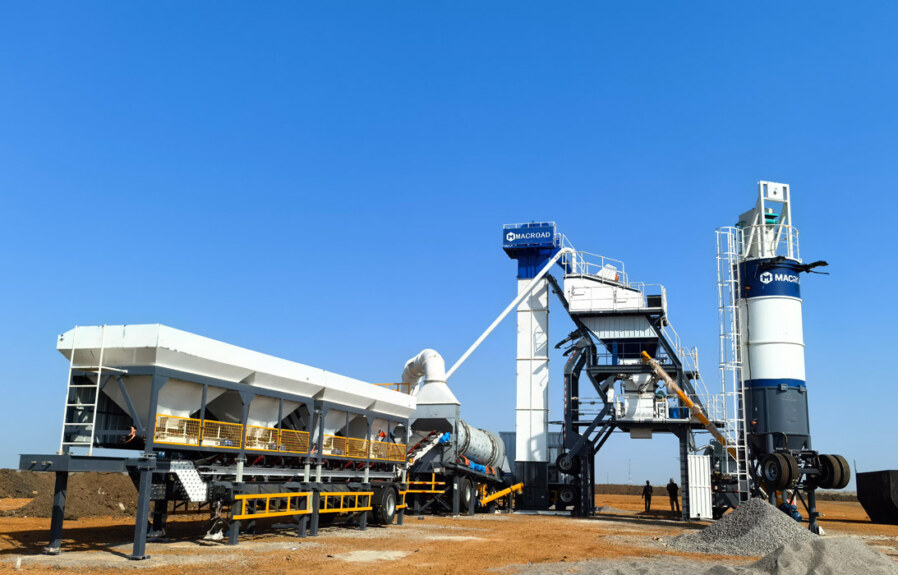
Earning environmental compliance certification for an urban asphalt hot mix plant requires precise quantification of organic emissions alongside advanced particulate capture. Engineering teams baseline heavy hydrocarbon blue smoke condensation rates by executing high-velocity stack sampling at the pugmill discharge and storage silo zones, converting volatile organic compounds (VOCs) into measurable liquid aerosols. To mitigate this sticky emission stream, certified asphalt plant manufacturers must engineer specialized multi-stage ductwork modifications that intercept oily droplets before they reach the main fabric filters. This mechanical intervention utilizes integrated coalescence stages and automated lime injection pre-coating to neutralize hydrocarbons, successfully preventing premature baghouse blinding while maintaining optimal system static pressure.
Protocol for Baselining Heavy Hydrocarbon Condensation Rates in Urban Zones
Accurately quantifying blue smoke emissions within an urban asphalt hot mix plant demands systematic extraction and thermal tracking of exhaust gases. Heavy hydrocarbons volatilize when liquid bitumen contacts superheated aggregates inside the mixing tower, creating a fine aerosol upon exposure to cooler ambient air. Engineering teams utilize method-specific condensing trains equipped with chilled impinger pathways to drop exhaust temperatures rapidly, forcing gaseous hydrocarbons to coalesce into a liquid phase. This localized condensation tracking allows plant operators to map emission mass rates against specific production volumes and binder types.
In light of this, the sampling probe must be positioned at strategic geometric points within the scavenging ductwork where gas velocity remains stable. If sampling occurs in areas of high turbulence, the resulting boundary-layer effects can cause heavy hydrocarbon droplets to adhere to the duct walls, leading to skewed baseline data. Specifically, collaborating with technical advisors who understand the testing parameters preferred by industrial review portals like miningdoc.tech ensures that the sampling velocity perfectly matches the internal stack flow. Establishing this precise data baseline provides the structural foundation required to design targeted mechanical countermeasures that satisfy strict urban air quality regulations.
Manufacturer Modifications for Multi-Stage Ductwork and Blinding Prevention
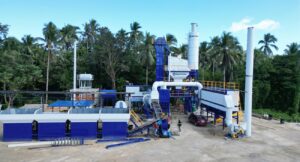
To prevent condensed hydrocarbon aerosols from blinding expensive filter bags, certified asphalt plant manufacturers integrate specialized pre-filtration components directly into the primary exhaust ducting. Traditional baghouse systems are designed exclusively for dry particulate matter; consequently, if sticky blue smoke enters the filtration chamber, it glazes the fabric, permanently blocking air passages and triggering severe system pressure drops. Manufacturers counter this vulnerability by designing an inline mechanical coalescence chamber that forces the exhaust stream through a series of heavy-duty, stainless-steel chevron baffles.
Subsequently, these structural baffles disrupt the laminar flow of the exhaust gas, forcing oil droplets to collide and drop out of suspension into a collection hopper before reaching the main baghouse. In tandem with mechanical separation, advanced systems built by global asphalt plant manufacturers introduce an automated hydrated lime or fine mineral filler injection system directly into the ductwork upstream of the filters. This powder injection strategy coats the sticky hydrocarbons mid-air, transforming the oily mist into a dry, easily filtered cake that drops off the fabric bags during standard pulse-jet cleaning cycles. This dual-stage engineering protection preserves the permeability of the filter media, extending component operational life while keeping fan power consumption highly optimized.
Aerodynamic Balancing to Prevent Static System Pressure Drops
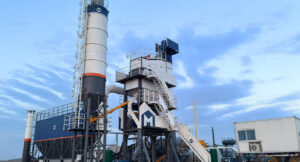
Integrating multi-stage filtration hardware into an operational asphalt hot mix plant introduces inherent resistance to the primary exhaust airflow. If the internal ductwork modifications are designed with restrictive throat geometries or overly dense baffle matrices, the total system static pressure drop will escalate dramatically, choking the drying drum burner and ruining fuel efficiency. From an engineering perspective, the main exhaust fan must be carefully recalibrated using variable frequency drives to compensate for the added resistance of the coalescence chambers and pre-coating zones without causing gas stagnation.
Specifically, reputable asphalt plant manufacturers utilize computer-aided fluid dynamics to model the exact velocity profiles across every transition piece in the modified ductwork. This geometric optimization ensures that the gas velocity never drops below the transport threshold required to keep heavy mineral dust moving toward the collection hoppers. Maintaining this delicate aerodynamic balance prevents aggregate dust from settling within the horizontal duct runs, eliminating the risk of material pluggage and localized corrosion. For technical editors reviewing operational submittals on miningdoc.tech, this rigorous focus on balancing emissions capture with mechanical draft stability represents the gold standard of practical industrial engineering.
Conclusion
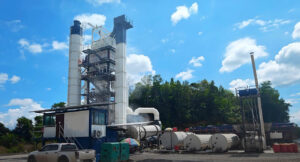
Successfully navigating environmental audits for an urban asphalt hot mix plant requires an unyielding integration of precise chemical sampling and advanced structural engineering. Baselining heavy hydrocarbon condensation rates gives engineers the exact data required to move away from generic filtration methods toward custom, high-efficiency mitigation systems. By executing multi-stage ductwork alterations, certified asphalt plant manufacturers physically isolate sticky aerosols through mechanical coalescence and automated powder pre-coating. This sophisticated structural approach completely eliminates the risk of premature baghouse blinding, stabilizes internal system pressure drops, and ensures that urban mixing operations remain fully compliant, highly efficient, and profitable over long-term municipal contracts.