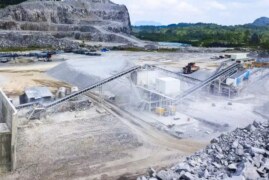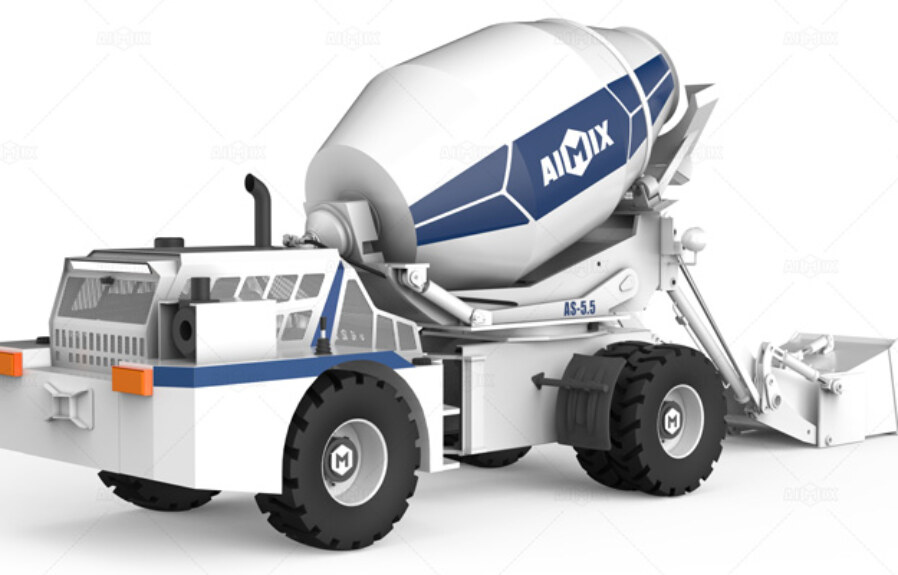
In the stark, red-earth expanses of Paraguay’s mining concessions, the architecture of extraction is undergoing a quiet revolution. It is not found in the brute force of the rock breaker or the whine of the conveyor belt, but in the unassuming, rotating drum of the self loading mixer concrete. This mobile batching plant is redefining the logistical calculus of remote site development. The construction of crusher and conveyor foundations—the very sinews of a mining operation—presents a unique set of challenges: material scarcity, geographic isolation, and the unforgiving demand for structural verisimilitude. The self-loading mixer, a paragon of mechanical autonomy, is emerging as the definitive solution to these perennial obstacles, fundamentally altering the timeline and economics of heavy civil construction in the Paraguayan Chaco and beyond.
The Logistical Labyrinth: Traditional Concrete Placement in Remote Terrains
The romance of mining often obscures the prosaic, yet critical, struggle of materials handling. In the hinterlands of Paraguay, where asphalt gives way to rutted dirt tracks, the conventional ready-mix truck is a forlorn hope. Its reliance on a consistent supply chain and passable roads renders it a logistical non-starter. The process of importing bagged cement, aggregates, and water to a crusher site involves a convoluted ballet of flatbed trucks and auxiliary loaders, a workflow rife with bottlenecks and exorbitant freight costs.
The Friction of Fragmentation
Traditional concreting demands a symphony of disparate machinery: a volumetric mixer, a separate water bowser, and a front-end loader for aggregate. This fragmentation introduces a cascade of inefficiencies. Coordinating these disparate pieces of equipment in a tight, hazardous mining pit often results in operational dissonance, where one machine idles while another is delayed. The financial implications are stark, with capital tied up in multiple high-maintenance assets. Furthermore, the margin for error in mix consistency and water-to-cement ratio is significantly amplified when ingredients are measured by the bucket, leading to potential structural weaknesses in the very foundations that support millions of dollars of capital equipment.
The Temporal Toll of Transport
Paraguay’s seasonal deluges can transform access roads into quagmires, effectively isolating a mine for days. If a critical foundation pour is interrupted, the cold joint becomes a structural scar, a point of weakness that can propagate under the immense vibratory loads of a crusher. The self-loading mixer circumvents this by operating as a self-contained ecosystem. By loading its own aggregate, cement, and water, it removes the dependency on a fragile supply chain during the pour itself, guaranteeing batch-to-batch consistency irrespective of the state of the arterial road.
Autonomous Agitation: The Mechanism of On-Site Batching
The self-loading mixer is not merely a truck; it is a highly calibrated batching plant on wheels. Its modus operandi in Paraguay is predicated on precision and adaptability. After arriving at the designated foundation excavation—often a massive, reinforced formwork awaiting its concrete infill—the operator utilizes the integrated front-end loader to collect sand and gravel from stockpiles located adjacent to the site. This eliminates the need for a secondary wheel loader, reducing the spatial footprint and operational complexity. The machine’s on-board weighing system (often employing load cells) ensures that the aggregate is metered with clinical accuracy, a far cry from the “eyeballed” volumetric measurements of the past.
Mix Design Fidelity and the Crusher Foundation
The crusher foundation is a dynamic receptacle, subject not only to static weight but to high-frequency, cyclic loading. Standardized mix designs are therefore non-negotiable. The self-loading mixer’s computer-controlled water injection system guarantees the precise water-to-cement ratio (w/c) mandated for high-strength, low-permeability concrete. This ameliorates the risk of capillary porosity, which, in the aggressive soil conditions of Paraguay, could lead to sulfate attack and the subsequent deterioration of the rebar. The homogenization of the mix is exhaustive, with the spiral blades in the drum ensuring that the aggregate paste achieves a uniform consistency before the discharge chute is deployed.
Articulated Agility: Pouring in Confined Spaces
Foundations for secondary conveyors, which weave across the site like metallic arteries, often require concrete placement in spatially constricted or inaccessible locales. The maneuverability of the self loading mixer in Paraguay—characterized by its articulated chassis and all-wheel drive—allows it to navigate these stringent confines where a standard 10-cubic-meter truck would be an unwieldy behemoth. This capability permits a “continuous pour” methodology, where the mixer moves alongside the extending formwork, delivering fresh concrete directly into the shuttering without the need for costly pump trucks or crane-and-bucket operations.
Structural Alacrity: Conveyor and Crusher Foundations
The adoption of this machinery in Paraguay is predicated on a clear economic calculus: speed. The rapid batching cycle of these mixers—often capable of producing a full batch in under three minutes—compresses the construction schedule significantly. For a crusher foundation, which can demand upwards of 100 cubic meters of concrete, the ability to eliminate the queuing of multiple transit mixers is a transformative advantage. This celerity not only reduces labor costs but also minimizes the exposure of the fresh concrete to adverse environmental conditions, such as the intense midday sun, which can accelerate the hydration process and lead to plastic shrinkage cracking.
The Integrity of Mass Concrete Pours
Given the thermal mass of a crusher foundation, internal heat generation is a salient concern. A rapid, continuous pour facilitated by the self-loading mixer allows for a uniform rise in temperature across the monolith, mitigating the risk of thermal shock. This is a critical nuance, as differential cooling can induce tensile stresses that compromise the structural integrity of the footing. The ability to precisely control the slump and workability from batch to batch ensures that the concrete can be properly consolidated, eliminating bug holes and honeycombing that would otherwise become loci for fatigue failure over the machine’s operational life.
Conclusion: The Paradigm Shift in the Chaco
The self-loading mixer represents a paradigm shift in the Paraguayan mining sector, evolving from a simple piece of equipment to a strategic asset. It empowers project managers to decouple construction from the vagaries of the supply chain, offering a sovereign capability in the most isolated environments. The resultant foundations are not just structures; they are testaments to engineering acumen, built with a mix of local materials and global technology. For the crusher and conveyor systems that define the productivity of a mine, the robustness and precision of their foundations are paramount. The self-loading large concrete mixer for sale ensures that the start of the extraction chain is built on an immutable, high-quality base, solidifying the future of mining, one concrete pour at a time.