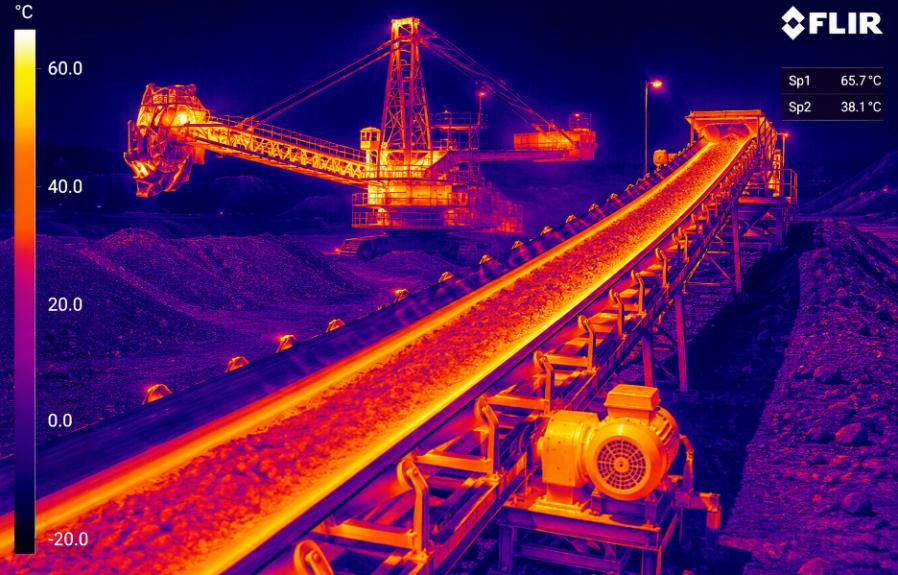
Mine sites carry risks that most industries never have to think about: overheating equipment, unstable rock faces, and the constant chance that a mechanical fault turns into a fire before anyone notices. Standard visible-light cameras can tell you what happened after the fact, but they cannot tell you what is about to happen. A thermal camera does not wait for smoke or visible flame. It reads surface temperature directly, which means it can pick up on a seized conveyor bearing or an overheating transformer well before either one fails outright.
Where the risk actually starts
That gap, between seeing a problem and seeing it coming, is what this technology is actually solving. Rock faces under stress can shift temperature slightly before they move, and researchers have used thermal cameras specifically to watch open pit slopes for these early warning signs, treating heat data as a proxy for structural risk long before a visual inspection would catch anything. It is a quiet form of monitoring, but a genuinely useful one.
Watching the areas people cannot stand in
Some areas of a mine are simply not places you want a person stationed full time: blast zones, unstable highwalls, active haul roads. Thermal cameras placed at these points let a control room keep watch continuously without putting anyone at risk. Combined with the kind of layered perimeter and access monitoring covered in this guide to physical security at mining sites, thermal coverage adds a layer that visible-light cameras and human patrols cannot match on their own, since it works in total darkness, through dust, and in poor visibility that would blind a normal lens.
Built for zones where standard hardware fails
The hardware side matters just as much as the detection itself. A camera that can see heat is only useful if it can survive where the heat actually comes from, and mine sites often have zones where flammable dust or gas is a genuine possibility, which rules out standard housings. This is where explosion protected cameras come in: units built to contain any internal spark or heat source so they cannot become the ignition point for a wider incident, letting operators install monitoring exactly where the risk is highest instead of working around it.
Faster response when it matters most
The value shows up in a few different ways. First, response time: a control room watching live thermal feeds can direct a crew immediately when something crosses a temperature threshold, rather than reviewing footage afterward to work out what happened. For equipment fires, minutes matter, and that early alert is often the difference between a small fix and a shutdown.
Turning heat patterns into a maintenance schedule
Recurring hot spots on a piece of machinery point to a wear pattern long before that part actually fails, which turns what used to be guesswork into a proper schedule built on real evidence rather than habit. This ties into the broader shift toward AI-supported predictive maintenance that mining operators are increasingly relying on, where thermal data becomes just one input feeding a larger picture of equipment health. Over months, that adds up to fewer surprise breakdowns and less unplanned downtime.
What thermal imaging does not replace
None of this replaces trained personnel, gas detectors, or routine ground control checks, and it was never meant to. What thermal imaging adds is a constant, tireless set of eyes on the parts of a site that are hardest to watch and most expensive to get wrong. For an industry where the worst incidents are the ones nobody saw coming, that is a fairly direct trade: better visibility into risks that used to stay invisible until it was too late.
Where to start the rollout
Sites weighing where to start typically prioritise haul roads, stockpile and conveyor areas, and any zone already flagged for flammable atmosphere risk, since these are where early heat detection tends to pay for itself fastest. Rolling it out gradually, section by section, also makes it easier to judge which areas benefit most before committing to a full site-wide setup.