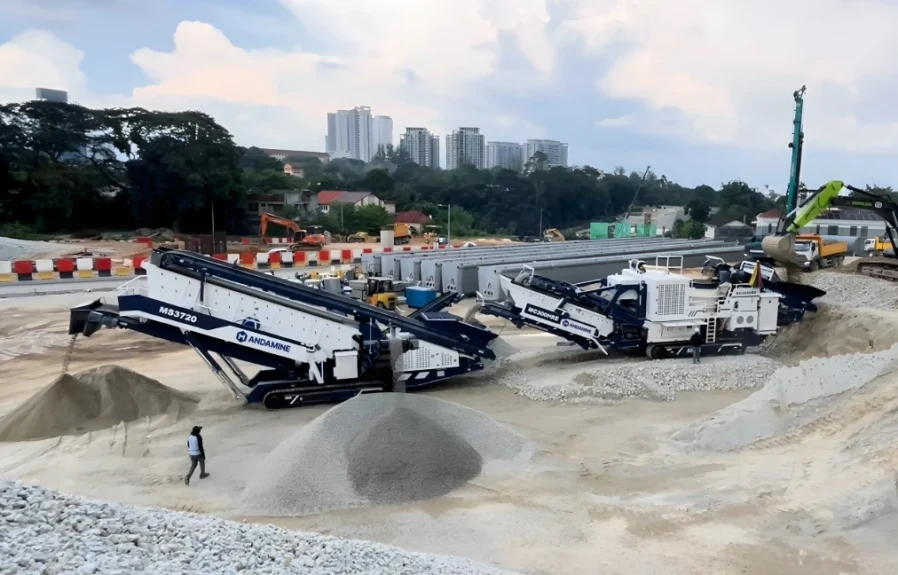
Granite is a hard, dense, and abrasive rock that places demanding requirements on crushing equipment. A tracked cone crusher can provide a flexible secondary or tertiary crushing solution for granite when the process is configured around the material’s hardness, feed size, and final aggregate specifications. Compared with a fixed crushing plant, its crawler-mounted design allows the crusher to be relocated closer to changing extraction or construction areas, reducing material hauling within the site. However, successful granite crushing depends on more than crusher selection. Feed preparation, chamber configuration, liner management, screening, and operating conditions all influence production stability and aggregate quality.
Granite Crushing Process Configuration
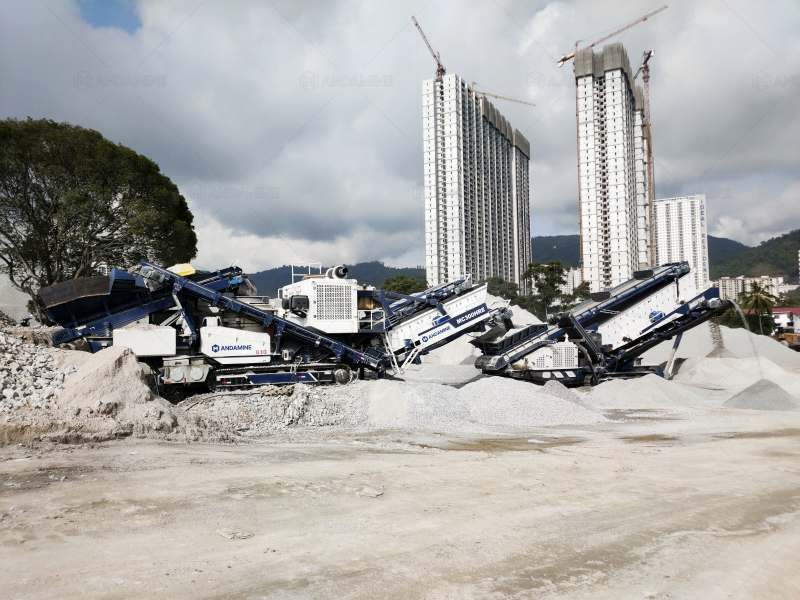
A typical granite crushing process begins with a mobile jaw crusher performing primary size reduction. Large blasted granite is reduced to a manageable size before entering the tracked cone crusher. The cone crusher is generally used for secondary or tertiary crushing, where its compression crushing action reduces the already-sized granite into smaller aggregate products.
The configuration should be determined by the required final products rather than by crusher capacity alone. For example, a project producing 5–10 mm and 10–20 mm aggregates may require a cone crusher followed by a multi-deck screen and, depending on the feed and specification, a recirculation circuit. A closed-circuit configuration can return oversize material to the cone crusher instead of sending it directly to the finished-product pile.
Feed consistency is particularly important when processing granite. Large fluctuations in feed size or an uneven material flow can reduce chamber utilization and make product gradation less stable. A controlled feeder and properly sized screening equipment help maintain a more uniform load on the tracked cone crusher, allowing the crushing chamber to operate closer to its intended conditions.
Choosing the Right Crushing Chamber and Settings
Granite crushing requires a chamber configuration that can handle high compressive strength and abrasive particles without creating unnecessary wear. Coarser chamber configurations can be appropriate when the cone crusher receives relatively large secondary-crushing feed, while finer configurations are more suitable when the machine is being used for further reduction toward smaller aggregate sizes.
The closed-side setting (CSS) also has a direct influence on the final product. A smaller CSS generally produces a finer product but can increase crushing forces and circulating load. Increasing the CSS can allow greater throughput but may result in more oversize material. Operators therefore need to balance product requirements, capacity, and liner condition instead of treating CSS as a setting that should always be minimized.
For a granite stone crusher plant, the cone crusher should also work together with the screen rather than being evaluated independently. If the screen cannot efficiently separate the required sizes, the cone crusher may receive excessive recirculating material. This can increase the circulating load and reduce the amount of new granite that the complete plant can process.
Wear Management for Abrasive Granite
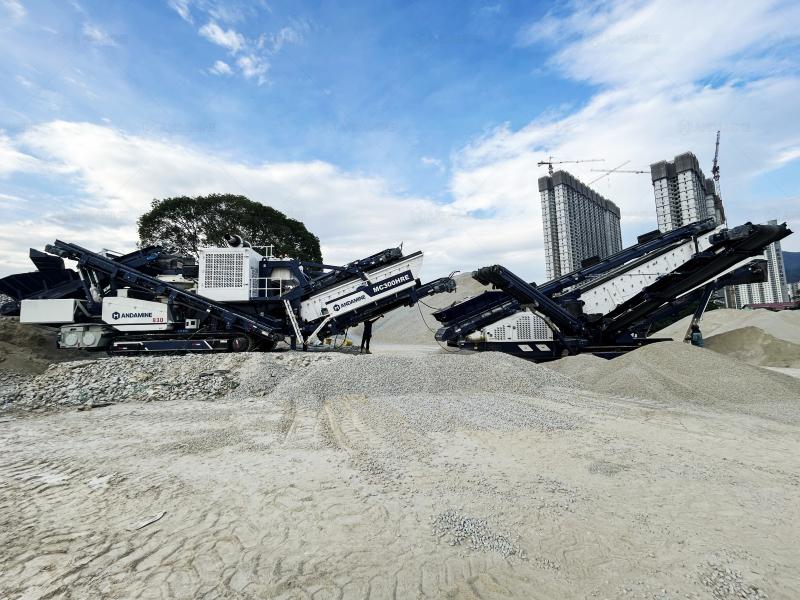
Granite contains hard mineral components that can accelerate wear on crushing liners and other material-contact components. Liner wear gradually changes the geometry of the crushing chamber, which can affect both capacity and product gradation. Monitoring wear is therefore important not only for maintenance but also for maintaining consistent aggregate production.
Operators should inspect liner condition regularly and compare actual wear with changes in production performance. If the product becomes coarser, throughput changes, or the crusher requires increasingly frequent setting adjustments, liner condition should be checked. Running heavily worn liners for too long can make it more difficult to maintain the required product size and may increase the risk of unplanned downtime.
Wear management should also consider the relationship between material abrasiveness, operating hours, feed gradation, and chamber configuration. Instead of replacing liners solely according to a fixed calendar interval, maintenance planning can be based on actual wear measurements and production conditions. Keeping suitable replacement wear parts available is especially important for remote granite quarries where equipment downtime can disrupt the entire crushing operation.
Controlling Granite Aggregate Product Quality
Product control starts with defining the required aggregate sizes before the crushing circuit is configured. Road construction, concrete production, asphalt applications, and general aggregate supply may require different gradations. The tracked cone crusher should therefore be adjusted according to the required product specification rather than simply targeting maximum hourly capacity.
Screening plays a major role in final product control. A properly sized screen separates finished material from oversize particles and sends only the material requiring further reduction back to the crusher. Regularly checking screen media, aperture condition, and material distribution can help prevent contamination between product sizes and maintain consistent output.
The quality of granite aggregate is also affected by feed conditions and crusher operation. Stable feeding helps maintain consistent crushing pressure, while excessive fluctuations can produce changes in particle-size distribution. For projects with strict aggregate specifications, operators should periodically sample the finished products and compare the results with the required gradation. This provides a practical basis for adjusting CSS, feed rate, or screening conditions.
Operating a Tracked Cone Crusher in Granite Applications
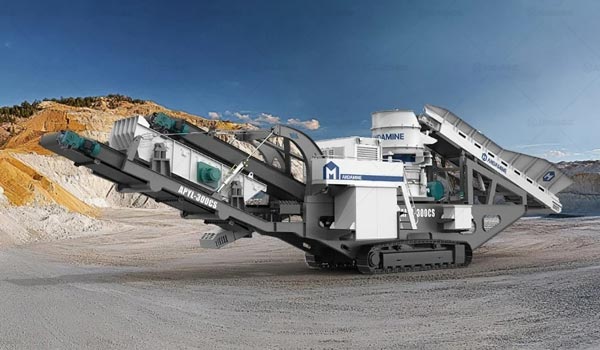
A tracked cone crusher offers a practical advantage when granite extraction or construction work moves between different areas. The crawler chassis allows the crushing unit to relocate within the working site without requiring a permanent foundation. This can be useful for quarry development, road projects, and temporary aggregate production where material sources change over time.
However, mobility does not remove the need for proper site preparation. The machine should be positioned on stable ground with sufficient space for feeding, discharge, stockpiling, and maintenance. The complete crushing circuit should also be considered, because moving only the cone crusher without coordinating the feeder, screen, conveyors, and other equipment can create bottlenecks elsewhere in the process.
Conclusion
A tracked cone crusher for granite crushing works best when it is treated as part of an integrated crushing and screening process rather than as an isolated machine. Primary feed preparation, chamber selection, CSS, liner condition, screening efficiency, and feed stability all influence actual production and product quality. For abrasive granite applications, effective wear monitoring is equally important because liner condition directly affects both operating cost and crushing performance. By matching the tracked cone crusher configuration to the required aggregate sizes and maintaining stable operating conditions, granite producers can build a more predictable mobile crushing process while retaining the relocation flexibility of a crawler-mounted system.