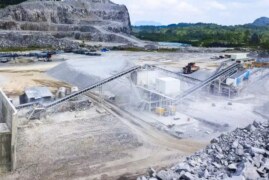
Large-scale mining infrastructure projects—such as haul roads, processing facilities, tailings dams, and worker housing—require massive volumes of high-quality concrete delivered consistently and efficiently. To meet these demands, contractors rely on different types of batching plant solutions designed to adapt to complex site conditions, production requirements, and logistical constraints. From stationary systems to highly mobile units, each configuration plays a vital role in supporting mining development at scale. Among them, the ready mix batching plant has become a cornerstone for ensuring reliable and standardized concrete supply.
The Role of Batching Plants in Mining Infrastructure
Mining projects often take place in remote or rugged environments where access to commercial concrete supply is limited. Establishing an on-site batching solution is therefore essential. Batching plants enable precise proportioning of aggregates, cement, water, and admixtures, ensuring consistent concrete quality for structural integrity and safety.
In large-scale mining operations, batching plants are not just auxiliary equipment—they are central to project timelines. Delays in concrete supply can halt construction of critical infrastructure such as crushers, conveyor foundations, and retaining structures. This is why selecting the right type of batching plant is a strategic decision that directly impacts productivity and cost control.
Stationary Batching Plants for High-Volume Production
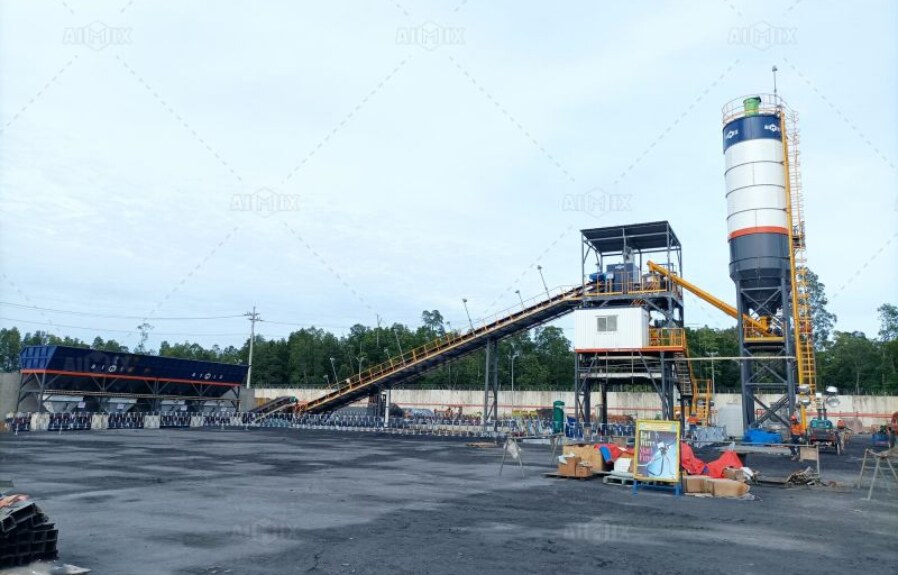
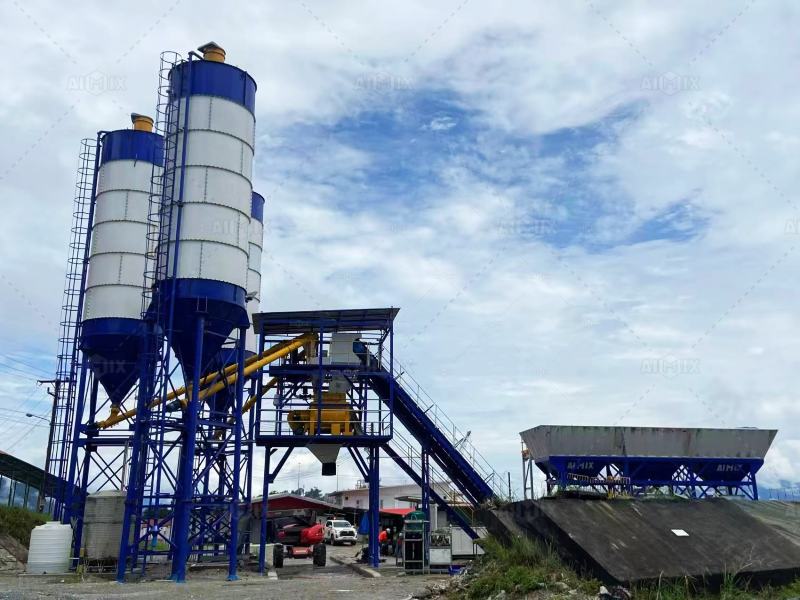
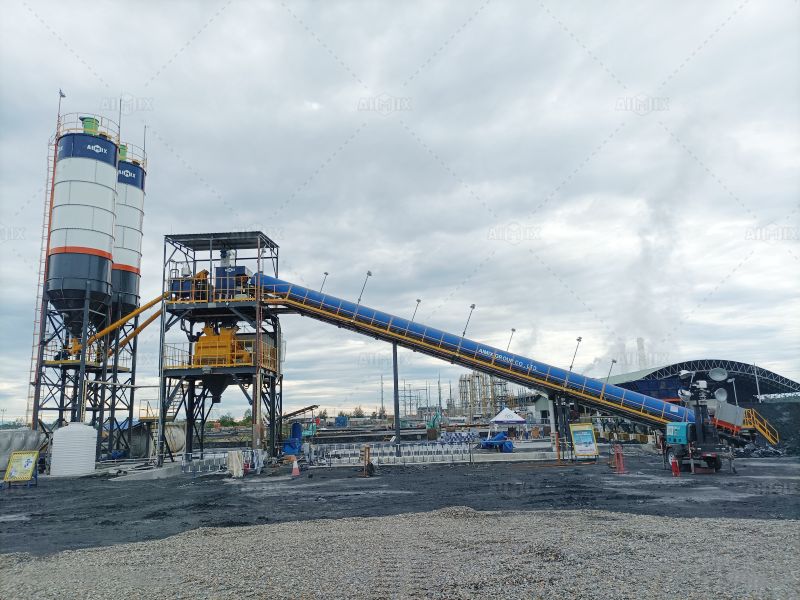
Stationary batching plants are widely used in large mining projects due to their high production capacity and stability. These plants are typically installed at a fixed location near the core construction zone and are capable of producing 60 to 180 cubic meters of concrete per hour or more.
A ready mix batching plant in stationary configuration is ideal for continuous, large-volume concrete supply. It integrates advanced control systems, automated weighing, and efficient mixing technology to deliver uniform concrete for demanding applications such as:
- Processing plant foundations
- Tailings dam structures
- Heavy-duty mining roads
The main advantage of stationary plants is their ability to maintain consistent output over long periods, making them suitable for projects with extended timelines and high daily concrete demand.
Mobile Batching Plants for Remote and Dynamic Sites
Mining sites are often spread over large geographical areas, and construction zones may shift as the project progresses. In such cases, mobile batching plants offer unmatched flexibility. These plants are mounted on wheeled or skid-based systems, allowing for quick relocation and installation.
Mobile batching plants typically have capacities ranging from 25 to 75 m³/h and can be operational within a short time after transport. For mining contractors, this means reduced dependency on long-distance concrete transport and lower logistics costs.
A mobile ready mix batching plant is particularly useful for:
- Remote road construction within mining sites
- Temporary infrastructure projects
- Early-stage development phases
Despite their compact design, modern mobile plants are equipped with automated systems that ensure accurate batching and reliable performance, even in challenging environments.
Compact and Modular Batching Plants
For projects with space constraints or phased development plans, compact and modular batching plants provide a practical solution. These systems are designed with a smaller footprint and can be assembled in modules, allowing for gradual expansion as project needs grow.
In mining infrastructure, modular plants are often used for:
- Medium-scale concrete production
- Satellite construction zones
- Projects requiring fast deployment with limited civil works
A compact ready mix batching plant can deliver consistent concrete quality while minimizing installation time and infrastructure investment. This makes it an attractive option for contractors seeking cost-effective yet efficient solutions.
Dry Mix vs Wet Mix Batching Plants
Another important classification among different types of batching plant is based on the mixing process: dry mix and wet mix.
- Dry mix batching plants measure and discharge raw materials into a transit mixer, where mixing occurs during transportation. These plants are simpler and require less maintenance but rely heavily on transport time and conditions for final concrete quality.
- Wet mix batching plants, on the other hand, mix all ingredients within the plant before discharge. This ensures higher consistency and is preferred for critical mining structures that demand strict quality control.
In large-scale mining projects, wet mix ready mix batching plant systems are generally favored due to their ability to produce uniform, high-strength concrete suitable for heavy-duty applications.
Automation and Smart Control Systems
Modern batching plants used in mining projects are increasingly equipped with intelligent control systems. These systems monitor and manage the entire production process, from material feeding to mixing and discharge.
Key features include:
- Real-time data tracking and reporting
- Automated recipe management
- Fault detection and predictive maintenance
For a ready mix batching plant, automation ensures that each batch meets precise specifications, reducing material waste and improving overall efficiency. In mining environments where operational reliability is critical, these technologies play a significant role in minimizing downtime.
Selecting the Right Batching Plant for Mining Projects
Choosing among different types of batching plant depends on several factors:
- Project scale and duration: Large, long-term projects benefit from stationary plants, while smaller or temporary works may require mobile solutions.
- Site conditions: Terrain, accessibility, and available space influence plant selection.
- Concrete demand: Daily output requirements determine plant capacity.
- Logistics and cost considerations: Transport distance, installation time, and budget constraints must be evaluated.
A well-selected ready mix batching plant not only ensures consistent concrete supply but also enhances construction efficiency and reduces operational risks.
Conclusion
Different types of batching plant play a crucial role in supporting large-scale mining infrastructure projects. Whether it is a high-capacity stationary system, a flexible mobile unit, or a compact modular plant, each type offers unique advantages tailored to specific project needs. Among these, the ready mix batching plant stands out as a reliable solution for delivering high-quality concrete at scale.
As mining projects continue to grow in complexity and size, the demand for efficient, adaptable, and technologically advanced batching plants will only increase. By understanding the strengths of each type, contractors can make informed decisions that drive project success and long-term value.