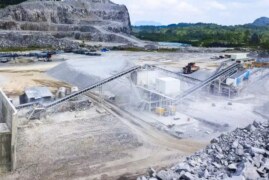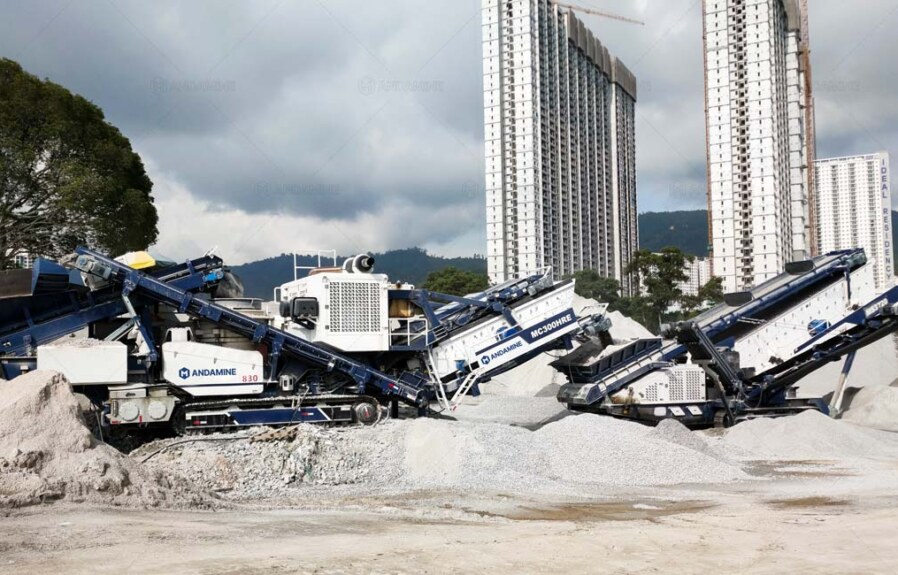
Heavy construction projects often process raw rock directly at quarry faces or site cuts. However, transporting crushed stone to distant commercial batching plants wastes time and money. Consequently, contractors mix concrete on site right after crushing aggregates. This approach cuts transport costs and speeds up project timelines significantly.
Linking Aggregate Crushing Directly to Concrete Production
Crushing machines reduce large boulders into graded stone and sand fractions on site. After crushing, site teams transfer fresh aggregate straight to mixing machinery.

Controlling Material Quality and Moisture Content
First, freshly crushed rock remains free from long-distance transport contamination. Dust and clay buildup often occur during long road haulage across open terrain. Direct site transfers keep aggregates clean for mixing.
Second, operators test aggregate moisture levels right after crushing tasks finish. Accurate moisture readings allow exact water adjustments during concrete batching. Consequently, your team maintains consistent concrete strength across every pour.
Reducing Raw Material Transportation Expenses
Transporting heavy raw rock across long distances consumes large amounts of diesel fuel. Furthermore, haul trucks suffer heavy wear on tires and suspension systems during road travel.
Processing stone on site reduces total vehicle mileage across your project lifecycle. As a result, contractors save significant operational capital on fuel, road tolls, and truck maintenance.
Key Operational Advantages of Onsite Integration
Combining crushing and mixing creates a direct supply chain on the construction site. Contractors eliminate commercial aggregate transport fees completely.
Furthermore, site teams avoid commercial ready-mix delivery delays caused by heavy road traffic. In addition, project managers adjust aggregate sizing based on immediate pour requirements.
For example, operators adjust crusher gap settings quickly when shifting from foundation slabs to thin walls. Consequently, on-demand crushing and batching improves operational flexibility across changing site conditions.
Choosing the Right Onsite Concrete Mixing Equipment
Contractors choose mixing machinery based on daily output goals and site mobility needs. Matching machine capacity to aggregate crushing speed prevents material stockpiling bottlenecks.
Versatility of a Self Loading Concrete Mixer
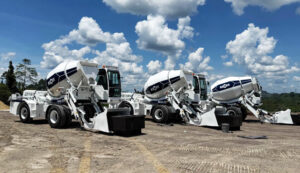
For small to medium projects, a self loading concrete mixer offers high operational efficiency. First, the operator scoops crushed aggregate directly from the crusher discharge pile.
Second, internal load cells weigh stone, sand, and cement with high precision. Third, the rotating drum mixes raw materials while driving across rough site terrain.
Therefore, one operator handles loading, weighing, mixing, and transport independently. This single vehicle reduces total labor expenses and simplifies daily site logistics.
Scaling Production with a Large Concrete Mixer for Sale
In contrast, massive foundation pours demand continuous high-volume concrete supply. Contractors searching for a large concrete mixer for sale evaluate stationary or semi-mobile units.
These heavy-duty mixers process over 3.0 cube meters per batch reliably. Furthermore, high-capacity twin-shaft mixers handle coarse crushed aggregates easily.
Heavy mixing arms blend tough granite aggregates without suffering rapid mechanical wear. Consequently, large mixers satisfy demanding pour schedules for dams, bridges, and highways.
Practical Best Practices for Combined Sites
Integrating crushing and mixing operations requires disciplined site organization and routine maintenance. Site managers must coordinate crushing production rates with concrete placement schedules.
Managing Aggregate Stockpiles and Material Segregation
First, store crushed rock on clean, paved, or covered staging areas. Unprotected dirt grounds contaminate crushed aggregates with mud during heavy rains.
Second, separate crushed stone into clear size categories before mixing. Proper aggregate grading ensures smooth concrete pumping and prevents pipe blockages. Third, inspect fine stone dust and sand ratios regularly during daily work shifts.
Preventive Maintenance for Integrated Site Machinery
Dust from stone crushers quickly reaches surrounding concrete batching machinery on site. Therefore, technicians must clean engine air filters and hydraulic coolers daily.
Clean hydraulic oil protects sensitive pumps from abrasive rock dust damage. In addition, operators must wash mixing drums thoroughly after completing daily pours. Removing hardened concrete buildup maintains full drum volume and protects internal blades.
Conclusion
Mixing concrete directly after aggregate crushing improves productivity and lowers operating expenses. Contractors gain complete control over material quality, batching schedules, and labor costs. Furthermore, selecting a self loading concrete mixer or a large concrete mixer for sale optimizes site output. Plan your integrated equipment workflow carefully to build a profitable construction operation.