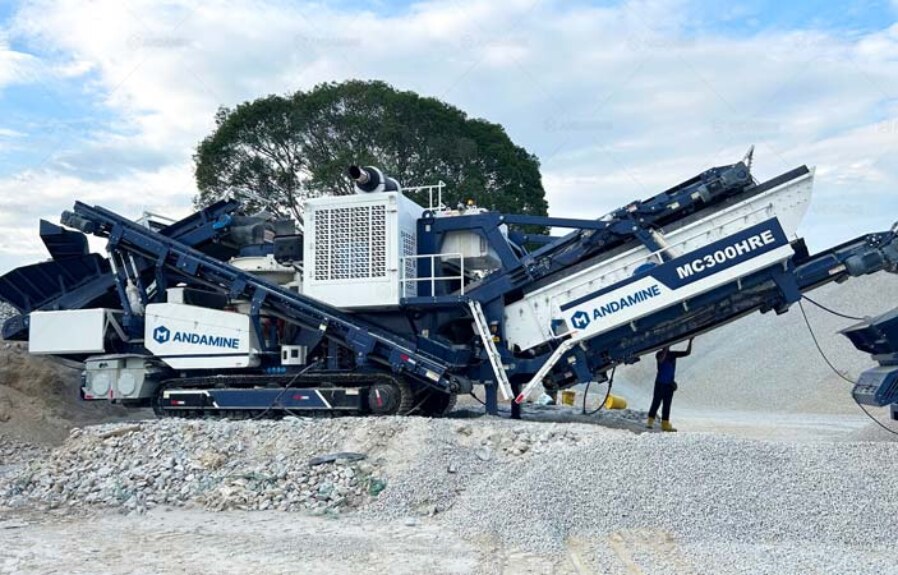
A mining downturn often makes companies cautious about capital expenditure. Falling commodity prices, weaker aggregate demand, and tighter cash flow can make purchasing new equipment appear risky. However, a downturn can also create opportunities for companies with strong financial planning. A mobile crushing plant, for example, can provide greater flexibility and lower initial site infrastructure requirements when future production demand is uncertain.
The key question is not simply whether equipment prices are lower during a downturn. Instead, mining companies need to determine whether the expected improvement in production efficiency, equipment availability, and future cash flow justifies the investment. For operations processing limestone, a limestone crusher may become particularly valuable when existing equipment has high maintenance costs or limited mobility.
Why Counter-Cyclical Equipment Investment Can Make Sense
Counter-cyclical investment means increasing capital expenditure when market conditions are weak and preparing for stronger demand ahead. In mining and aggregates, this strategy can work when companies have sufficient cash reserves and a clear production plan.
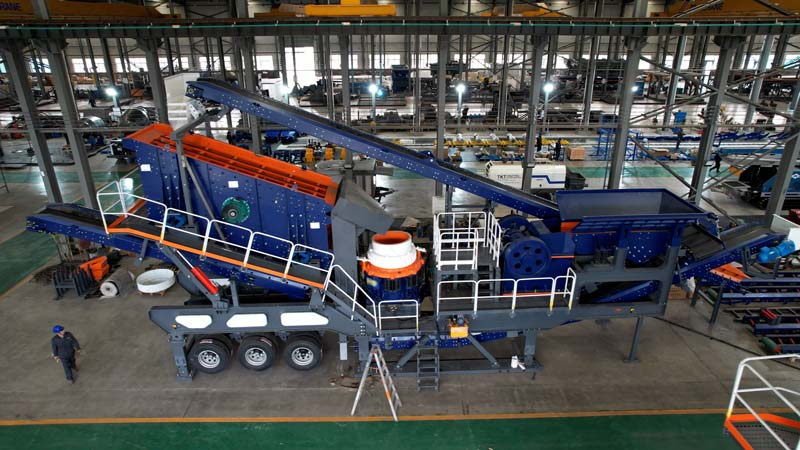
A mobile crushing plant(planta chancadora móvil) is well suited to this approach because it can be relocated between working areas as production requirements change. Compared with a completely fixed crushing system, mobile equipment can reduce dependence on permanent infrastructure and support phased project development.
Lower Competition for Equipment and Services
During strong mining cycles, demand for crushing equipment, components, installation teams, and technical services can increase significantly. Buyers may face longer lead times and greater pressure on project schedules.
During a downturn, however, suppliers may have more production capacity and service availability. This can create better conditions for negotiating equipment configurations, delivery schedules, and after-sales support.
How to Calculate Whether the Investment Is Worth It
The decision should be based on expected cash flow rather than equipment price alone.
A practical calculation can include four major factors:
- Equipment investment – purchase price, transportation, installation, and commissioning.
- Operating savings – lower fuel consumption, reduced labor requirements, or improved maintenance efficiency.
- Additional production – extra saleable aggregates generated by higher equipment availability or capacity.
- Residual value – potential resale or relocation value of the equipment.
A simplified calculation is:
Annual Benefit = Additional Gross Profit + Operating Cost Savings − Additional Annual Costs
Then estimate the payback period:
Payback Period = Initial Investment ÷ Annual Net Benefit
For example, if a new mobile crushing plant costs $400,000 and generates an estimated annual net benefit of $160,000, the simple payback period would be approximately 2.5 years.
The calculation should be based on realistic production volumes rather than the crusher’s theoretical maximum capacity.
When a Mobile Crushing Plant Is a Stronger Choice
Not every mining operation should purchase equipment during a downturn. A mobile crushing plant becomes more attractive when several conditions are present.
1. Existing Equipment Has High Downtime
If an older crusher frequently requires emergency repairs, the actual production cost may be much higher than its maintenance invoices suggest.
Lost production, idle labor, delayed deliveries, and emergency spare parts can all increase the true cost of aging equipment.
2. The Project Requires Multiple Working Areas
Mobile equipment can be particularly useful for mines and aggregate producers that need to process material at different locations.
Instead of transporting large quantities of raw rock over long distances, the crusher can move closer to the extraction area. This can reduce internal haulage requirements and improve material-handling efficiency.
3. Future Demand Is Uncertain
A fixed production line may be difficult to justify when long-term demand remains unclear. A mobile crushing plant can offer greater deployment flexibility, allowing companies to adjust production according to project requirements.
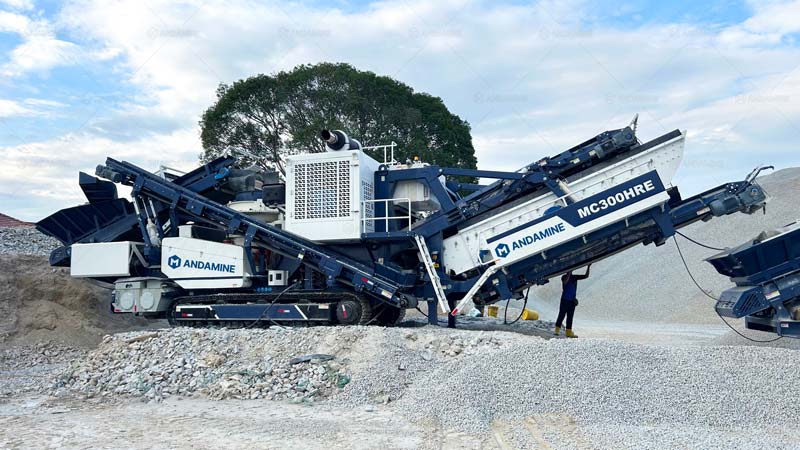
Evaluating a Limestone Crusher During a Downturn
For limestone operations, equipment selection should reflect the characteristics of the material and the required final products.
A limestone crusher(trituradora de piedra caliza) needs to handle the required feed size, capacity, and product specifications while maintaining acceptable wear rates. Abrasive conditions, moisture, material hardness, and required particle size distribution should all be considered.
Focus on Total Cost of Ownership
Instead of comparing limestone crusher prices alone, buyers should evaluate:
- Purchase and transportation costs
- Energy consumption
- Wear-part consumption
- Maintenance requirements
- Expected service life
- Spare parts availability
- Resale or relocation value
A machine with a higher initial price may deliver a lower cost per ton if it provides better reliability and productivity.
When You Should Wait
Counter-cyclical investment is not automatically the right strategy. Companies should postpone purchasing if cash reserves are insufficient, project demand is highly uncertain, or existing equipment still provides reliable and economical production.
A useful decision rule is to stress-test the investment under unfavorable conditions. For example, calculate the payback period assuming lower selling prices, reduced utilization, higher fuel costs, and unexpected maintenance expenses.
If the project remains financially viable under conservative assumptions, the investment has a stronger foundation.
Turning a Downturn Into Strategic Preparation
A mining downturn can expose weaknesses that are less visible during periods of strong demand. Companies that use this period to modernize equipment, improve maintenance systems, and prepare flexible production capacity may be better positioned when the market recovers.
For qualified projects, investing in a mobile crushing plant can therefore be more than an equipment purchase. It can be a strategic move to improve production flexibility, control operating costs, and prepare for future demand. The same principle applies when selecting a limestone crusher: the best decision should be based on total lifecycle economics rather than short-term equipment price alone.