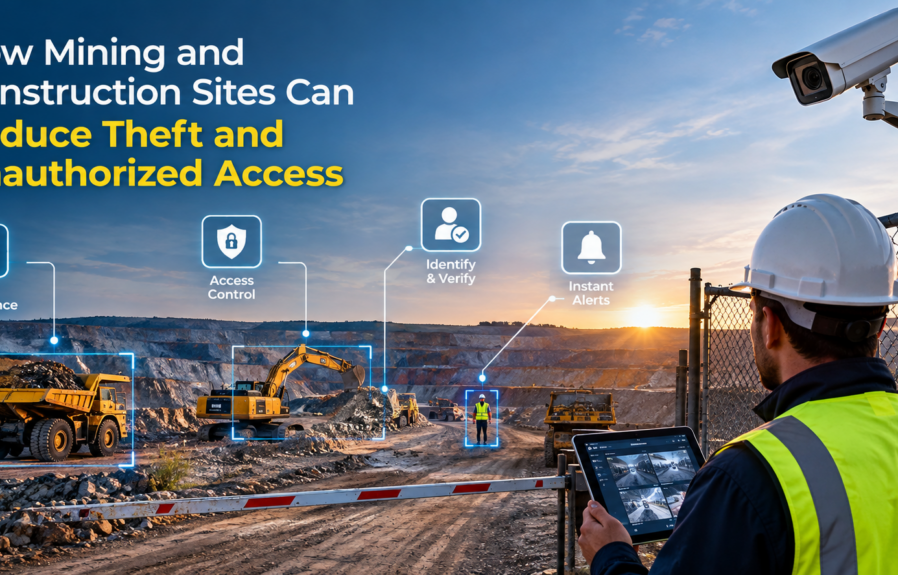
Mining and construction sites face a unique mix of security challenges. Large work areas, expensive equipment, temporary access points, changing crews, and after-hours activity can make these locations difficult to control.
The risk is not limited to major equipment theft. Fuel, tools, cables, materials, and smaller components can also disappear from poorly monitored areas. Unauthorized visitors can create additional safety concerns, especially around active machinery, excavation zones, and restricted infrastructure.
A practical security plan should therefore protect both people and assets without interfering with daily operations.
Identify High-Risk Areas Early
Security planning should begin with a review of the areas most exposed to theft, trespassing, or unauthorized access.
Equipment yards, fuel storage areas, temporary offices, loading zones, material stockpiles, access roads, and perimeter gates often require more attention than other sections of the site.
The layout may also change as work progresses. New storage areas may appear, machinery may move, and temporary access points may be opened or closed.
Because of this, security should be reviewed regularly rather than treated as a one-time setup.
Control Access to the Site
Mining and construction projects can involve employees, contractors, subcontractors, drivers, suppliers, and visitors entering the property throughout the day.
Clear access procedures make it easier to determine who should be on-site and where they are allowed to go.
Entry points should be clearly defined, and visitors should follow a consistent check-in process. Vehicle access can also be monitored to help reduce unauthorized entry and maintain better oversight of deliveries.
Restricted areas may need additional controls, particularly when they contain fuel, electrical equipment, tools, hazardous materials, or valuable machinery.
Protect Equipment and Materials
Heavy machinery is one of the most visible assets on a work site, but smaller items can be just as vulnerable.
Portable tools, generators, batteries, fuel, wiring, metal components, and building materials can often be removed more easily than large equipment.
Secure storage, controlled key access, fencing, proper lighting, cameras, and equipment tracking can all help reduce exposure.
Site managers should also consider what happens after the main workforce leaves. Areas that are busy during the day may become isolated at night or over the weekend, increasing the importance of after-hours controls.
Add a Human Security Presence
Cameras and access systems can provide valuable oversight, but some situations still require human judgment.
For large mining and construction projects, professional security guard services can support existing security measures by monitoring entrances, conducting patrols, observing deliveries, checking restricted areas, and reporting unusual activity.
A visible security presence can also help discourage trespassing and unauthorized access, particularly during evenings, weekends, or periods when fewer workers are present.
Security personnel should have clear instructions about site procedures, authorized personnel, restricted areas, emergency contacts, and incident reporting.
The goal is to make security part of normal site operations rather than a separate process.
Use Patrols Across Larger Work Areas
Mining and construction sites can cover significant distances, making it difficult to monitor the entire property from one location.
Routine patrols can help provide visibility around storage areas, equipment yards, temporary buildings, access roads, parking areas, fencing, and sections of the site that are not continuously occupied.
Patrol routes should also change as the project develops.
If equipment is moved or a new work zone becomes active, security coverage should adjust accordingly.
Patrols can also help identify problems before they become larger issues, such as damaged fencing, unsecured gates, poor lighting, or storage areas that have been left open.
Use Cameras Where They Provide the Most Value
Security cameras can support both active monitoring and incident review.
Useful locations may include entrances, equipment storage areas, fuel zones, parking areas, warehouses, and sections of the perimeter.
Camera placement should be based on actual site activity rather than simply covering as much space as possible.
Lighting, distance, weather conditions, blind spots, and moving equipment can all affect how useful a camera will be.
There should also be a clear process for responding when suspicious activity is detected.
Prepare for After-Hours Security Risks
The security environment often changes once the main work shift ends.
With fewer employees and supervisors present, equipment yards and storage areas can become more vulnerable.
Before the site closes for the day, teams should confirm that gates are secured, equipment is properly stored, tools are locked away, and high-value areas are protected.
Sites operating overnight security or monitoring should also define how to respond to unexpected vehicles, damaged fencing, alarms, or people entering restricted areas.
Document Security Incidents
Even minor incidents can provide useful information.
An open gate, damaged fence, missing tool, unauthorized visitor, or unusual vehicle may reveal a gap in existing security procedures.
Keeping clear incident records can help site managers identify patterns and determine where additional controls may be needed.
Repeated problems in the same area may indicate that lighting, fencing, patrol coverage, access procedures, or camera placement should be improved.
Build Security Into Daily Operations
Mining and construction security works best when it is planned alongside the rest of the project.
Access controls, cameras, lighting, patrols, secure storage, and trained personnel can all play a role in reducing theft and unauthorized activity.
The most effective approach is one that changes with the site.
As new areas open, equipment moves, and contractors change, security procedures should be reviewed and adjusted. This helps create a more controlled work environment while protecting the people, equipment, and materials needed to keep the project moving.