
As granite mining sites expand, increasing mineral reserves often create new demands on existing crushing operations. A granite crusher that meets current production targets may become insufficient when extraction areas grow, mining depths increase, or annual output requirements rise. Expanding a mining operation therefore requires more than purchasing additional equipment. Operators must evaluate reserve estimates, expected production rates, material transportation distances, and downstream processing capacity to determine how the crushing system should develop alongside the mine.
1. Evaluate Remaining Reserves Before Expanding Crushing Capacity
Before upgrading a granite crushing plant, mining operators should evaluate the quantity, distribution, and accessibility of remaining reserves. A larger reserve does not necessarily mean that the mine must immediately increase its crushing capacity. The expansion plan should consider the expected extraction schedule, annual production targets, and projected operating life of the mining site.
For example, a granite quarry with newly developed extraction zones may have sufficient reserves to support several additional years of operation. However, if extraction is planned gradually, the existing crusher may continue meeting short-term requirements. Increasing equipment capacity too early could result in unnecessary capital investment and lower equipment utilization.
Operators should also examine how the location of new mining areas affects material transportation. As extraction faces move farther from the existing crushing plant, hauling distances may increase. In some cases, relocating a mobile crusher closer to the new mining area can improve material handling efficiency without requiring a complete expansion of the stationary processing facility.
2. Calculate the Required Capacity for Future Production Targets
The required granite crusher capacity should be determined by projected saleable output rather than reserve volume alone. Mining operators need to consider annual production targets, operating hours, scheduled maintenance, and expected equipment availability when estimating the necessary processing rate.
For instance, a mine targeting 600,000 tons of finished aggregates annually cannot simply divide this figure by 365 days. Actual operating schedules, shift arrangements, planned shutdowns, and seasonal restrictions must also be considered. If the plant operates fewer hours per day, its required hourly production capacity will increase accordingly.
Another important consideration is the difference between processing capacity and qualified finished output. Screening losses, recirculating loads, material rejection, and product specifications can reduce the amount of saleable aggregate produced. Therefore, capacity calculations should account for the complete crushing and screening process rather than relying exclusively on the crusher’s rated throughput. This approach helps prevent underestimating the equipment requirements of an expanding mine.
3. Upgrade Crushing Stages According to Material Flow Requirements
When mining production increases, individual crushing stages may experience different levels of pressure. The primary crusher may handle larger quantities of extracted granite, while secondary crushing and screening equipment may become the main production bottlenecks. Expanding only the primary crushing capacity can therefore create material accumulation rather than improve overall output.
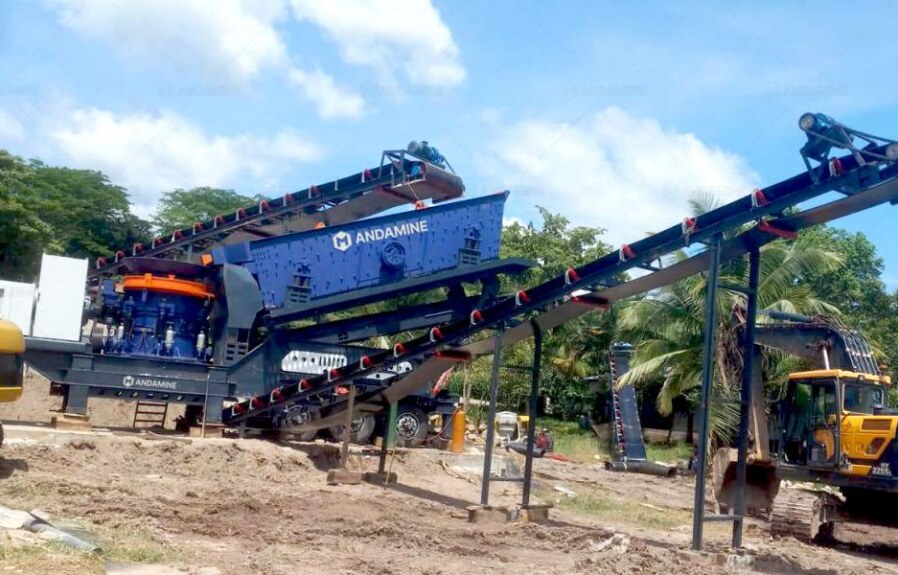
A practical upgrade strategy begins with evaluating the existing production line. Primary jaw crushers reduce large granite rocks into manageable sizes, while secondary cone crushers provide further reduction for aggregate production. Vibrating screens classify the crushed material into different product sizes, and conveyors transfer materials between processing stages.
If the secondary crushing stage cannot process the increased primary output, operators may need to install an additional cone crusher or upgrade the existing unit. Similarly, additional screening capacity may be necessary when the mine needs to produce more aggregate grades. An appropriately configured aggregate crusher machine system should maintain balanced processing capacity across feeding, crushing, screening, and conveying operations.
4. Choose Between Mobile and Stationary Crushing Expansion
The physical development of a mining site is another important factor when selecting an expansion strategy. Stationary granite crushing plants are generally suitable for established mining operations with stable extraction areas and long-term production requirements. Their fixed layouts can support large-scale processing and integrated conveyor systems.
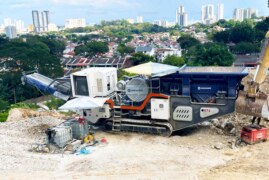
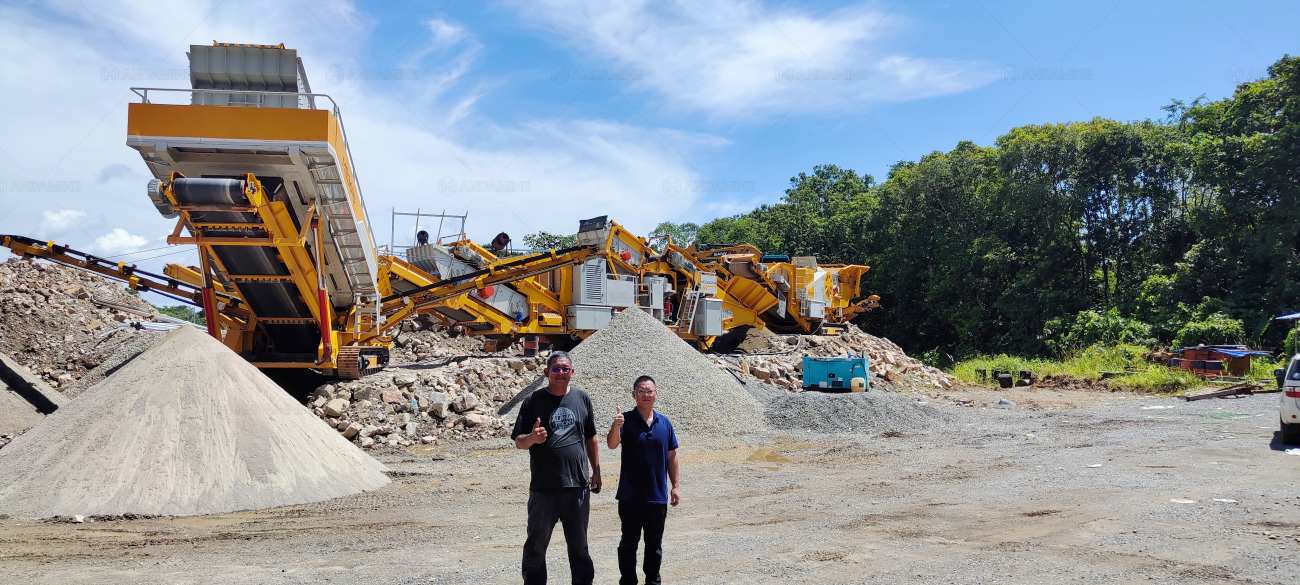
Mobile crushing plants offer greater flexibility when extraction locations change frequently. A track-mounted mobile crusher can move closer to active mining faces, reducing the distance that unprocessed granite must travel. This arrangement may be particularly useful when new extraction zones are located far from the original crushing facility.
Some expanding mines may benefit from a combination of both systems. A stationary plant can handle the main production volume, while mobile crushing equipment supports newly developed extraction areas or temporary production requirements. The decision should be based on transportation costs, mine layout, expected operating life, and the required production capacity rather than equipment mobility alone.
5. Account for Granite Hardness and Equipment Wear
Increasing mining output also means that crushers, liners, screens, and conveyors may experience higher cumulative workloads. Granite is a hard and abrasive material, so expanding production without reviewing wear management can increase maintenance frequency and unexpected downtime.
Operators should inspect jaw plates, cone crusher mantles, concaves, and other wear components to determine whether the existing equipment can sustain higher operating loads. Feed size distribution also deserves attention. Excessively large rocks or uneven feeding can create additional impact loads and accelerate component deterioration.
A higher-capacity crusher does not automatically provide a lower operating cost per ton. Equipment selection should consider power consumption, wear part service life, maintenance accessibility, and replacement intervals. Maintaining sufficient spare parts inventory is particularly important for mines operating continuously or in remote locations where replacement components may take longer to arrive.
6. Expand Conveying and Stockpiling Systems Alongside Crushers
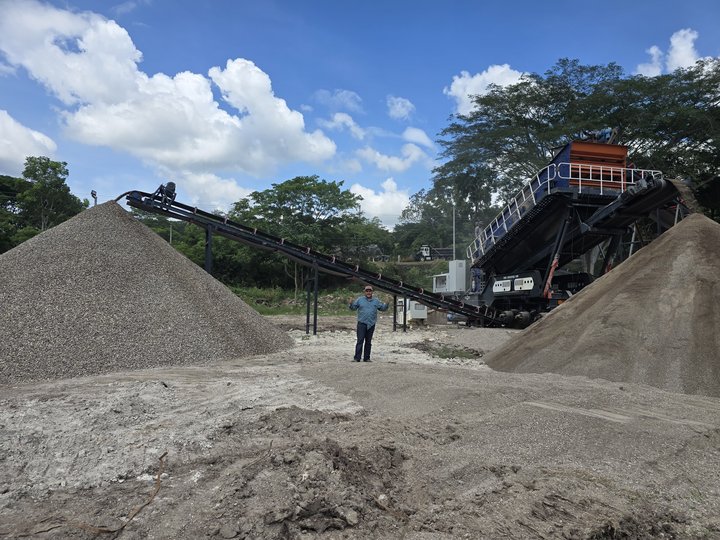
Increasing crusher capacity without upgrading material handling infrastructure can create bottlenecks outside the crushing process. Conveyors, transfer points, storage areas, and loading equipment must all accommodate the higher volume of granite aggregates.
For example, an upgraded secondary crusher may discharge material faster than the existing conveyor can transport it. This can cause material accumulation around discharge points and force operators to reduce crusher feed rates. Similarly, insufficient stockpile capacity can interrupt production when finished aggregates cannot be removed quickly enough.
Mining operators should evaluate conveyor belt width, operating speed, transfer chute design, and stockpile arrangements before increasing processing capacity. Separate stockpiles for different aggregate grades also help maintain product quality and simplify downstream transportation. Coordinating these systems ensures that additional crushing capacity translates into higher finished product output.
7. Plan Expansion in Stages to Control Investment Risks
Not every mining site needs to expand its entire crushing plant at once. A phased investment strategy allows operators to respond to actual production requirements while controlling capital expenditure.
The first stage may involve improving feeder performance, replacing worn crusher components, or increasing screening efficiency. If these adjustments cannot meet future production targets, operators can consider adding secondary crushing equipment, installing additional screens, or upgrading conveyor systems. A complete plant expansion may become necessary when reserve development and long-term production forecasts justify the investment.
Performance indicators should be reviewed after each upgrade. Important measurements include hourly throughput, saleable output, equipment utilization, maintenance costs, and energy consumption per ton. Comparing these figures against the original production targets helps determine whether further investment is necessary.
Conclusion
Expanding granite mining operations requires a crushing system that can adapt to increasing reserves, changing extraction locations, and higher production targets. By evaluating future capacity requirements, balancing crushing stages, selecting suitable mobile or stationary equipment, and upgrading material handling systems, mine operators can expand production without creating unnecessary operational bottlenecks. A well-planned granite crushing plant should support not only current extraction needs but also the long-term development and profitability of the mining site.