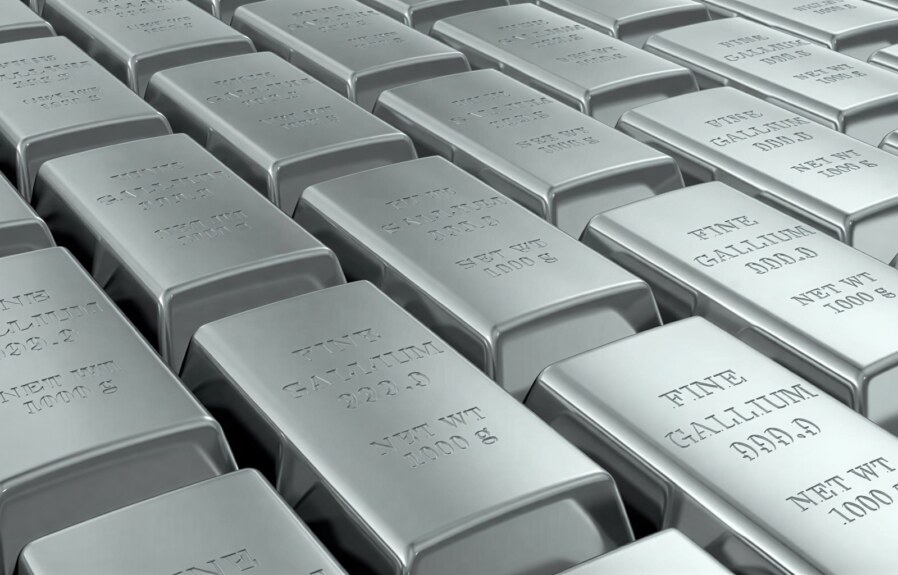
Mining giant Rio Tinto has officially broken ground on a pilot plant in Saguenay, Quebec, marking a significant step in its ambitious project to produce high-purity gallium metal. The R&D initiative, which successfully extracted its first gallium in May 2025, aims to validate a proprietary extraction process at an industrial scale. The new pilot facility at the company’s Complexe Jonquière is scheduled to become operational by 2027, paving the way for a subsequent demonstration plant capable of producing up to four tonnes of the critical mineral annually.
The federal government has thrown its weight behind the strategic project, conditionally approving a non-repayable contribution of up to C$18.95 million through Natural Resources Canada’s Global Partnerships Initiative. This federal funding complements a previous C$7 million commitment from the Quebec government announced in late 2024. With the total R&D investment estimated at approximately C$45 million, the public-private partnership underscores a shared national priority to secure domestic supplies of minerals deemed essential for economic and defense interests.
The push for a domestic gallium supply chain comes as global dynamics shift, with China currently accounting for the vast majority of the world’s more than 700 metric tonnes of annual production. A future commercial-scale plant in Quebec could see Rio Tinto’s output reach up to 40 tonnes per year, potentially representing about five percent of global production. Company leadership emphasized the strategic value, noting that extracting gallium from existing alumina refining processes creates additional value from current assets while bolstering North American resilience.
Gallium is a critical mineral indispensable for modern technology, used extensively in high-performance radars, smartphones, semiconductors, electric vehicles, and defense applications. “Research and development are essential to building the responsible and resilient critical mineral supply chains that power clean energy, advanced manufacturing, and defense readiness,” stated Canada’s Minister of Energy and Natural Resources, Tim Hodgson. The project is widely viewed as a direct response to recent global supply chain restrictions, aiming to secure a sovereign source of a material vital to both the clean energy transition and national security.