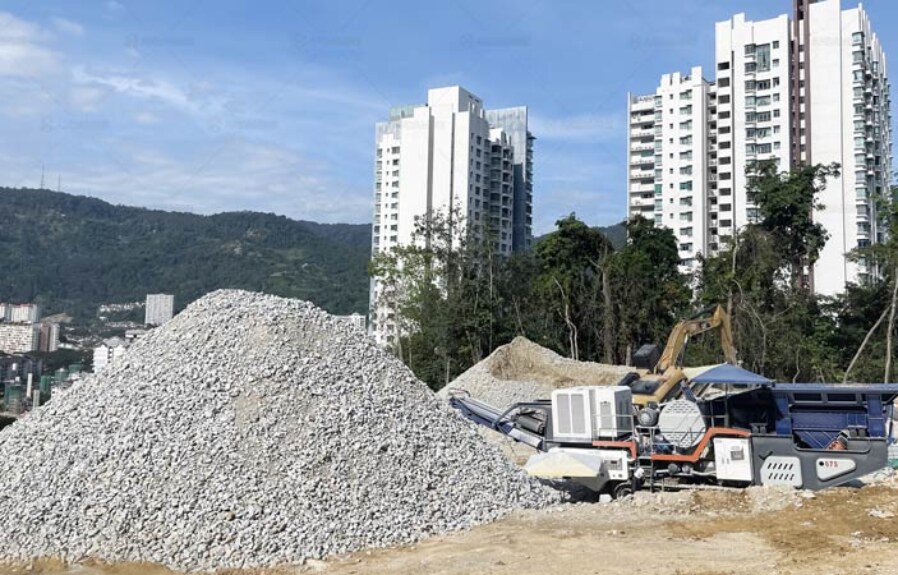
Turning raw stone into construction aggregate requires a carefully coordinated sequence of crushing, screening, conveying, and stockpiling operations. A properly designed aggregate plant does more than reduce large rocks into smaller pieces. It controls particle size, production capacity, material flow, and final aggregate quality throughout the entire process.
From quarry extraction to finished products, every stage influences the efficiency of the aggregate plant. The characteristics of the raw stone determine the crushing equipment, while the required final products influence the screening and conveying configuration. Understanding this complete process helps quarry operators build a more reliable and cost-effective production system.
What Happens Before Stone Crushing?
Before raw stone enters a stone crushing plant, operators need to evaluate the material and production requirements. Rock type, hardness, abrasiveness, maximum feed size, moisture content, and expected output all influence plant design.
For example, granite and basalt are hard and abrasive, so an aggregate plant(planta de árido) processing these materials generally requires heavy-duty crushers and wear-resistant components. Softer limestone may require a different crushing configuration.
This initial assessment provides the foundation for selecting equipment and designing the complete stone crushing plant.
Step 1: Feeding Raw Stone
After extraction, large rocks are transported to the processing site and loaded into a vibrating feeder or similar feeding device.
The feeder regulates the amount of material entering the primary crusher. Stable feeding prevents sudden overloads and helps maintain consistent production throughout the aggregate plant.
In some applications, the feeder can also remove excessive fines before crushing. This reduces unnecessary processing and improves the efficiency of the downstream equipment.
Why Stable Feeding Matters
An unstable feed can cause several problems:
- Crusher overload
- Fluctuating production
- Uneven product size
- Increased equipment wear
- Lower overall plant efficiency
Therefore, the feeding system should be properly matched to the capacity of the stone crushing plant.
Step 2: Primary Crushing
Primary crushing is the first major size-reduction stage. Large pieces of quarry rock are reduced into smaller material that can be processed by secondary crushers and screens.
Jaw Crushers for Large Rocks
Jaw crushers are commonly used as primary crushers because they can handle large feed sizes and generate strong compressive forces.
The raw stone enters the crushing chamber and is compressed between a fixed jaw and a moving jaw. Repeated movement gradually breaks the material into smaller pieces.
A properly selected jaw crusher gives the aggregate plant a stable foundation for subsequent crushing stages.
Step 3: Secondary Crushing
After primary crushing, the material may enter a secondary crusher to achieve a smaller and more controllable particle size.
Cone crushers and impact crushers are frequently used at this stage. The choice depends on rock hardness, abrasiveness, required product shape, and target output.
For hard and abrasive rocks, cone crushers can provide effective compression crushing and good wear resistance. Impact crushers may be advantageous when particle shape and cubicity are important.
The secondary crushing stage is particularly important because it determines how efficiently material can move through the rest of the aggregate plant.
Step 4: Screening and Classification
Crushing alone cannot produce accurately controlled aggregate sizes. Screening is therefore an essential part of a modern stone crushing plant(planta trituradora de piedra).
Vibrating screens separate crushed material according to particle size. Correctly sized aggregates are sent to stockpiles, while oversized material can be returned to the crusher for additional reduction.
Improving Screening Efficiency
Screening performance depends on several factors:
- Screen surface area
- Feed rate
- Material moisture
- Particle size distribution
- Deck configuration
- Screen inclination
If screening efficiency is poor, oversized material may remain in the finished product or excessive material may circulate through the crushing circuit. Both situations can reduce the capacity of the aggregate plant.
Step 5: Tertiary Crushing and Fine Processing
Some projects require smaller aggregates or manufactured sand. In these cases, the stone crushing plant may include a tertiary crushing stage.
Tertiary crushers further reduce intermediate material to meet finer product requirements. Depending on the application, additional shaping or sand-making equipment may also be installed.
However, crushing material more finely than necessary can increase energy consumption and wear. The aggregate plant should therefore be configured according to actual product specifications rather than simply maximizing the number of crushing stages.
Step 6: Conveying and Stockpiling
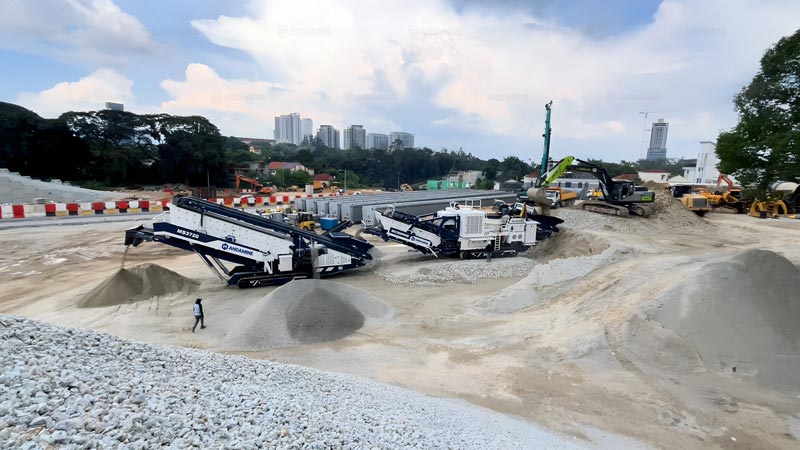
Conveyors connect the different sections of the stone crushing plant and transport materials between crushers, screens, and stockpiles.
The conveyor capacity should be compatible with the production capacity of the crushing equipment. If the conveyor is undersized, it can become a bottleneck and restrict the entire aggregate plant.
Finished aggregates are usually separated into different stockpiles according to particle size. This allows materials to be supplied for road construction, concrete production, asphalt applications, and other projects.
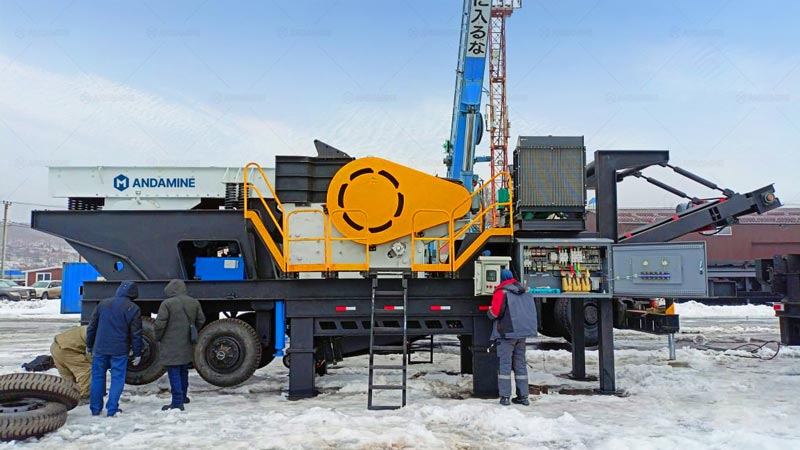
How to Design an Efficient Aggregate Plant
An efficient aggregate plant should be designed as an integrated production system rather than a collection of individual machines.
Match Equipment Capacity
The feeder, crushers, screens, and conveyors should have compatible capacities. A weak link in the production line can limit the output of the entire stone crushing plant.
Consider Final Aggregate Requirements
Operators should define the required aggregate sizes before selecting equipment. If several specifications are required, the screening system may need multiple decks and additional material-return circuits.
Plan for Maintenance
Maintenance accessibility should be considered during the design stage. Operators need convenient access to wear parts, bearings, lubrication points, belts, and other critical components.
Spare parts availability is also important, especially for remote quarry operations where unexpected downtime can be expensive.
Building a Complete Stone Processing Solution
The transformation from raw stone to construction aggregate follows a logical sequence: raw material assessment, feeding, primary crushing, secondary crushing, screening, optional tertiary processing, conveying, and stockpiling.
A well-configured aggregate plant coordinates every stage to maintain stable material flow and consistent product quality. Meanwhile, a properly designed stone crushing plant can reduce unnecessary recirculation, improve equipment utilization, and control operating costs.
Whether processing granite, basalt, limestone, or other quarry materials, the most effective solution is not necessarily the plant with the largest number of machines. The key is to match the crushing, screening, and conveying configuration with the raw material characteristics and final product requirements.
By treating the aggregate plant as an integrated system, quarry operators can achieve more consistent production, extend equipment service life, and produce construction aggregates that meet the specifications of different downstream applications.